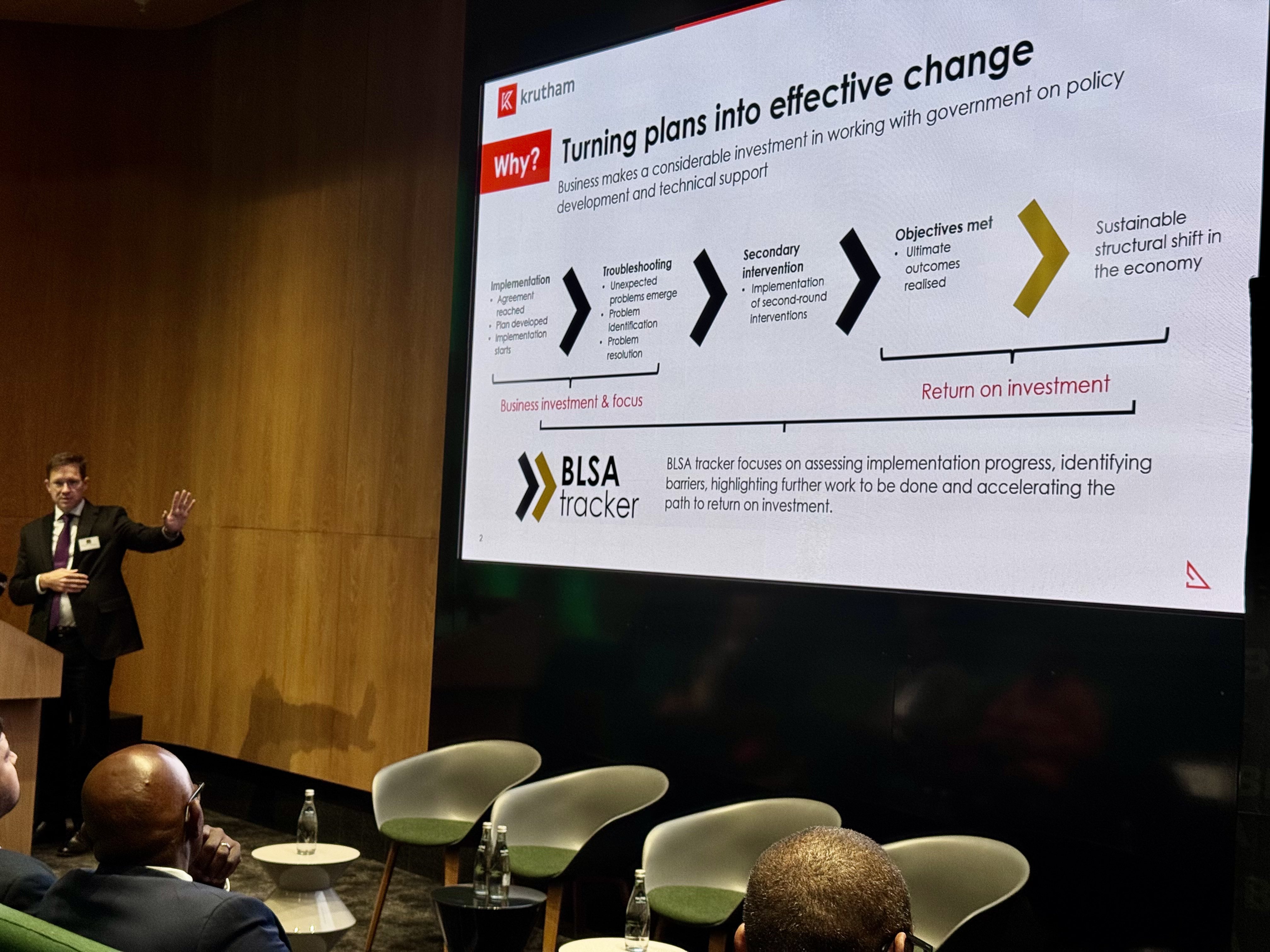
The BLSA Reform Tracker released its quarterly update last week, and I find the picture it paints genuinely worrying.
There are areas of real progress – but on the two reforms that matter most for growth, electricity and logistics, momentum is slipping.
With load-shedding behind us and the ports performing better than at the height of the crisis, I fear we are falling into the trap of “good enough.”
For a country with 32% unemployment, good enough is not good enough.
I was encouraged by several findings on the positive side.
Last week, after the Tracker’s quarter had concluded, Home Affairs gazetted an extension of the Trusted Employers scheme, which allows qualifying employers to expedite visas for skilled staff, exactly the kind of practical reform that improves the business environment.
The Tracker also credited Home Affairs for progress on electronic visas, streamlining access for tourists and boosting visitor numbers and the jobs that come with them.
Progress in public service reform was also noted, important groundwork for improving the performance of local government and the civil service more broadly.
But the Tracker also found concerning reversals, and we cannot accept these.
On electricity, deadlines have again been missed.
Wheeling protocols that would enable electricity generators to sell power over the grid to customers were due in April and have now been pushed to September.
Finalising regulations for the South African wholesale electricity market, which would deliver the genuinely competitive electricity market our economy needs, is also facing delays.
Independent power producers are having their production curtailed, and Eskom now owes almost R2bn for electricity not used, undermining investor confidence in independent production.
Most seriously, the unbundling of the independent system operator from Eskom has been delayed despite it being unambiguous government policy.
This is no longer a matter for negotiation– it is a matter of implementing what has already been decided.
The risk of complacency here is real.
With load-shedding behind us, the political pressure that drove electricity reform has eased.
There have certainly been improvements, ranging from the performance of Eskom plants to the extensive investment in new private sector generation.
But those improvements cannot be allowed to translate into a slower implementation of the remaining reforms. Energy is a critical growth enabler.
If the economy is to grow at the rates we need to make a dent in unemployment, current production capacity will be insufficient and without genuine competition, businesses and consumers alike will not benefit from competitive pricing.
The reform path must be followed.
The cost of abandoning it now would be paid in growth foregone and jobs never created.
The same risk applies to logistics.
Rail and ports are performing better than at the peak of the crisis, and I want to acknowledge real progress.
The publication of the draft Volume 4 of the Network Statement earlier this month, which sets out the terms on which private operators can access the rail network, is a significant step.
Port concessioning is advancing: last week Cape Town’s container terminal joined Durban, Richards Bay, the Cape Town liquid-bulk terminal and Ngqura in the concessioning process, and Durban Gateway Terminal has reached financial close, opening the way to R11.1 billion in new investment.
These are meaningful milestones.
But they cannot become a reason for complacency.
The Transport Economic Regulator, essential to overseeing a competitive rail market, is not yet operational.
The unbundling of the rail infrastructure manager from Transnet, to create an independent and neutral provider of rail access to all operators, is going backwards.
Without both, the terms set out in the Network Statement cannot be enforced, and the full benefit of private sector participation will not be realised.
We need a step change in the performance of our logistics system.
Not incremental improvement, but the kind of transformation that makes our ports rank among the world’s best and ensures miners and manufacturers can move goods reliably and at competitive cost.
The pattern across both sectors is the same: progress happens where government drives it and holds firm.
It stalls where SOEs resist, and ministers allow them to.
The unbundling of the grid and the rail network are not optional elements of the reform programme.
They are the essential preconditions for the billions in private investment South Africa needs to grow.
Failure to deliver them means condemning the country to lower growth and fewer jobs than we are capable of. Government has set the policy.
The SOEs must now follow through.
BLSA will hold them to it – reform momentum cannot be allowed to stall at the moment it matters most.
*This column was first published in the Business Leadership South Africa (BLSA) weekly newsletter. The author, Busisiwe “Busi” Mavuso, is the CEO of BLSA.
*The views Busi Mavuso expresses in this column are not necessarily those of The Bulrushes