Across Africa, including South Africa, new journalism and media education programmes have emerged, promising training suited to today’s disrupted media landscape.
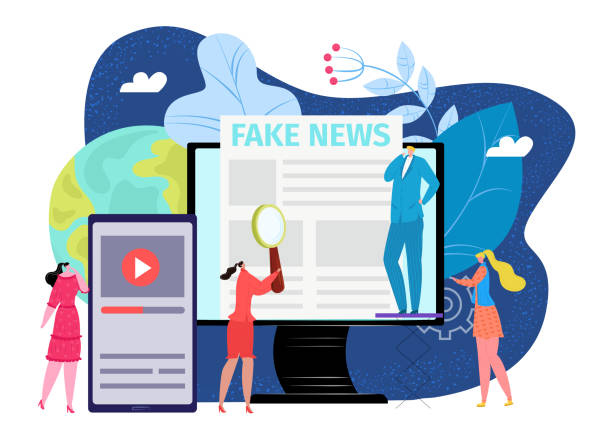
On the surface, these programmes respond to the decline of traditional media, the rise of digital and online platforms, and the spread of misinformation, disinformation, and fake news.
This is a necessary and worthwhile goal.
Yet traditional media has not disappeared, and new media has not fully replaced its influence.
Journalism and media education must therefore help shape media landscapes and practices that advance democratic values, justice, accountability, and sustainable futures for all.
Still, we should not be fooled, misled, or bamboozled, as Malcolm X famously warned.
New programmes should begin with a shared recognition that societies in the first half of the 21st century face multiple, overlapping, and interconnected challenges across political, economic, social, and cultural life.
For this reason, it is troubling when programmes focus narrowly on media management and related elements in a decontextualised way, without engaging theories of social change and transition.
Such approaches overlook the richness of emerging theory, critique, and analysis of society, institutions, organisations, and practices.
Adding AI and data-driven approaches does not, by itself, make these programmes relevant to the present moment.
These technologies and methods also require critical understanding grounded in social theory.
Is there an aversion to theory that reflects the wider anti-intellectual climate associated with fakery, misinformation, disinformation, and disregard for facts and science?
Practice without theory or thought is perilous, even dangerous.
Theory without regard for practice is equally inadequate.
Are these programmes attempting to confront fakery in the media space with “fake” programmes of their own?
How can such programmes so visibly lack diversity in content, balance between theory and practice, and breadth in instructor expertise and demographics?
In an age of hybrid teaching, why is diverse expertise not being mobilised for this purpose?
Africa, including South Africa, has a long and rich history of journalism and media education that skillfully combines theory and practice.
This tradition has been shaped by people with strong academic qualifications and deep journalism experience, and it should be harnessed in credible efforts to create new media for new societies.
These times call for breaking knowledge silos, co-creating new knowledge, and developing new skills for the futures we must build together.
In this regard, these programmes should bring together critical social theory that illuminates media, journalism and society.
Partnerships and collaborations among local institutions and global partners offer the most promising way forward—not isolated efforts that present themselves as centres of excellence.
*Professor Tawana Kupe is a Global Higher Education Strategist, the former Vice Chancellor of the University of Pretoria and former Vice Principal of Wits University in South Africa. The views expressed by Professor Tawana Kupe are not necessarily those of The Bulrushes.