Johannesburg – Tiger Brands says it is accelerating the transition to a lower-emissions logistics network with the introduction of compressed natural gas (CNG) trucks into the Albany bread distribution fleet.
This marks an important step in the company’s drive to reduce its environmental footprint while improving operational efficiency, strengthening supply chain resilience and supporting consumer affordability.
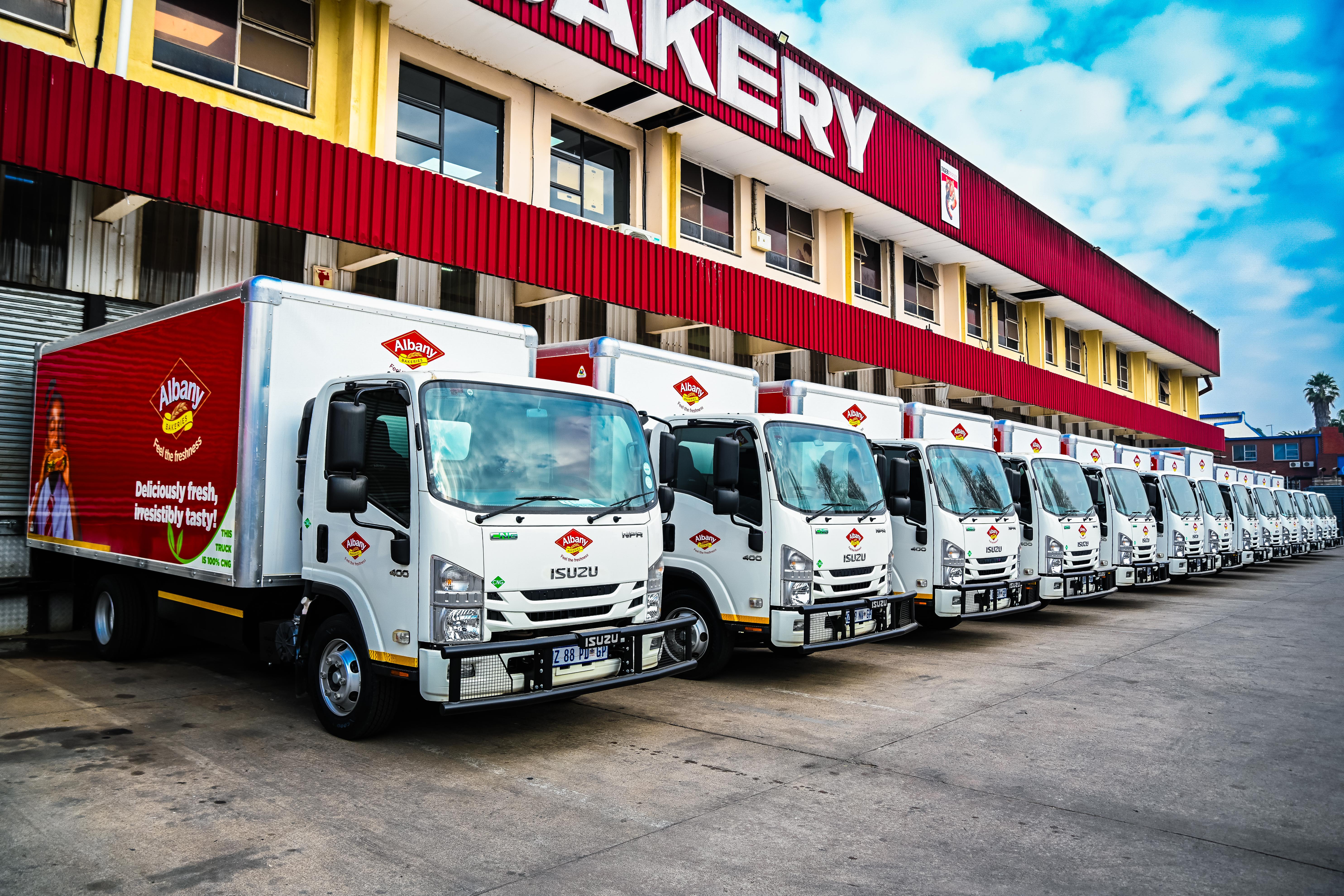
The company has introduced an initial fleet of 14 CNG-powered trucks, at an approximate investment of R12 million, operating from its Albany Germiston Bakery in Johannesburg.
The vehicles, which have a single-trip range of around 480km, have begun delivering bread on routes closest to the bakery to maximise efficiency.
The vehicles are supported by a dedicated CNG fuelling point installed on site.
The Albany Super Bakery, currently under construction in Pretoria, will be the next Tiger Brands operation to receive a CNG fleet.
The Albany CNG rollout forms part of Tiger Brands’ long-term fleet strategy to diversify its transport energy mix and reduce reliance on diesel.
Over the next five years, the company plans to transition 10% of its fleet to alternative-fuel vehicles, while piloting electric, hybrid and solar-powered vehicle technologies to assess their suitability across its operations.
This comes as businesses continue to navigate volatility and uncertainty in global energy markets, placing pressure on transport costs, supply chains and consumer affordability.
By diversifying its transport energy mix, Tiger Brands aims to reduce its reliance on conventional diesel while improving operational resilience and transport cost predictability.
It also supports the company’s 2030 Environmental Stewardship targets to reduce carbon emissions by 30% and source 31% of its electrical energy from renewable sources.
“We expect the introduction of CNG vehicles to the Albany fleet to deliver meaningful benefits for the business and value for our consumers by lowering fuel costs, reducing exposure to diesel price volatility and improving fleet efficiency,” said Quinton Swart, MD: Bakeries, Tiger Brands.
“At the same time, we are reducing our impact on the environment and caring for the communities in which we operate.”
CNG vehicles are powered by natural gas stored under high pressure and used as an alternative to conventional diesel.
Compared with diesel-powered vehicles, they produce lower emissions and fewer air pollutants, while offering a more cost-effective fuel source.
Although South Africa’s CNG market is still in its early stages, the technology has gained traction internationally.
According to the National Energy Regulator of South Africa (Nersa), commercial fleets are increasingly adopting lower-emission transport solutions, while more than 28.5 million natural gas vehicles are already in operation globally.