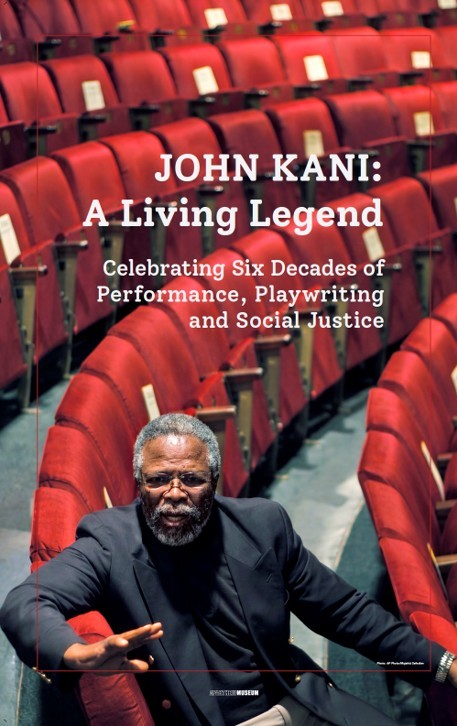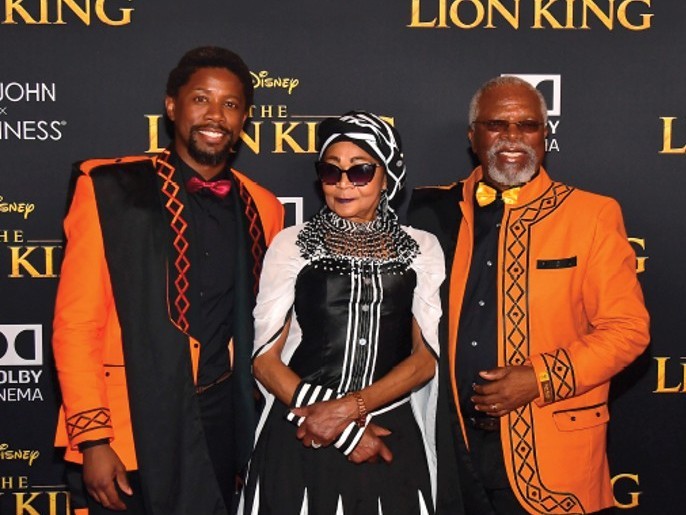
Johannesburg – For over 25 years, Dr. John Kani has helped guide the direction of the Apartheid Museum, an institution whose mandate overlapped uncannily with that of his own plays.
His role as chairman of the Board of Trustees unfolded parallel to his development as a playwright, an art form through which the veteran actor began to ask pertinent questions about the shortfalls of democracy and reconciliation in a society that remains unequal.
From 30 August until 30 November, the Apartheid Museum will honour Kani’s contribution to the institution with an exhibition that revisits key moments in a stage and screen career that, over six decades, has taken him from Port Elizabeth rehearsal rooms to Hollywood studios.
Drawing on images, text, artefacts, and film, the exhibition showcases the ideas that have occupied Kani on and off the stage, informing his vision as a mentor and visionary.
Kani was born in the Gqeberha township of New Brighton in 1943.
He was already dabbling in acting in high school, but his approach to the art form was altered dramatically following his encounter with the Serpent Players in 1965.
The Serpent Players were an amateur group formed in New Brighton in the early 1960s and soon began collaborating with playwright Athol Fugard.
Besides Barney Simon’s work, Fugard considered them “the only significant provocation and stimulus to myself that I have encountered in South Africa…”
In a move befitting the times, the group shifted from their initial reliance on the classics, increasingly infusing their repertoire with their personal experiences, significantly after the arrest of fellow actor Norman Ntshinga in 1965.
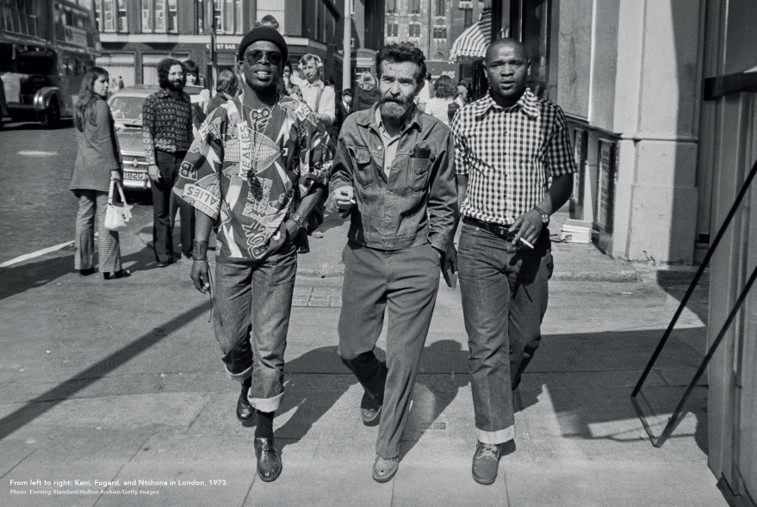
His arrest before the group was set to perform Sophocles’ Antigone influenced Kani, Winston Ntshona, and Fugard as they workshopped their two-hander, The Island, just weeks before they stormed England in 1973.
Their historic run over the next few years catapulted Kani and Ntshona to global fame and instituted them as a cornerstone in what came to be known as protest theatre.
From left to right: Kani, Fugard, and Ntshona in London, 1973. Photo: Evening Standard/Hulton Archive/Getty Images
Through the transition, Kani took up leading administrative roles at various cultural institutions, not least the Market Theatre Lab and the National Arts Council, where he was a founding chairman from 1996 to 2004.
His continued role at the museum is in keeping with his views that nurturing the vision of a thriving post-apartheid South Africa requires unwavering vigilance and commitment.
While this national project is currently on shaky ground, it is safe to say Kani has been exemplary in keeping his end of the bargain by building structures to increase opportunities for actors on all levels and in all disciplines.
“We need to create vibrant film, television, and theatre industries so that we do not look up to Hollywood as the only solution for our dreams and the only way our stories can be told,” he told the American Repertory Theatre artistic director, Robert Woodruff, in 2004.
With this exhibition, we celebrate a man who, sometimes at great personal cost, has ensured that the performing arts have a fighting chance to speak to the present moment.
John Kani: A Living Legend is on display at the Apartheid Museum from 30 August to 30 November 2026.
The Apartheid Museum:
The Apartheid Museum opened in 2001 in Johannesburg and is acknowledged as the pre-eminent museum in the world dealing with 20th-century South Africa, at the heart of which is the apartheid story.
The Apartheid Museum, the first of its kind, illustrates the rise and fall of apartheid.
An architectural consortium, comprising several leading architectural firms, conceptualised the design of the building on a seven-hectare stand.
The museum is a superb example of design, space, and landscape offering both the local and international community a unique South African experience.
The exhibits have been assembled and organised by a multi-disciplinary team of curators, film-makers, historians and designers.
They include powerful film footage, photographs, text panels and artefacts illustrating the events and human stories that are part of the darkest period in our history, known as apartheid.
The Apartheid Museum is open Wednesday to Sunday, and public holidays 9h00 to 17h00
Consult our website for further details www.apartheidmuseum.org
Facebook: @ApartheidMuseumSA
Instagram: S.A. Apartheid Museum