Nashville — The Queen of Country left the stage on Tuesday, 25 August 2026, dying peacefully in her beloved Tennessee at the age of 80 after a brief battle with cancer.
Dolly Rebecca Parton Dean, the rhinestone-clad daughter of the Great Smoky Mountains who turned Appalachian hardship into a songbook that spoke to millions, is gone.
Yet the outpouring of grief that followed made clear she remains everywhere: in the books arriving monthly in children’s mailboxes, in the soaring notes of “I Will Always Love You,” and in the collective memory of a woman who never forgot where she came from.
(Source: nytimes.com)
Born on 19 January 1946 in a one-room cabin on the banks of the Little Pigeon River in Sevier County, Parton was the fourth of 12 children of Robert Lee Parton, a sharecropper and labourer who could not read or write, and Avie Lee Owens Parton, a homemaker steeped in old ballads and hymns.
The family lived without electricity or running water in the early years.
Clothes were homemade, often from feed sacks.
Meals came from what could be hunted or grown—squirrel, rabbit, groundhog, bear.
Baths were sometimes taken in the river.
Winters could trap them inside with boarded windows against the snow.
Parton later recalled nearly freezing and the makeshift remedies of mountain life, including her mother sewing her toes back on after an injury with a sewing needle and kerosene as antiseptic.
thelist.com
Yet the hollers were rich in music and stories.
Mama told tales of “Raw Head Bloody Bones” and “painters” (panthers) that kept the children scrambling under the covers.
Daddy worked the fields; the children hoed corn and set tobacco. Parton stood on the front porch with a tin can jammed onto a tobacco stick as a microphone, singing to the chickens, dogs, and dirt, dreaming of the Grand Ole Opry she heard crackling through a battery radio.
At around six she wrote her first song, “Little Tiny Tasseltop,” for a corncob doll with corn-silk hair that her mother had made.
The family treasured it in a shoebox.
By eight or ten she was performing locally; at thirteen she recorded and appeared on the Opry.
The day after high-school graduation she boarded a bus for Nashville with a cardboard suitcase and ambition.
(Source: everand.com)
She met Carl Thomas Dean outside the Wishy Washy Laundromat on her first day in town in 1964.
He looked at her face, not her figure.
They married two years later in a quiet ceremony in Ringgold, Georgia.
Dean, who ran an asphalt business and shunned the spotlight, became her steady anchor for nearly 60 years until his death in March 2025 at 82.
The couple had no children of their own.
Parton, who had helped raise younger siblings and later underwent a partial hysterectomy, often said it was God’s plan: without kids of her own she was free to work, and “everybody’s kids could be mine.”
Nieces and nephews called her Aunt Granny (and later Gigi); Dean was Uncle Peepaw.
They bought cars and helped with college for the next generation.
pagesix.com
Her songwriting gift surfaced early and never left.
She co-wrote hits for others, then claimed the charts herself with “Coat of Many Colors,” the autobiographical tale of a patchwork jacket her mother sewed from rags that schoolmates mocked.
“Jolene,” “My Tennessee Mountain Home,” “9 to 5” and dozens more followed.
She wrote “I Will Always Love You” as a farewell to mentor Porter Wagoner; her own version was a country classic, but Whitney Houston’s soaring 1992 cover for The Bodyguard made it a global anthem and generated royalties Parton later invested in a Nashville office complex in a predominantly Black neighbourhood—“the house that Whitney built.”
She sold more than 100 million records, earned multiple Grammys, crossed into film and Broadway, and built Dollywood into a celebration of her roots.
(Source: cnn.com)
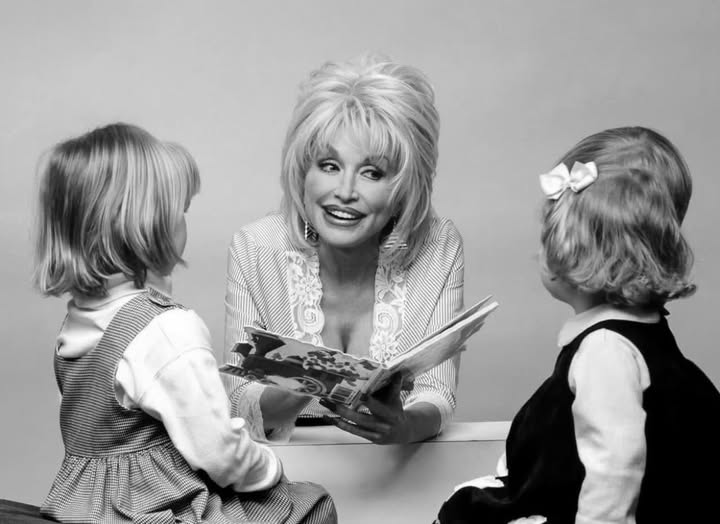
Philanthropy was never an afterthought. Inspired by her father’s illiteracy, she launched the Imagination Library in 1995 in Sevier County.
It grew into a worldwide programme mailing free, age-appropriate books monthly to children from birth to age five.
By the time of her death, it had gifted more than 300 million books; one in seven American children under five received them.
She funded Covid-19 vaccine research at Vanderbilt, poured millions into wildfire and hurricane relief for her home region, supported education and health causes, and treated the children of Dollywood employees like extended family.
“I think it probably was his plan for me not to have kids so everybody’s kids could be mine—and they are now,” she said.
(Source: people.com)
News of her death, announced in a video by nephew Bryan Seaver on behalf of the Parton and Owens families, triggered an immediate wave of mourning that crossed every divide.
Fans gathered at her Hollywood Walk of Fame star with flowers, candles and spontaneous sing-alongs of “Jolene.”
Crowds assembled around her statue in Sevierville. President Donald Trump ordered American flags flown at half-staff for a week.
Fellow artists—Reba McEntire, Kacey Musgraves (“The world feels a lot less sparkly”), Jane Fonda, Lily Tomlin, Keith Urban—and politicians of every stripe paid tribute to her talent, generosity and unifying spirit. “Sadness lies with us, not with Dolly,” Seaver said.
She had asked to be laid to rest in a bed of plush cotton after a lifetime in heavy rhinestones.
(Source: theguardian.com)
From a porch in the Smokies to stages around the world, Dolly Parton turned poverty into possibility and pain into melody.
She leaves no biological children, but millions who grew up with her books, her songs and her example of kindness without pretence.
The coat of many colours she once wore in pride still shines.
Disclaimer: This article was compiled using the AI tool Grok on X and may contain inaccuracies