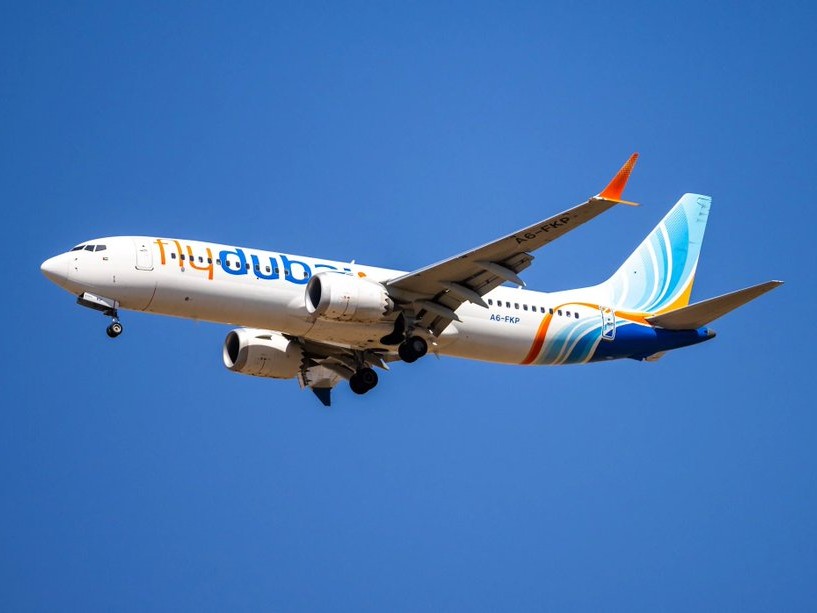
Tel Aviv Flight – On Wednesday morning, Flydubai flight FZ1073 lifted off from Dubai International Airport bound for Tel Aviv’s Ben Gurion Airport, carrying a predominantly Israeli passenger load on what should have been a routine regional hop.
About two hours into the journey, over northwestern Saudi Arabia near the Jordanian border, the routine shattered.
One of the pilots stabbed the other in the cockpit and apparently attempted to crash the aircraft, according to Israeli Prime Minister Benjamin Netanyahu.
What followed was a desperate mid-air struggle that sent the Boeing 737 into a terrifying plunge before passengers and crew regained control and forced an emergency landing in Tabuk.
(Source: bbc.co.uk)
Flight-tracking data captured the crisis.
The aircraft, cruising at altitude, reversed course and dropped more than 14 000 to 17 000 feet in under two minutes—in some accounts nearly 14 000 feet in less than 30 seconds—before transmitting an emergency squawk and briefly a hijacking code.
The rapid descent created a sensation of freefall. Overhead bins sprang open.
Cabin lights flickered or failed.
Passengers described the plane entering a spin or uncontrolled dive as screams filled the cabin.
(Source: bbc.co.uk)
“I was sure I was going to die,” one passenger later recounted. Sixteen-year-old Peleg Itali recalled thinking, “I’m so screwed… I don’t deserve to die like this.”
Others reported hearing shouts from the cockpit followed by the plane’s violent maneuvering.
Panic spread instantly.
Several men, acting on instinct, rushed forward.
An Israeli passenger later told Israeli Prime Minister Benjamin Netanyahu that the aircraft “went into a spin and began to descend” before he and a crew member forced their way into the cockpit.
There they found the captain, Indian national Captain Smit Machchhar, badly wounded and bleeding heavily on the floor, and the other pilot still attempting to interfere with the aircraft’s systems.
(Source: nytimes.com)
Machchhar, despite serious stab wounds to his head, hands and body, had fought back.
Covered in blood, he managed to open the cockpit door, allowing passengers and crew to enter and overpower the attacker.
Accounts from those who entered described subduing a man wielding a knife amid a chaotic, blood-slicked scene.
Additional crew members—reports indicated two other Flydubai pilots traveling as passengers—then helped stabilize the aircraft.
The plane leveled off and diverted to Tabuk’s Prince Sultan bin Abdulaziz International Airport, touching down safely around 9:45 a.m. local time after a distress call.
Both pilots were taken to hospital; Machchhar was reported in stable condition.
(Source: cbc.ca)
The flight carried more than 170 people.
Netanyahu specifically credited Machchhar with saving 174 lives, nearly all of them Israeli citizens.
Saudi airport authorities confirmed the aircraft landed safely with all aboard accounted for.
The attacker, identified in some Israeli reports as an Omani national, was arrested by Saudi authorities upon landing and remains under interrogation.
His precise motive has not been publicly confirmed by Saudi or Emirati officials, though Israeli leaders described the episode as an apparent attempt to crash the plane and, in some statements, a suspected terror attack.
Flydubai later suspended all flights to and from Israel pending investigation.
(Source: bbc.co.uk)
Passengers spent hours on the ground in Tabuk before a replacement Flydubai aircraft was arranged to ferry them the final leg to Israel.
More than ten hours after the original departure, they finally touched down at Ben Gurion Airport on Wednesday evening.
Many still wore blood-stained clothing.
Emotional reunions unfolded on the tarmac as travelers recounted the ordeal to waiting family and media.
Netanyahu met arriving passengers and issued multiple statements praising the heroes of the flight.
In a video message, he said one pilot had stabbed the other and “apparently attempted to crash the plane with its passengers on board.”
He highlighted an Israeli passenger’s account of breaking into the cockpit with a crew member to overpower the attacker while another crew member stabilised the aircraft.
“I salute these heroes who showed extraordinary resourcefulness and courage,” Netanyahu said.
“They saved many lives and prevented a major disaster.”
jpost.com
Later, addressing Captain Machchhar directly on social media, Netanyahu wrote: “Despite being stabbed and seriously injured, he fought back, resisted, opened the cockpit door, and enabled passengers and crew to overpower the attacker—preventing a catastrophic mid-air disaster.”
He called the Indian pilot “a true hero” who had saved 174 lives and wished him a full recovery.
At the airport, Netanyahu embraced one bloodied passenger who had helped subdue the attacker, telling him, “It’s simply unbelievable what you did… You didn’t just save everyone on the plane.”
Indian Prime Minister Narendra Modi also publicly praised Machchhar.
(Source: aljazeera.com)
The incident has prompted heightened security reviews for flights to Israel. Israeli officials scrambled warplanes during the event amid initial hijacking fears.
While the attacker remains in Saudi custody and the full investigation continues, the passengers’ collective action—storming a locked cockpit during a violent descent—stands as the decisive factor that turned a potential catastrophe into a hard-won survival story over the Saudi desert.
All those aboard FZ1073 ultimately reached Tel Aviv alive, their relief mixed with the lingering trauma of those terrifying minutes when the aircraft seemed to fall out of the sky.
Disclaimer: This article was compiled using the AI tool Grok on X and may contain inaccuracies