Johannesburg – NetFlorist says corporate gifting increased by 45% during the 2025 year-end period compared with average sales for the rest of the year, as South African businesses ramped up gifting to employees and clients before the festive season.
NetFlorist said during the year-end period, companies spent an average of R850 on client gifts compared with R250 on employee gifts, while premium gifts for key clients and senior stakeholders exceeded R1 000.
Personalisation is also a significant part of year-end corporate gifting, with 85% of NetFlorist’s corporate orders including a recipient’s name and/or company branding.
Key figures at a glance:
- Corporate gifting revenue increased by 45% during NetFlorist’s year-end period from mid-October to December in 2025, compared with average sales for the rest of the year.
- Businesses spent an average of R850 on client gifts and R250 on employee gifts during that period.
- Premium gifts for key clients and senior stakeholders exceeded R1,000.
- 85% of NetFlorist’s corporate orders included some form of personalisation — a name, message or company branding.
- Employee gifting programmes were typically booked four to six weeks in advance, compared with one to two weeks for individual corporate orders.
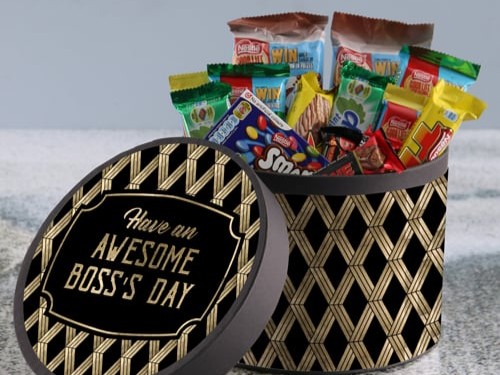
- NetFlorist’s largest single corporate order to date comprised 4,500 branded snack tins for employees at an automotive-sector company.
Ryan Bacher, co-founder and managing director of NetFlorist says the increase reflects how much corporate gifting is concentrated into the final weeks of the corporate calendar.
“From mid-October, corporate gifting shifts very quickly from occasional orders to planned year-end programmes.
Businesses are often buying for very different groups at the same time, from hundreds or even thousands of employees to smaller groups of valued clients.”
Businesses spend differently on clients and employees
The difference in average spend reflects the different scale and purpose of client and employee gifting.
Client gifting generally involves smaller volumes and higher-value choices, including premium hampers, gourmet treats and personalised combinations.
Employee gifting, meanwhile, tends to happen at much greater scale, with popular choices including chocolates, mugs, water bottles, lunch bags and smaller gourmet or bath and body hampers.
“The difference in spend shouldn’t be read as a difference in importance,” said Bacher.
“Employee programmes are generally much larger, so businesses are balancing the cost per gift against the need to recognise a much bigger group of people.”
NetFlorist’s largest corporate order to date illustrates that scale, comprising 4 500 branded snack tins for employees at a company in the automotive sector.
Larger employee programmes also require more planning. NetFlorist’s data shows these orders are typically placed four to six weeks in advance, compared with one to two weeks for individual corporate orders, as businesses coordinate recipient lists, personalisation and delivery details.
“A business may place one order for thousands of employees, but each person experiences that gift individually,” said Bacher.
“The challenge is to manage the scale without making the recipient feel like another name on a distribution list.”
What businesses are buying
NetFlorist’s 2026 corporate sales data to date shows flowers remain its largest corporate gifting category, accounting for 41.4% of total spend.
Snacks are the second-largest category at 18.4%, followed by personalised gifts at 16.7%.
Together, these three categories account for 76.5% of NetFlorist’s corporate gifting spend.
| South African corporate gifting spend by category, 2026: NetFlorist Category | % of sales |
| Flowers | 41.4% |
| Snacks | 18.4% |
| Personalised gifts | 16.7% |
| Chocolate & nougat | 7.2% |
| Plants | 4.9% |
| Alcohol | 4.3% |
| Other | 3.8% |
| Baby | 2.8% |
| Stationery | 0.3% |
| Apparel | 0.1% |
Source: NetFlorist internal sales data: 1 January – 1 September 2026
Corporate gifts are getting personal
Beyond what businesses are buying, the data shows that personalisation has become a significant part of corporate gifting.
Around 85% of NetFlorist’s year-end corporate orders include some form of customisation, whether through the recipient’s name and/or company branding.
Bacher says companies are increasingly having to find the balance between making their brand visible and ensuring the gift still feels as though it was chosen for the person receiving it.
“No one wants their year-end gift to feel like an advertisement,” he said.
“The company’s identity can still be present, but the experience should centre on the person receiving it.”
Branding nevertheless remains popular for larger employee programmes, particularly on practical products where it can help create a sense of shared identity across a workforce.
Hybrid and geographically dispersed teams have added another consideration.
Where businesses may once have delivered hundreds of gifts to a single office, employee gifting programmes can now involve individual deliveries to recipients across South Africa.
For Bacher, this makes planning increasingly important as businesses approach the year-end rush.
“Before deciding what to buy or where to put the logo, businesses should think about what they want the recipient to take away from the gesture,” said Bacher.
“Once that is clear, the gift, message and delivery can work together to say it.”
The data shows that year-end gifting remains an important part of how South African businesses recognise both employees and clients.
With most of this activity taking place between mid-October and December, businesses that plan ahead have more time to manage larger orders, personalisation and deliveries, particularly when gifting across multiple locations.