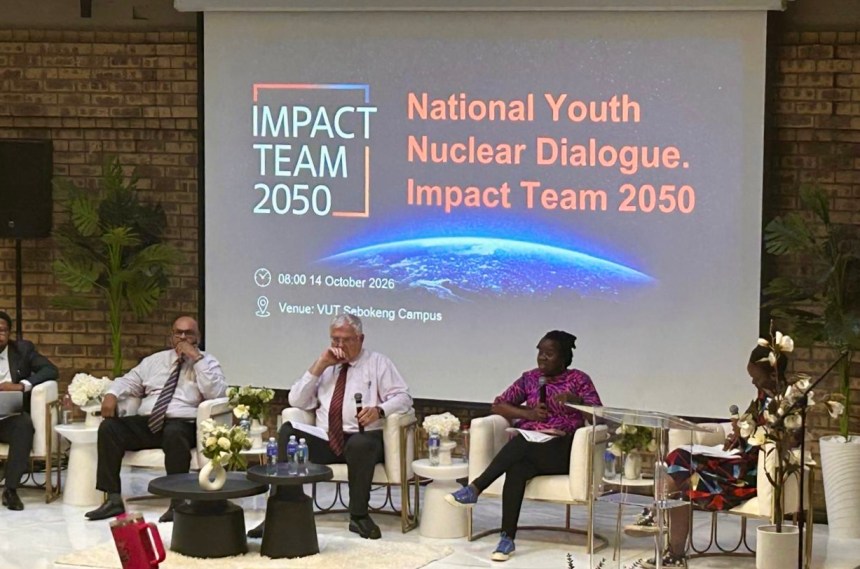
Johannesburg – Vaal University of Technology’s (VUT) Sebokeng Campus hosted the National Youth Nuclear Dialogue, where participants explored the opportunities nuclear technologies offer young South Africans and the pathways to a career in the industry.
The event brought together young people from more than six schools and Sedibeng TVET College, alongside representatives of the nuclear industry, energy companies, educational institutions and the local community.
The young participants presented nuclear-themed projects and asked experts about careers in science and engineering.
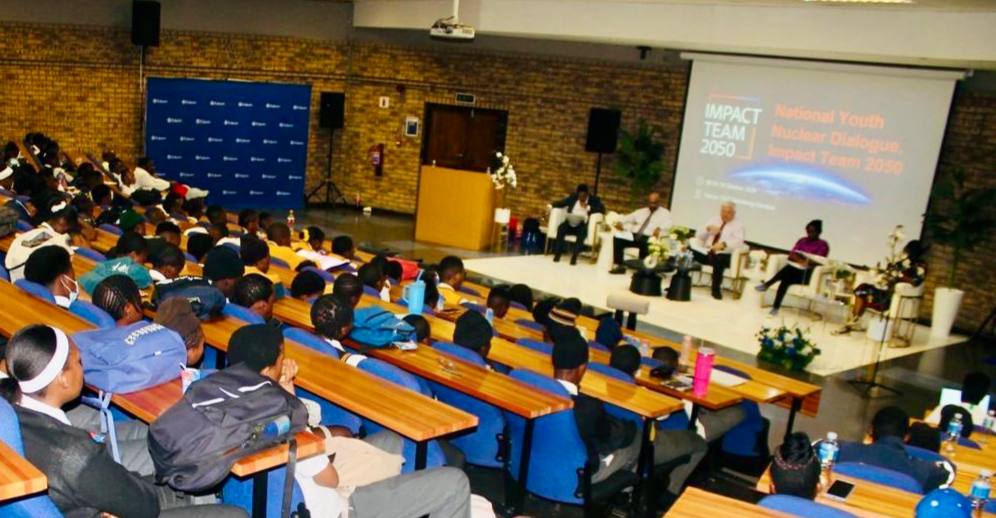
The expert discussions featured Head Coordinator of the BRICS Nuclear Platform Elsie Pule; Chairperson of the NECSA Dave Nicholls; Chief Engineer at Eskom Nellan Govender; Generation Young Professionals Network SteerCo and Chairperson of the JET committee task team Lindelwa Dlamini; Chairperson of the South African Young Nuclear Professionals Society (SAYNPS) Emmanuel Montwedi.
Participants examined barriers affecting nuclear energy development and public perceptions of nuclear technologies, alongside the training of the next generation of professionals.
Particular attention was paid to young people’s access to industry information, educational programmes and professional development.
Following the meeting, local community representatives expressed interest in holding another dialogue to give more people in the region the opportunity to engage with experts.
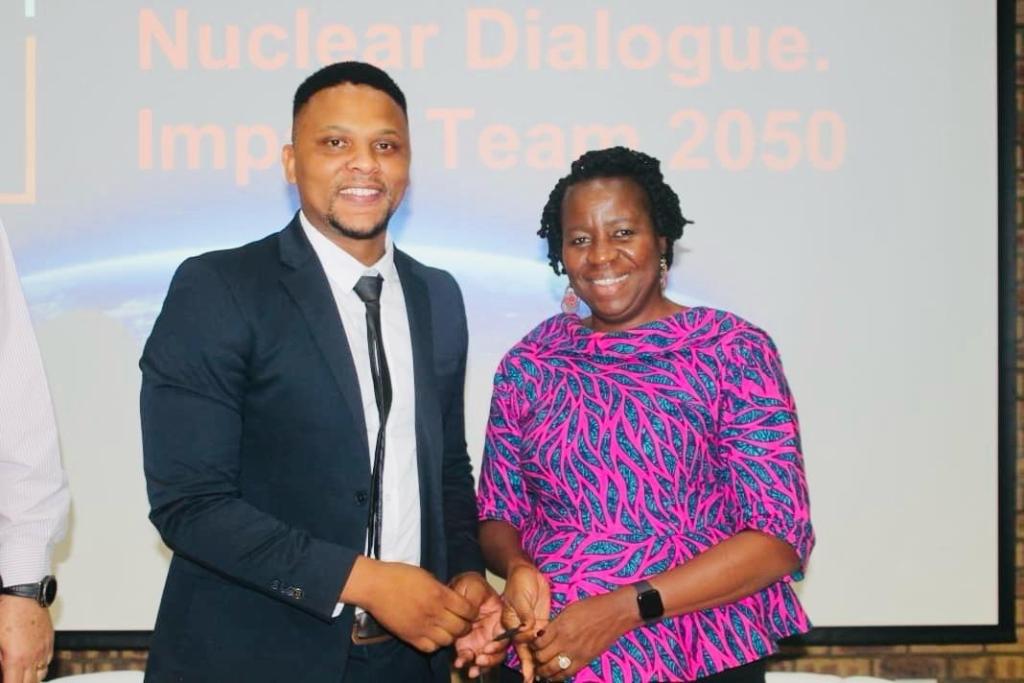
“As a member of Impact Team 2050 and a nuclear industry professional, I want young people in South Africa to see the opportunities this field holds for them,” noted Senior Supervisor Maintenance for Eskom, Koeberg NPP Sonwabile Baklei.
“Exploring an idea through a school project or speaking with an engineer can spark a lasting interest and help a young person imagine their future in the industry.
“This dialogue gave participants a space to share their ideas, explore their ambitions and discover how they can help shape South Africa’s energy future. Our industry starts with people.”
Impact Team 2050, of which Sonwabile Baklei is a member, enables direct dialogue between young leaders from different countries.
The International Youth Advisory Council serves under Rosatom Director General Alexey Likhachev.
Its new cohort was introduced in 2026 at the fourth Obninsk NEW’26 International Youth Nuclear Forum in Russia, which brought together more than 700 participants from 85 countries.
The forum also welcomed the winners of the Atoms Empowering Africa video competition, including a representative from South Africa.
The competition engages young Africans in discussions about the peaceful uses of nuclear technologies, while winners visit nuclear industry facilities and educational institutions in Russia.
In 2026, young South Africans also took part in other international Rosatom projects, including the Global HackAtom student hackathon and the Icebreaker of Knowledge educational expedition.
The former challenges teams to develop solutions to nuclear technology-related problems, while the latter gives school learners the opportunity to see a nuclear-powered icebreaker in operation and learn more about the applications of nuclear technology during a voyage to the Arctic.
These youth initiatives complement Rosatom’s cooperation with South Africa on human capital development.
In March 2026, Rosatom and NECSA signed a memorandum of understanding covering joint educational programmes, support for women and young professionals, short-term internships, engineering skills development, professional competitions and joint research.
An additional 15 scholarships were also announced for South African students and young professionals to study at Rosatom’s partner universities in 2026.
These areas of cooperation are intended to connect young people’s interest in nuclear technologies with specialised education and professional development.
Impact Team 2050 is the International Youth Advisory Council under the Rosatom Director General, established in 2021.
It brings together young leaders from partner countries to develop recommendations for raising awareness of nuclear technologies and making them more appealing to young audiences internationally.
The first cohort was formed in 2022. From 2022 to 2026, it comprised eight representatives from South Africa, Brazil, China, Kazakhstan, Armenia, Thailand, Argentina and India.
National Youth Nuclear Dialogues are taking place in 15 countries from 1 September to 30 October 2026.
They aim to engage young people in advanced technologies, research, and industry activities; encourage interest in energy and engineering disciplines; identify workforce-related, informational, and societal barriers concerning nuclear energy; and develop recommendations to make the industry more attractive to young professionals.
The dialogues are expected to inform a roadmap identifying the main barriers affecting young people’s decisions to pursue nuclear careers and recommending ways to address them.
The document may support workforce training plans for the nuclear industries of countries represented on the Impact Team 2050 council.
The roadmap is scheduled to be presented during a meeting with Rosatom Director General at the UN Climate Change Conference COP31 in Antalya, Türkiye.