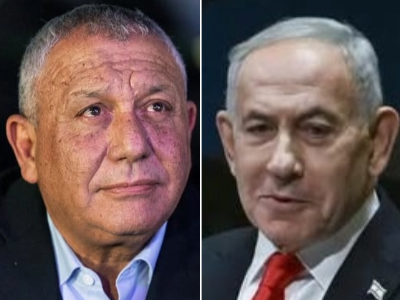
Jerusalem – Nearly three weeks after Israel’s deadlocked 27 October 2026 election, former IDF Chief of Staff Gadi Eisenkot is locked in intense coalition talks that could end Benjamin Netanyahu’s long tenure as prime minister—or plunge the country into another election.
President Isaac Herzog tasked Eisenkot with forming a government on 8 November 2026 after the Yashar party leader secured recommendations from 67 Knesset members, far more than Netanyahu’s 46.
Eisenkot has until 6 December 2026 (with a possible 14-day extension) to assemble a majority of 61 seats in the 120-seat parliament.
(Source: reuters.com)
The election left Netanyahu’s religious-nationalist bloc with 53 seats (Likud the largest single party at 27) and Eisenkot’s four-party centrist-to-right Jewish opposition alliance with 48.
Arab-led parties (Joint List and Ra’am) scored a historic 19 seats. Neither major Jewish bloc has a clear path without difficult partners.
(Source: aljazeera.com)
Eisenkot’s progress and the complexities
Eisenkot has ruled out a full coalition with Arab parties, despite their recommendations, citing principles that include recognising Israel as a Jewish and democratic state, adherence to the Declaration of Independence, mandatory national service for all.
In addition, designating Hamas as a terrorist organisation whose military and governing capabilities must be dismantled.
A minority “national emergency government” relying on Arab outside support has also faced resistance, notably from Avigdor Liberman’s Yisrael Beiteinu.
(Source: ynetnews.com)
Progress has centered on outreach to the ultra-Orthodox (Haredi) parties.
United Torah Judaism (UTJ, 7 seats) sources have reported “significant progress” in intensive talks with Eisenkot and Liberman, though core disputes over military conscription remain.
Haredi parties seek temporary freezes on arrests of draft dodgers, deferred service for yeshiva students, and strong legal guarantees.
Shas has stayed more loyal to Netanyahu.
Adding UTJ (and potentially Shas) could push Eisenkot’s bloc over the line, but concessions on the draft clash with Eisenkot’s and Liberman’s longstanding positions.
Parallel unity talks between Yashar and Likud began but produced no breakthrough, with deep disagreements over leadership (Eisenkot insists on leading without rotation) and exclusion of far-right figures like Itamar Ben-Gvir.
(Source: haaretz.com)
Naftali Bennett has positioned himself as a kingmaker supporting Eisenkot rather than seeking the premiership himself.
The new Knesset has been sworn in, with the anti-Netanyahu bloc moving to assert control, including a planned vote on a new speaker.
If Eisenkot fails, the mandate would likely pass to Netanyahu; further failure risks new elections in early 2027.
(Source: foxnews.com)
Netanyahu’s likely fate without his party in power
If a government forms without Likud and its allies, Netanyahu—Israel’s longest-serving prime minister—would leave office after years of polarising leadership marked by the 7 October 2023 attacks, prolonged wars, judicial overhaul fights, and corruption trials.
He remains a caretaker premier with significant residual power over security decisions.
Allies portray any alternative as unstable or dependent on “extremists,” while critics see the election as a referendum rejecting his continued rule.
A pure Eisenkot-led government would mark a major shift away from the religious-nationalist coalition that has defined recent years.
A unity deal keeping Netanyahu in some capacity remains possible but unlikely given mutual distrust.
(Source: cnn.com)
Impact on Gaza, Iran, Yemen, and Trump relations
The political haggling is occurring against a backdrop of unresolved multi-front conflicts, with a caretaker government limiting decisive long-term policy.
In Gaza, a U.S.-brokered ceasefire framework (involving Trump’s Board of Peace) has largely stalled.
Reconstruction has barely begun amid rubble, winter flooding of tent camps, and disputes over sequencing Hamas disarmament versus Israeli withdrawals and governance transitions.
Targeted IDF strikes continue, humanitarian conditions remain dire, and political deadlock in Jerusalem has delayed Israeli buy-in for next phases, including international forces.
(Source: bostonherald.com)
On Iran, tensions are acute.
Netanyahu has invoked the nuclear threat and pressed for renewed action, while Eisenkot has publicly warned against major operations during the transition, demanded security briefings, and urged restraint absent an immediate threat.
Security Cabinet discussions and readiness measures have fueled concerns that Netanyahu could act to reshape the political landscape.
Previous joint U.S.-Israeli actions and ongoing diplomacy leave the situation volatile.
(Source: jpost.com)
Yemen remains a theater of Houthi (Iran-aligned) advances. Saudi-backed government forces recently retreated from key Red Sea coastal positions near the Bab el-Mandeb Strait toward Aden, allowing Houthi gains.
Missile and drone attacks on Saudi targets continue, and the group has a history of targeting Israel-linked shipping.
Israeli political uncertainty limits coordinated regional responses.
(Source: reuters.com)
Relations with the Trump administration are in flux.
Trump endorsed Netanyahu late in the Israeli campaign and has coordinated closely on Iran and Gaza plans.
However, on U.S. midterm election day, he announced that annual military aid (roughly $3.8–4 billion) would end by the close of 2026 under a deal with Netanyahu.
Trump framed the move as Israel no longer needing the support and removing a political talking point—while promising continued arms sales and help if required.
The move surprised some Israeli officials given the existing memorandum running to 2028 and has raised questions about the alliance’s future shape amid American domestic politics.
A new Israeli government would still inherit deep strategic ties, but the transition adds uncertainty to joint efforts.
(Source: reuters.com)
Eisenkot has described Israel as facing a “devastating diplomatic crisis” requiring “creative and unconventional” steps for a national emergency government.
With roughly three weeks left on the initial clock, the haggling continues to constrain Israel’s ability to project clear strategy across multiple fronts.
Whether Eisenkot succeeds, a unity arrangement emerges, or the country heads back to the polls, the outcome will shape not only Netanyahu’s political future but Israel’s approach to its most pressing security challenges.
Disclaimer: This article was compiled using the AI tool Grok on X and may contain inaccuracies