Antalya – South African specialists took part in key sessions of World Atomic Days 2026, Rosatom’s international business forum.
The forum was held on 12–13 November in Antalya, Turkey, alongside the COP31 climate conference.
South Africa is represented on the Impact Team 2050 Council, Rosatom’s global youth partnership, by Senior Supervisor at Koeberg Nuclear Power Station, Sonwabile Baklei.
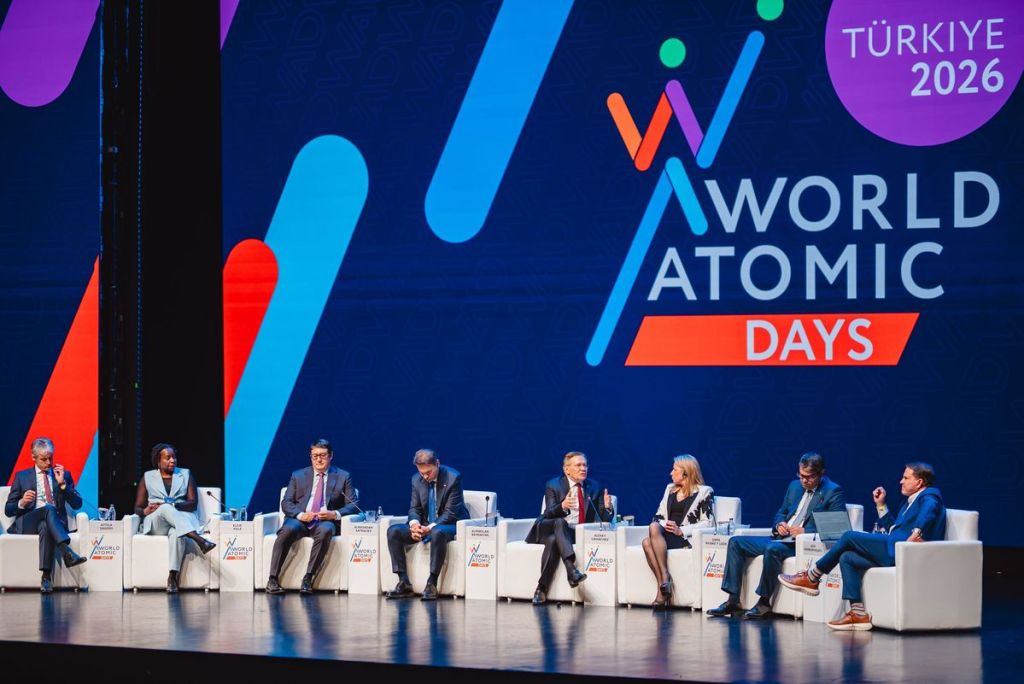
On 12 November, the Council presented the results of 17 national youth nuclear dialogues to Rosatom Director General Alexey Likhachev.
Members proposed forming national Impact Team 2050 teams and regional youth nuclear platforms.
Alexey Likhachev supported the idea and named Africa among the regions where this work should start.
“I am confident that such work should also begin in other regions of the world that you represent: Latin America, Africa, Europe and the Asia-Pacific region,” he highlighted.
Sonwabile Baklei brought results from South Africa’s own dialogue.
It was held at Vaal University of Technology’s Sebokeng Campus and brought together more than 300 participants, including pupils from more than six schools and students of Sedibeng TVET College.
“This dialogue gave participants a space to share their ideas, explore their ambitions and discover how they can help shape South Africa’s energy future. Our industry starts with people,” stressed Sonwabile Baklei.
On 13 November, Sonwabile Baklei presented research on BRICS cooperation on resilient supply chains for large-scale nuclear power plants.
He spoke at the Annual Conference of the BRICS Nuclear Energy Platform, which counts Necsa and Eskom Holdings among its ten members.
The topic is directly relevant to South Africa. Its Integrated Resource Plan 2025 provides a roadmap for 5,200 MW of new nuclear capacity by 2039.
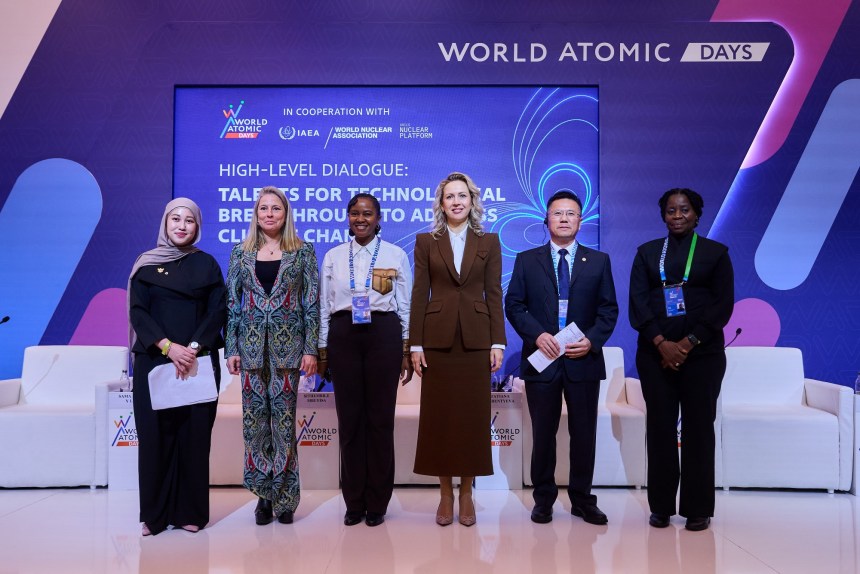
New capacity will need new specialists. Deputy Director General for Human Capital at Necsa, Sithembile Mbuyisa, joined the forum’s dialogue “Workforce for a Technological Breakthrough in Response to Climate Change”.
Participants discussed the growing demand for specialists who can work with modern technologies, digital tools and complex engineering systems.
“Developing and nurturing the right skills, expertise and talent is essential to unlocking technological innovation and accelerating solutions to climate change,” said Sithembile Mbuyisa.
“Building a future-ready workforce requires investment in education, skills development, collaboration and partnerships to ensure that nuclear science and technology can contribute meaningfully to a sustainable, low-carbon future.”
Part of South Africa’s future nuclear workforce is already studying in Russia. Rosatom has allocated 145 study places at Russian universities to South African citizens since 2014.
As of July 2026, 31 South African students were studying nuclear and related disciplines in Russia.
Ten of them study under cooperation with Eskom.
Another 15 places have been allocated for 2026/2027. At home, the University of Zululand runs a joint bachelor’s programme in Nuclear Science and Technology with Rosatom’s partner university MEPhI.
In September 2026, a University of Zululand team took second place in the Global HackAtom final.
South African women are also visible in Rosatom’s talent initiatives.
In the first season of the Green Future International Contest of Women’s Environmental Projects, Joni Pierce-van Zyl won first place in the Green Workforce category.
Her Wild Hearts environmental education programme has reached more than 4,500 schoolchildren since 2023.
Rosatom and the Council of the Eurasian Women’s Forum launched the contest’s second season at the forum.
South Africa is among the 20 eligible countries, and applications are open until 31 March 2027.