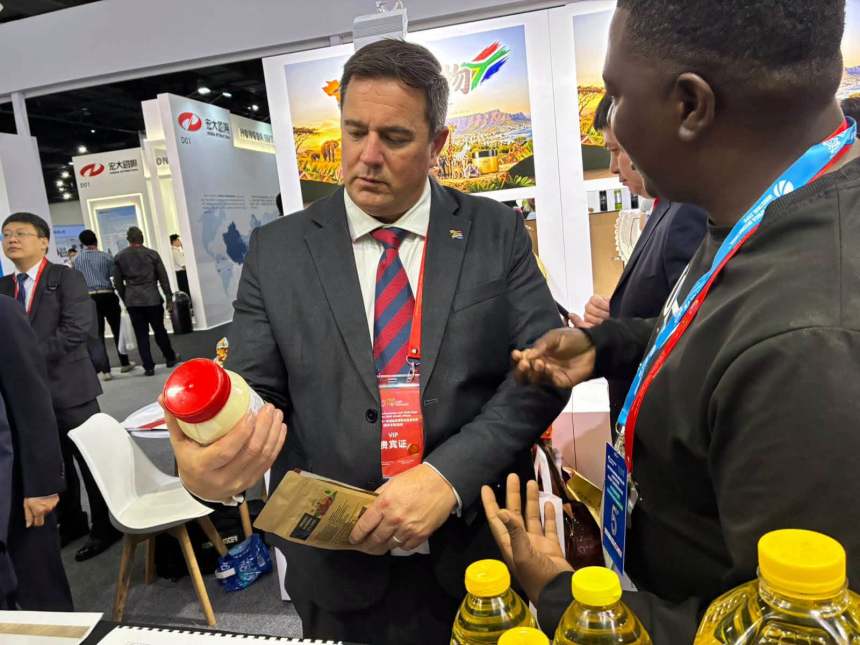
Johannesburg – Deputy Minister of Trade, Industry and Competition John Steenhuisen has urged South African companies to take full advantage of the export opportunities available through China’s zero-tariff trade.
China introduced the zero-tariff scheme on 1 May this year, which is expected to last until April 2028.
It enables African qualifying goods exported to China to benefit from zero customs duties, subject to compliance with the applicable tariff schedule and rules of origin.
Speaking at the opening ceremony of the China-Africa Economic and Trade Expo (CAETE) 2026 hosted at the Sandton Convention Centre, Deputy Minister Steenhuisen urged South African companies to turn the Zero-tariff opportunity into success for their businesses and the South African economy.
“We must do the hard work and turn access into actual sales – and not waste a second while doing so.
“We recognise that the current zero-tariff arrangement is temporary.
“We must use it to secure commercial relationships and predictable market access.”
The China-Africa Economic Partnership Agreement for Shared Development, signed in February 2026, provides a framework for cooperation in trade, investment and industrial development.
The deputy minister referred to a Chinese saying about “working together with one heart and one effort”.
“That is the spirit we need to succeed in the context of this partnership: friendship and trust expressed through practical cooperation and shared prosperity,” he said
“We are also advancing discussions on a SACU-China Early Harvest Arrangement, which is intended to provide a more predictable and sustainable framework for reciprocal trade preferences and longer-term market access.”
Deputy Minister Steenhuisen also called on Chinese investors to establish and expand operations in South Africa, work with local manufacturers and develop skills and technologies that serve both domestic and regional markets.
Turning his attention to the CAETE, the deputy minister urged South African businesses to meet buyers, understand their requirements and pursue commercial partnerships.
“The real test of a successful partnership is not how many meetings we hold or agreements we sign,” he said.
“It is whether a business can open its doors, a factory can expand, and a young South African can find meaningful work.”