Antalya – The longest United Nations climate summit in history ended in an impasse on Sunday, 22 November 2026.
Exhausted delegates from nearly 200 countries rejected a final compromise text and walked away without an overarching political agreement on tackling global warming.
COP31, held in Antalya, Turkey, under the joint presidency of Turkey and Australia, was scheduled to conclude on Friday, 20 November 2026.
Negotiations spilled into the weekend and stretched more than 40 hours past the deadline, surpassing the previous record set in Madrid in 2019.
By Sunday afternoon, Turkish Environment Minister and COP31 President Murat Kurum told the closing plenary there was nothing left to do.
“We did all that we could,” he said, declining to table any new text.
He later left the stage while some representatives were still speaking.
Australian Climate Minister Chris Bowen, who led negotiations, called the outcome “very disappointing.” (Source: Reuters)
It was the first time since the chaotic Copenhagen summit of 2009 that the annual conference of the parties failed to adopt a consensus cover decision — the high-level political statement meant to set the direction for global climate action.
The Breaking Point: Fossil Fuels and Finance
The core dispute centered on how, or whether, to name the primary driver of climate change.
More than 100 countries, including the European Union, the United Kingdom, Pacific island nations, and several Latin American and least-developed states, insisted the final text must explicitly reaffirm or build on the COP28 commitment to “transition away from fossil fuels in energy systems.”
They argued that omitting the phrase would amount to greenwashing and a retreat from science at a moment when the world is already on track to overshoot the Paris Agreement’s 1.5°C limit. (Source: BBC)
Oil-producing nations, led by Saudi Arabia and supported by other petrostates, rejected any direct reference.
They preferred language focused on emissions reduction technologies such as carbon capture, utilization and storage (CCUS), which they view as compatible with continued fossil fuel production.
Drafts that initially included stronger transition language saw those references stripped out. The final proposed “Antalya Pact” contained no mention of fossil fuels at all, only an indirect nod to the earlier Dubai agreement.CNN
Irish Climate Minister Darragh O’Brien, speaking for the EU, captured the rejection: it was “unconscionable” to endorse a climate decision that did not even mention fossil fuels, the key driver of warming.
Panama’s environment minister accused a “petroleum mafia” of holding the talks hostage. Small island states and vulnerable nations warned that the text failed to meet the moment of accelerating impacts. (Source: Washington Post)
A parallel disagreement concerned climate finance.
Developing countries sought clear, scaled-up commitments — including targets for tripling adaptation finance — to help them cope with rising seas, extreme heat, droughts and storms.
Wealthier nations resisted binding new dollar figures or timelines in the cover decision, preferring to defer details.
The absence of concrete financial pathways left many poorer nations unwilling to accept a weak overall package.
These divisions reflect deeper structural differences.
Fossil-fuel exporters see rapid phase-out language as an existential economic threat and emphasize technology solutions that preserve their industries. ‘
Highly vulnerable nations and progressive developed economies view explicit transition commitments as non-negotiable if the Paris goals are to retain credibility.
Major emerging economies often prioritise development needs and resist what they see as uneven burdens.
The United States, under President Donald Trump, did not participate in the same way as previous administrations after withdrawing from the Paris framework, removing a traditional balancing force.
A Process Under Strain
UN Secretary-General António Guterres expressed deep disappointment, sharing the frustration of those who expected governments to rise to the crisis. He pointed to powerful fossil fuel interests delaying action.
Yet some participants, including China’s delegation, cautioned against declaring the entire multilateral process a failure, arguing it still provides the only global forum for coordination. (Source: Reuters)
Not everything collapsed.
Side agreements and voluntary pledges advanced: more than 90 countries signed an electrification commitment, technical work continued on various tracks, and the action agenda highlighted clean energy progress.
These were not enough to paper over the absence of a political cover decision.
What Happens Now?
The immediate result is a vacuum. Without a new high-level political signal, momentum on the fossil-fuel transition, adaptation finance and responses to temperature overshoot rests on existing national plans, voluntary coalitions and markets.
The Paris Agreement and earlier COP decisions remain in force; countries are still expected to submit and implement stronger nationally determined contributions.
Technical work and the mitigation work programme may resume or be revisited at the next conference.
COP32 is scheduled for 2027.
In the interim, pressure will shift to bilateral deals, regional initiatives, private finance and domestic policy.
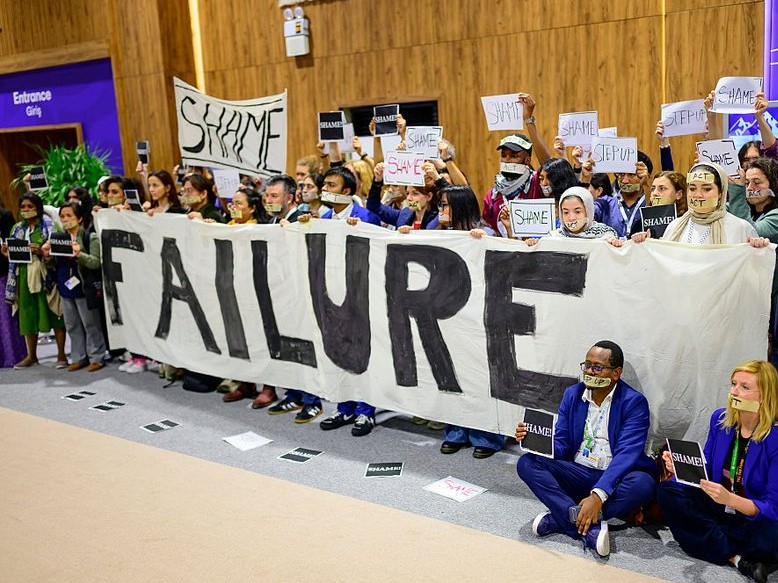
Civil society groups and climate-vulnerable nations are already framing the Antalya failure as a wake-up call that the consensus model struggles when core economic interests collide with scientific urgency.
Trust among blocs has been damaged; rebuilding it will require more than procedural fixes.
Scientists and observers note that the physical climate system does not pause for diplomatic deadlock.
Record heat, intensifying extremes and the approaching overshoot of 1.5°C continue regardless of whether diplomats can agree on wording.
The longest COP has ended with the clearest recent demonstration that the gap between what science demands and what politics can deliver remains wide.
How governments, businesses and citizens respond outside the negotiating rooms will now matter more than ever.
Disclaimer: This article was compiled using the AI tool Grok on X and may contain inaccuracies