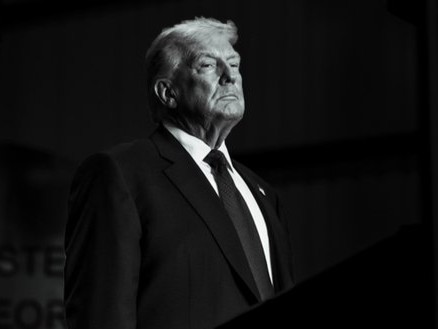
Washington, D.C. – In a clear rebuke to President Donald Trump, Virginia voters have approved a Democratic-backed redistricting measure that could flip multiple congressional seats to Democrats ahead of the 2026 midterms.
The “yes” vote, which passed despite President Trump’s personal appeals to reject it as a “partisan power grab,” has been widely interpreted as an early indicator of the president’s eroding support.
With President Trump’s approval ratings now hovering in the mid-to-upper 30s and net disapproval exceeding 20 points in major aggregates, the referendum underscores deepening public discontent six months before crucial midterm elections.
(Source: natesilver.net)
Polls paint a stark picture.
A recent FiftyPlusOne average showed President Trump at roughly 37% approve, and 60% disapprove.
Other surveys, including Reuters/Ipsos and Washington Post-ABC-Ipsos, have recorded net negatives of -20 to -25.
His handling of the economy and foreign policy fares even worse.
This marks a significant decline from the early months of his second term, with independents and even some Republicans expressing frustration.
(Source: fiftyplusone.news)
Central to President Trump’s woes is his administration’s military involvement in Iran, widely described as a “war of choice”.
Following U.S. and Israeli strikes beginning in late February targeting Iranian nuclear and missile sites, the conflict has escalated with disruptions to the Strait of Hormuz, a critical chokepoint for global oil shipments.
President Trump initially framed the action as necessary to prevent nuclear proliferation, but public support has eroded as casualties mounted and the conflict dragged on without a clear resolution.
Approval for his Iran policy has dipped to around 33-35% in recent polling, with 60% of Americans disapproving.
(Source: npr.org)
The human and economic costs have been immediate.
The war has contributed to a sharp rise in global oil prices, with U.S. fuel averages climbing above $4.50 per gallon—up more than $1.50 from pre-conflict levels in some reports.
Two-thirds of Americans blame President Trump for the spike, according to PBS News/NPR/Marist polling, with many citing strained household budgets.
Diesel and related costs have also surged, rippling through food, transportation, and consumer goods.
President Trump has touted increased U.S. oil production and potential exports, but critics argue the administration’s policies have tightened domestic supply.
(Source: pbs.org)
Compounding these pressures was President Trump’s recent three-day trip to China, where he met with President Xi Jinping.
While the White House highlighted discussions on trade and energy purchases, and an effort to urge China to pressure Iran over the Strait of Hormuz, the summit yielded mixed results.
President Trump boasted of Chinese interest in buying more U.S. oil from states like Texas and Alaska, but analysts warn this could further drive up domestic fuel prices by diverting supply abroad amid the ongoing closure of the Strait of Hormuz.
President Xi delivered a firm warning on Taiwan, and broader fears of resumed Iran hostilities persisted post-summit.
The trip, intended to project strength, instead highlighted economic vulnerabilities as gas prices continued their climb.
(Source: climatepower.us)
President Trump’s approval on economic matters has tanked accordingly.
Beyond gas prices, persistent inflation concerns—fueled by tariffs and supply chain issues—have left many voters feeling the pinch.
Polls show strong majorities believe the economy is not working for average families, eroding the traditional Republican advantage on pocketbook issues.
(Source: usatoday.com)
Adding fuel to the fire are ongoing questions about President Trump’s personal conduct and potential conflicts of interest.
Critics, including Democratic oversight members, have highlighted the President Trump family’s extensive business dealings during the presidency.
Reports estimate billions in realised and potential profits from foreign payments, cryptocurrency ventures, real estate expansions, and other enterprises.
Democratic reports have tallied significant gains, raising emoluments concerns and accusations of using the office for personal enrichment.
Should Democrats gain control of the House in November—as prediction markets and generic ballot polling currently suggest is likely—these issues could form the basis for impeachment proceedings.
With slim current Republican majorities vulnerable, analysts see a path for Democrats to pursue articles of impeachment focused on corruption, foreign influence, and abuse of power.
(Source: oversightdemocrats.house.gov)
Age and fitness have also emerged as potent liabilities.
At 79 (turning 80 next month), President Trump is the oldest person to assume the presidency.
Polls show growing majorities of Americans, including independents, question his mental sharpness and physical stamina.
Concerns about cognitive decline—echoing his father’s history with dementia—have intensified, with reports of erratic behavior, gaffes, and public speculation from former associates.
A Reuters/Ipsos poll found many perceiving increased erraticism with age, while lawmakers like Rep. Jamie Raskin have called for formal assessments.
These perceptions compound policy frustrations, painting a picture of a leader struggling to manage complex crises.
(Source: nytimes.com)
Virginia’s vote, while symbolic and later complicated by legal challenges, including a Supreme Court ruling on the map, resonates nationally.
It reflects backlash against perceived overreach, from redistricting battles to foreign entanglements.
Democrats are motivated, while Republican incumbents in competitive districts face headwinds.
Midterm forecasts increasingly favor Democratic gains, potentially handing them the House.
(Source: ballotpedia.org)
President Trump remains defiant, maintaining strong support within his base and touting achievements in energy production and tough diplomacy.
Yet the data is clear: across key metrics—overall approval, economy, foreign policy, and personal fitness—he is underwater.
Gas prices at the pump, images from the Iran conflict, and questions about propriety and capacity have shifted the political landscape.
As midterms approach, the president’s falling popularity threatens not just his agenda but Republican control of Congress.
Whether the administration can stabilise the economy and de-escalate abroad will determine if this downturn becomes a defining feature of his second term.
Meanwhile, the U.S. government is in the process of refunding approximately $166 billion (plus interest) in tariffs that the Supreme Court ruled illegal in February 2026.
(source: finance.yahoo.com)
This represents one of the largest repayment programs in U.S. history and has turned a major revenue source into a significant federal liability.
Some refunds have already hit company bank accounts.
(Source: bloomberg.com)
To compound the political gloom, the Epstein paedophile matter continues to cast a long shadow over President Trump, much like the albatross in Coleridge’s poem—a burdensome reminder of past associations that critics refuse to let sink.
Disclaimer: This article was compiled using an AI tool, Grok on X, and may contain inaccuracies