Johannesburg – Deputy Minister of Water and Sanitation Dr. Jack Bloom visited Lenasia, where residents complain of unreliable potable water supplies, and concluded that “Lenasia South has more water in the streets than in the taps”.
The deputy minister said thousands of residents in Lenasia South have lived for years with daily water cutoffs, yet water flows freely in the streets due to multiple recurring leaks.
“I saw this yesterday when I visited Lenasia South Ext 1 and spoke to residents about their daily efforts to ensure they have enough water for basic needs,” Deputy Minister Bloom said on Tuesday 11 August 2026.
“Water is cut off from 8 pm until 3 am, and again in the afternoon, so the taps are dry for more than half the day, with the added uncertainty of cut-off schedules that change all the time.
“I was shocked to hear that schools are sometimes forced to close because of water shortages.”
Residents complained that they often replace taps or repair their internal pipes because of erratic high pressures when water comes in sudden bursts.
Another outrage was that residents were faced with inexplicably high water bills ranging from R3 000 to R4 000 a month.
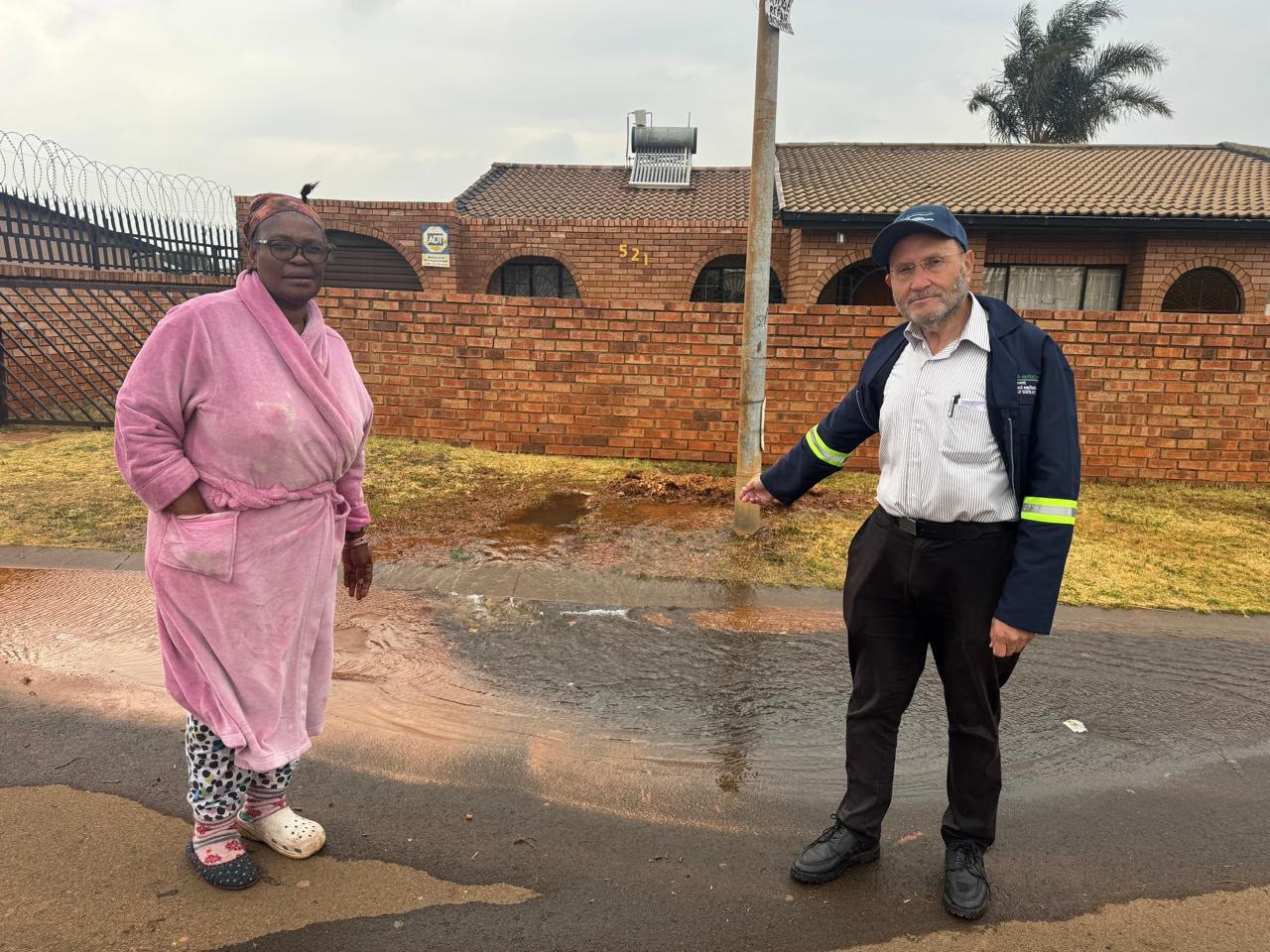
“Despite the empty taps, there are major recurring street leaks,” said Dr. Bloom.
“I saw three gushing flows in a short tour of the area. In one street, there have been an astounding 18 pipe breaks, with pavements broken up and shoddily covered over.
“Residents are aggrieved that R45 million was spent on a 15 ML reservoir that was officially launched on 30 June 2022 but has failed to improve the dire water situation for unexplained reasons.
“They call it a ‘white elephant’ reservoir.”
The deputy minister said a further R24 million was supposedly spent on fixing pipes, also with little to show for it. Is it corruption or inefficiency to blame for high spending but little result?
“I will ask my department to investigate the water situation in Lenasia South and hold the Johannesburg Metro Council to account for the leaks and the failure to provide a reliable water supply for the area’s growing population,” said Dr. Bloom.
“It is scandalous that one in three litres of water in Johannesburg is wasted through leaks, with ratepayers picking up the bill.
“How can it be that in some areas there is more water flowing down the streets than in the taps?”