Heineken’s proposed takeover of Namibian Breweries Investment Holdings Limited (NIH) received a boost after the SA Competition Commission recommended that the Competition Tribunal approve the deal – with conditions.
In a statement on Friday the Competition Commission said it has recommended that the Competition Tribunal approve with conditions the proposed transaction.
The Heineken Group through Sunside Acquisitions Proprietary Limited (Newco) intends to acquire a controlling interest in Namibian Breweries Investment Holdings Limited (NIH) and the flavoured alcoholic beverages (FABs), wine, and spirits operations of Distell Group Holdings Limited (In-Scope Assets).
The Acquiring Firm is Newco, a special purpose vehicle controlled by the Heineken Group.
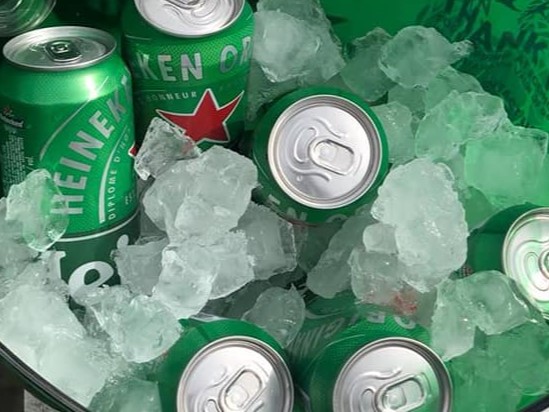
In South Africa, the Heineken Group operates the Sedibeng brewery, producing a range of beers including, amongst others, Heineken, Amstel, and Windhoek.
Prior to the merger, Heineken entered into various agreements with Namibian Breweries Limited (NBL) to manufacture, market, and distribute NBLs products, such as Windhoek, in South Africa.
Heineken also owns and operates a network of 13 distribution depots and undertakes its own primary and secondary distribution to supply its products across South Africa.
Heineken launched Strongbow (a cider brand) in South Africa in 2016, and manufactures and supplies several South African craft beer brands including Jack Black and Stellenbrau. Further, Heineken also owns Fox, a cider brand introduced in 2020.
Aside from Distell, Heineken is the only significant manufacturer of ciders in South Africa.
The primary target firms are NIH, and the In-Scope Assets of Distell. NIH is controlled by Ohlthaver & List Beverage Company (Pty) (O&L) and Heineken.
The Target Businesses or In-Scope Assets comprise of the FABs, and spirits and wine business of Distell. In the FABs segment, the transaction includes the two largest cider brands in South Africa, Hunters and Savanna.
The Distell brands that will be excluded from the transaction include Black Bottle, Bunnahabhain, Burn McKenzie, Deanston, Gordons Gin, Scottish Leader, and Tobermory Gin (Out-Of-Scope Assets).
The Out-Of-Scope Assets business involves the distillation, maturation, blending, bottling, distribution, and marketing operations of the above brands.
Post-merger, the Out-Of-Scope Assets will be owned by Capevin Holdings Proprietary Limited (Capevin), currently a wholly owned subsidiary of Distell but which will, after the transaction, be held by Distells current shareholders and Heineken (in respect of those Distell shareholders that elect to sell their Capevin shares to Heineken.
The economic and voting rights in Capevin will be the same as the economic and voting rights in Distell prior to the implementation of the proposed transaction.
The Commission found that the merger results in a horizontal overlap in the broad market for FABs and in the narrow market for ciders.
The evidence collected by the Commission shows that there is stronger competition between cider brands than between ciders and other FABs.
This distinction is material because, although Distell owns several FABs, it also owns the two largest cider brands in the country (Savanna and Hunters) while Heineken owns the Strongbow and Fox brands in South Africa.
There are other manufacturers within the FABs market, but the merging parties are the largest manufacturers of cider in South Africa.
Taken as a whole, the Commission found that the proposed transaction is likely to substantially prevent or lessen competition in the relevant markets as the merged entity will be a dominant supplier of FABs with a market share above 65% and would be the largest supplier of cider in South Africa.
To address the competition concerns arising from the transaction, Heineken has committed to divest its Strongbow business in South Africa and other SACU countries (Strongbow Divestiture).
The Strongbow Divestiture will be implemented in a manner that promotes transformation in the industry.
The Commission and the merging parties have also agreed to a number of public interest commitments in South Africa. In this regard, the merged entity committed to:
- Invest more than R10 billion over a period of five years to maintain and grow the aggregate productive capacity of its operations and related facilities in South Africa,
- Implement an Employee Share Ownership Scheme that will transfer more than R3bn of equity to workers of the merged entity’s South African operations,
- Establish a R400mn Supplier Development Fund to invest in SMEs and HDP-controlled suppliers;
- Contribute R200mn to promote localisation and growth initiatives within South Africa,
- Invest R175mn in a tavern transformation programme to create safe, responsible and sustainable businesses with a positive impact for consumers and society, and
- Establishing an Innovation, Research and Development Hub for the Africa region based in South Africa within five years.
- To address employment concerns in South Africa, the merging parties have agreed to maintain aggregate employee headcount for a period of five years following the merger and not to retrench any employees below specified managerial grades which includes the bargaining units.
The merged entity has also committed, in the event of any retrenchments, to considering retrenched employees for suitable vacancies in Newco for a period of three years following the merger.