Johannesburg – Ailing people go into hospitals to get cured – but at Gauteng hospitals, instead of getting better, more than 7 000 patients caught other ailments while admitted.
Jack Bloom the Democratic Alliance (DA) Gauteng Shadow MEC for Health made the shocking revelation on Monday, saying: “A total of 7457 patients picked up an infection in Gauteng public hospitals last year, mostly due to poor infection control measures”.
Bloom added: “These figures were revealed by Gauteng Health and Wellness MEC Nomantu Nkomo-Ralehoko in a written reply to my questions in the Gauteng Legislature”.
The technical name for hospital-acquired infections is nosocomial, which refers to infections caught in hospitals, often caused by organisms resistant to antibiotics.
“According to the MEC, there are weekly and monthly Healthcare Associated Infection (HAI) surveillance records, but no data was collected for 2020 and 2021 because of Covid,” Bloom said.
He said in 2022, 7 457 (6.4%) of 116 366 patients got nosocomial infections, of which 5 032 were in the seven central and tertiary hospitals.
The breakdown of nosocomial infections was as follows:
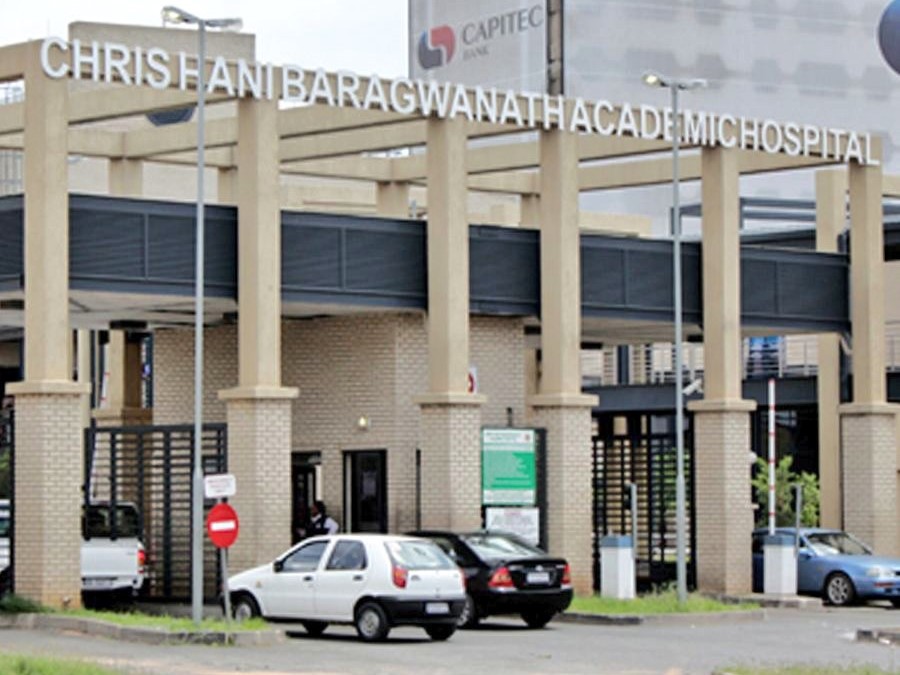
Chis Hani Baragwanath Hospital – 1 542 infections
Steve Biko Hospital -1 365 infections
Charlotte Maxeke Johannesburg Hospital – 1 157 infections
Helen Joseph Hospital – 613 infections
Kalafong Hospital – 337 infections
George Mukhari Hospital – 312 infections
Tembisa Hospital – 238 infections
“The nine regional hospitals accounted for 1617 (22%) of all hospital-acquired infections, ranging from 138 infections at Pholosong Hospital to 626 infections at Leratong Hospital, which is more than double the next highest figure of 255 infections at the Rahima Moosa Hospital,” Bloom said.
“Amongst the 12 smaller district hospitals, the Kopanong and Odi hospitals had the highest number of nosocomial infections – 194 and 176 respectively.”
The DA shadow health MEC said the most prevalent nosocomial infection is CRE/CPE, which are Carbapenem-resistant or Carbapenemase-producing bacteria that cause a variety of infections including urinalysis tract infections, wound infections, gastroenteritis, meningitis, septicaemia and pneumonia.
He said there were 1 038 ESBL infections, which are resistant to penicillin, 980 cases of Acinetobacter Baumann MDR/XDR, and 584 cases of Clostridium Difficile, which inflames the colon and can be fatal.
“Also of concern are 468 cases of Klebsiella Pneumonia, which has caused deaths of babies in previous outbreaks,” Bloom said.
“The antibiotic-resistant infections are a particular horror as they are difficult to treat, leading to longer hospital stays and sometimes even death.
“It is distressing that more than one in twenty patients will pick up an infection while in hospital.”
Bloom said there appears to be a sharp rise in nosocomial infections as there were only 975 such infections in 2014 according to a previous official reply to questions, but this may partly be due to improved monitoring.
“Whereas Chris Hani Baragwanath Hospital had 376 nosocomial infections in 2014, these have rocketed to 1542 last year,” the DA shadow health MEC said.
“The latest figures indicate the need for tight infection controls and proper hygiene to cut hospital infections as much as possible.”