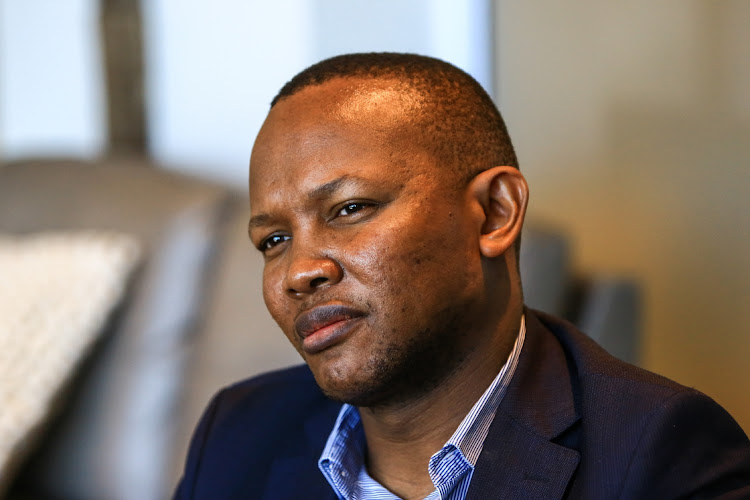
Johannesburg – Vodacom is once again seeking to challenge its obligation to “fairly compensate” Nkosana Makate, the inventor of the lucrative “Please Call Me” service, which the telco has used for over 23 years to generate billions of rand.
Despite the Supreme Court of Appeal ruling in February 2024 that Vodacom should pay Makate 5%-7.5% of the revenue generated by “Please Call Me” over 18 years, Vodacom is heading to the Constitutional Court to appeal the decision.
Vodacom – owned by British mobile giant Vodafone – is challenging the Supreme Court of Appeal ruling, which rejected the R47 million compensation offer made by CEO Shameel Joosub to Makate in 2019.
The Constitutional Court is set to hear the matter on 21 November 2024.
“Despite a protracted legal battle to establish the existence of a contract and his entitlement to a share in the revenue generated by ‘Please Call Me’, Vodacom continues to resist Mr. Makate’s claims,” his legal representatives state in court papers.
Makate’s legal counsel has outlined six reasons why Vodacom’s appeal should be dismissed.
No jurisdictional grounds for appeal:
- Vodacom’s appeal does not meet the requirements for Constitutional Court intervention. It does not raise any constitutional issue or point of law that is of general public importance. This case is about a commercial contract dispute that has already been resolved in two prior courts. Makate is simply owed compensation, and Vodacom is trying to delay this payment by framing the matter as a constitutional issue.
Purely a commercial dispute:
- This case has no broader public or constitutional significance – it’s a private contractual issue. The Supreme Court of Appeal has already confirmed that Makate is entitled to a share of the revenue from the service. The only matter left is to determine how much he should be paid, and that is not a constitutional question. Vodacom’s attempt to frame it otherwise is unjustified.
Misapplication of fair hearing rights:
- Vodacom claims that its right to a fair hearing under Section 34 of the Constitution was violated. However, this argument misses the point: Section 34 guarantees a fair process, not a perfect or correct outcome. Just because Vodacom disagrees with the outcome doesn’t mean its rights were violated.
Flawed arguments on substitution and costs:
- Vodacom’s claim that the Supreme Court of Appeal overstepped its authority by reconsidering issues like substitution and costs is based on a misreading of the judgment. The Supreme Court of Appeal was within its rights to address these issues because Vodacom’s appeal was partially successful. Moreover, Vodacom’s complaint that the Supreme Court of Appeal’s order is vague is unfounded, and the minor typographical errors in the ruling have no constitutional significance.
Introduction of new evidence:
- Vodacom is attempting to introduce new evidence at this late stage, claiming that it will suffer serious financial consequences if forced to pay the R9.4 billion Makate is asking for. However, Vodacom never raised this issue in the earlier stages of the case. The company also hasn’t applied to introduce this evidence formally, which makes its argument invalid. Additionally, Makate’s demand, while substantial, is nowhere near Vodacom’s claimed R40 billion impact.
Expansion of appeal grounds:
- Vodacom is now raising new points that were not part of its original application for leave to appeal. This expansion is not permitted in the highest court. The Constitutional Court has made it clear that it will not entertain cases that are essentially disagreements over facts or the application of established legal tests, which is exactly what Vodacom’s appeal amounts to.
No grounds for appeal:
Makate’s legal counsel says in court papers that Vodacom’s application for leave to appeal does not raise any significant constitutional issues or arguable legal points.
Moreover, Makate’s legal counsel states it is not in the interests of justice for Vodacom to continue avoiding its obligation to compensate the “Please Call Me” service inventor, which has greatly enriched the company.
With Vodacom valued at R200 billion, paying Makate R9.4 billion will not lead to its financial ruin, states Makater’s legal counsel, adding that it was time for the telco to honour its debt and close this long-standing chapter.
The Constitutional Court should dismiss the appeal, with costs, argues Makate’s counsel.
The “Please Call Me” inventor’s fight for fair compensation has dragged on for over two decades, and this appeal is simply Vodacom’s latest attempt to evade payment.
The interests of justice demand that this battle comes to an end.
“It is common cause that Vodacom has earned billions of rand from Makate’s invention,” states Makate’s counsel.
“Makate does not suggest that his claim does not involve a large sum of money.
“Whatever adverse description Vodacom ascribes to Makate’s share of revenue – it must be kept in mind that his share is just 5% – and all parties accept that 5% is a fair share.
“Vodacom has already made and kept 95% of the money generated.
“Mr. Makate’s entitlement flows from a proven contract.
“As we show below, common cause facts show that 38% of calls are responded to within the first 24 hours of a ‘Please Call Me’ being sent.”