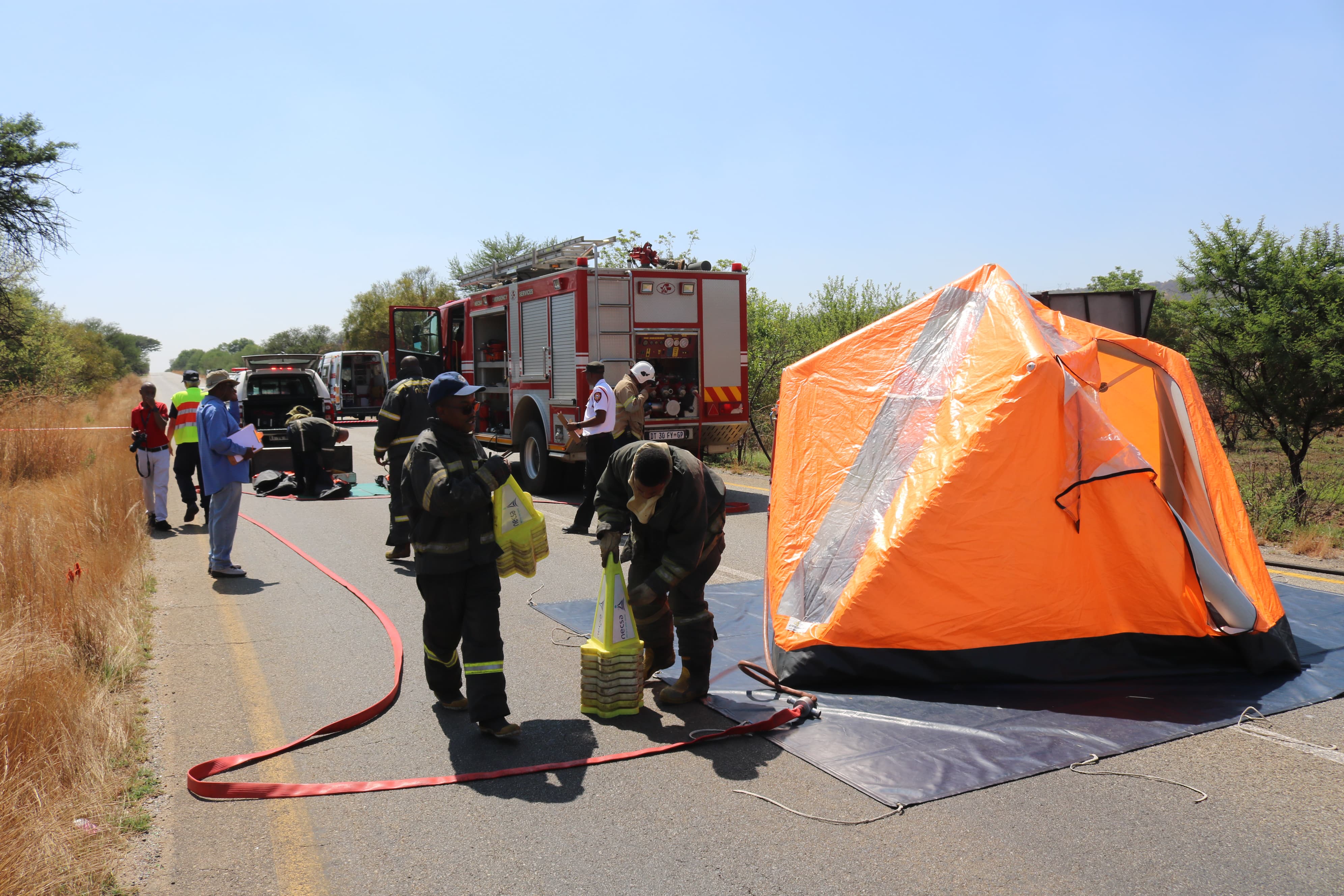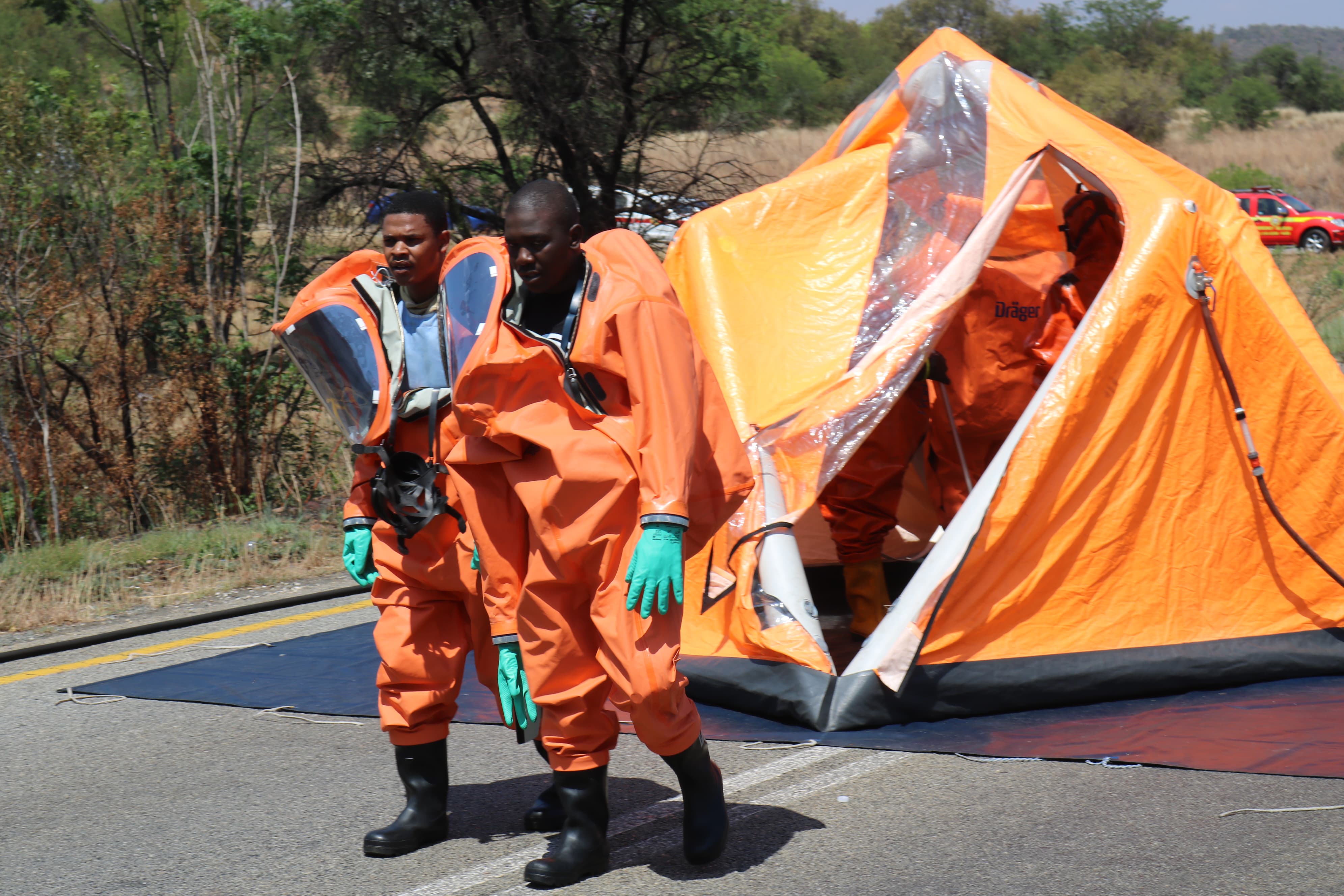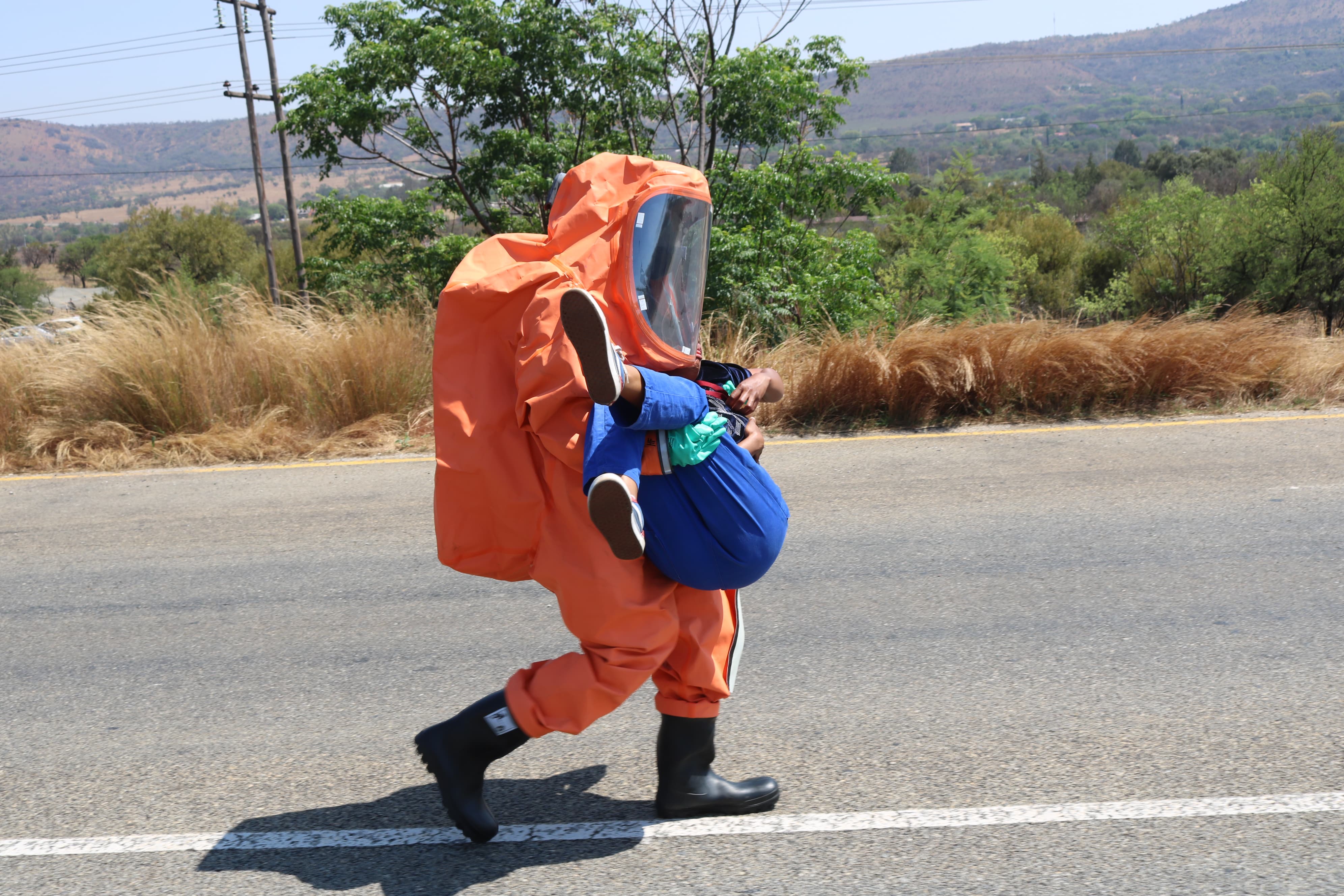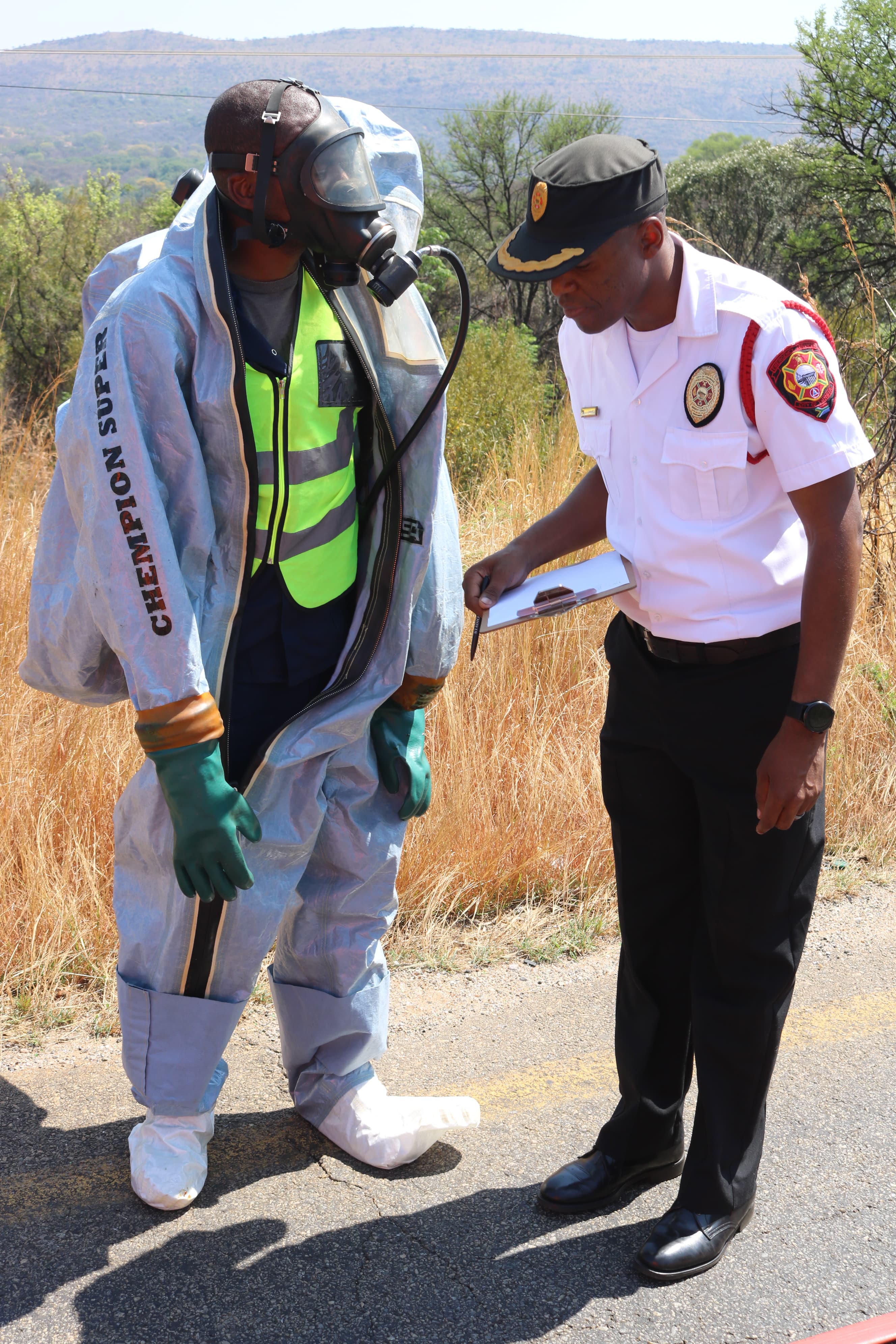
Pretoria – The City of Tshwane Emergency Services Department (ESD) joint chemical emergency simulation exercise with the South African Nuclear Energy Corporation (NECSA) at Elias Motsoaledi Street in Pelindaba was a success.
The simulation exercise was so successful it will be used as a reference in future training sessions.
The ESD said the simulation was carried out on Friday morning, (25 October 2024), at about 09:40.
“The simulation was done to test all systems relating to the preparedness, response, and recovery of the ESD, NECSA, and other stakeholders, should an emergency occur that could potentially escalate to a catastrophe or disaster if not managed properly,” the ESD said in a statement on Thursday, (31 October 2024).
“The simulation was also done to fulfil the mandate of the ESD to provide disaster risk management, firefighting, and rescue services to communities to prevent loss of life, to prevent property damage, and to conserve the environment.”
The ESD takes part in major simulation exercises regularly to ensure that resources are organised to identify, reduce and minimise the impact of disasters and emergencies on residents, properties and the environment should these disasters or emergencies occur.
NECSA is mandated by the National Nuclear Regulator (NNR) to perform frequent nuclear emergency exercises to strengthen its safety-first principle and to communicate with surrounding communities within a 5 km radius of the nuclear reactor.
“To provide information to the public regarding any emergency at the nuclear facilities in Pelindaba, several stakeholders need to be brought together,” explained the ESD.
“They all play a critical role in informing, creating awareness, and assuring relevant external stakeholders of their safety, while testing the state of readiness of these institutions through frequent emergency exercises.
“This ensures the readiness of all relevant response units in case of an emergency.”
The ESD and NECSA constantly work together with other role players and stakeholders at various levels, such as environmental services, neighbouring fire services, and departments in charge of human settlements and social and welfare services, to plan, organise, lead, and control incidents in case an evacuation must be ordered during real-life incidents or simulation exercises.
Friday’s imitation of a situation scenario involved a dangerous goods truck transporting anhydrous hydrofluoric acid (UN 1052) in an isotainer from NECSA (Pelchem) to a company in Laudium using Elias Motsoaledi Street (R104).
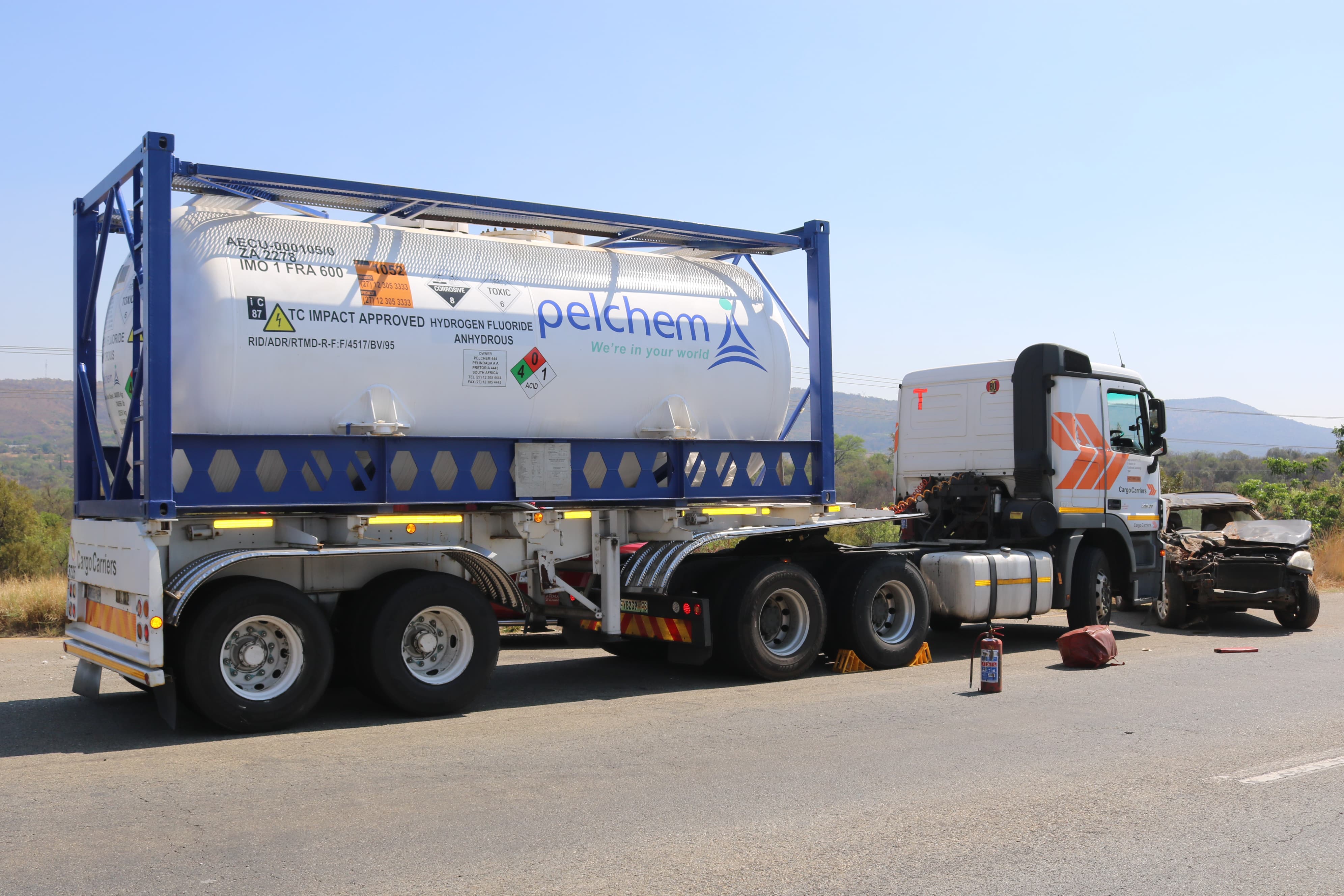
Anhydrous hydrofluoric acid is a colourless fuming liquid boiling at 19,4 ºC.
It is shipped as a liquid confined under its own vapour pressure and is corrosive to metals and human tissue.
Very short contact with fumes or small quantities of the liquid can cause severe, painful burns.
Its vapours are heavier than air.
This chemical is used as a catalyst and raw material in chemical manufacture.
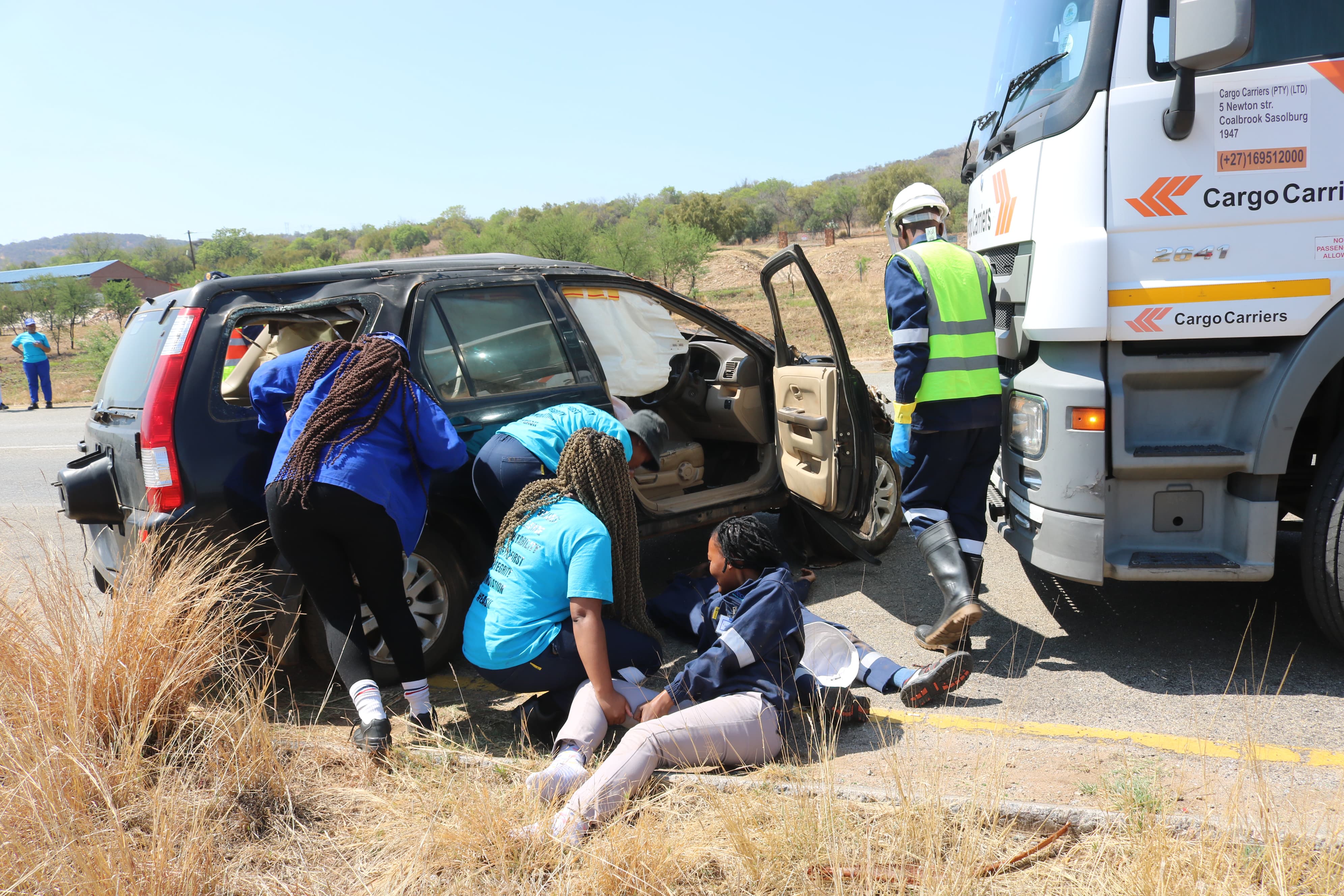
Recounting details of the simulation, ESD said: “While the truck was travelling on the R104, about 2 km away from NECSA, a vehicle failed to stop at the stop street as the truck was approaching and entered the R104 unexpectedly.
“This caused the truck and the light motor vehicle to collide.
“The passengers in the passenger vehicle were injured and required medical attention.”
In the imitation of a situation scenario, the impact on the truck was significant during the collision, causing the isotainer to decouple.
Initially, there was no apparent leak of the anhydrous hydrofluoric acid from the isotainer.
As if in real life, the driver called and notified the NECSA Emergency Control Centre of the emergency incident that had occurred.
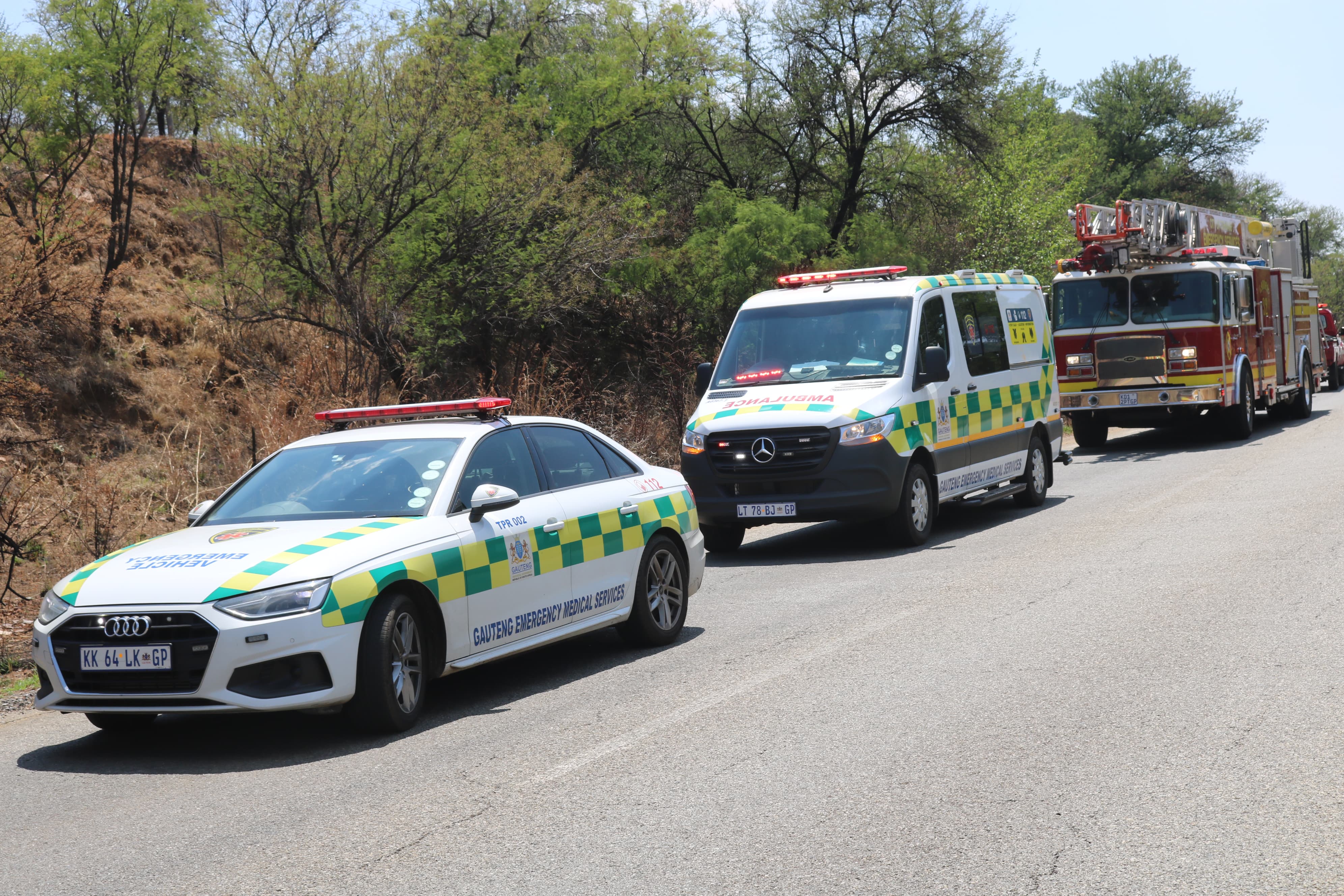
The ESD was also informed and immediately responded to the scene with several firefighting resources from Atteridgeville Fire Station, Central Fire Station, Wonderboom Fire Station, and Centurion Fire Station to the scene.
These included two fire engines, a ladder, two hazardous materials units, two district commander units, a video unit, a rapid response unit, and a mobile command unit.
The collision of the isotainer and the vehicle resulted in overpressure in the isotainer, which in turn caused the bursting of the safety disc about 15 minutes after the accident, releasing the anhydrous hydrofluoric acid under 1 200 kPa of pressure into the environment.
The Tshwane Metro Police Department was also called and responded to the scene with several units and ensured that the roads were closed at the R511 and the N4 off-ramp.
Traffic was diverted to safely bypass the incident while rescue efforts and all clean-up operations were ongoing on Elias Motsoaledi Street.
Gauteng Provincial Emergency Medical Services was called to the scene and they responded with several emergency medical rescue units.
In the imitation of a situation they “treated” a total of 12 patients for “minor to severe injuries, three of whom inhaled the fumes of the harmful product when it was released from the isotainer” when it failed under pressure.
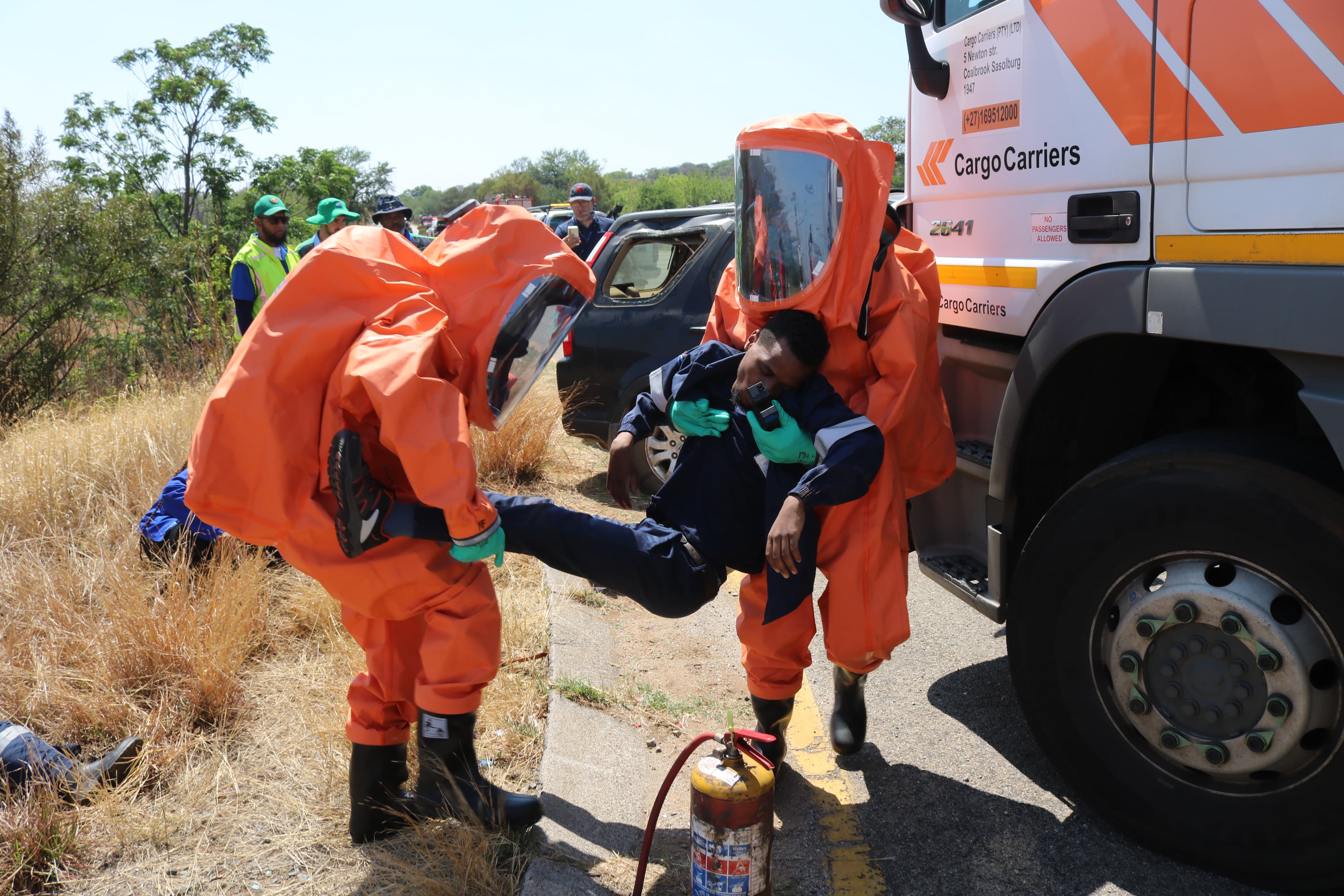
“The joint simulation exercise was concluded at about 13:01 and it was hailed as a success by all concerned,” the ESD said.
“It will be used as a reference in future training sessions.”
To report any fire or rescue incident, please call 107 toll-free or call 012 358 6300/6400.
When reporting an emergency, please remain calm, speak clearly, know where you are, give the correct address, and give your correct contact number to allow the operator to phone you back.