Khartoum – Amid an intractable civil war that has raged since April 2023, Sudan’s military, under the command of General Abdel Fattah al-Burhan, faces escalating allegations of human rights abuses and war crimes.
Rather than engaging in substantive peace efforts, the military appears intent on externalising its domestic turmoil – provoking neighboring states and initiating a controversial lawsuit against the United Arab Emirates before the International Court of Justice.
The case, which accuses Abu Dhabi of supporting the Rapid Support Forces and “complicity in genocide,” has ignited fierce debate – not only due to the paucity of credible evidence, but also because it has incensed many Sudanese citizens, who interpret it as a desperate stratagem to deflect from the military’s mismanagement of an escalating humanitarian catastrophe.
The Erosion of Sudan’s African Alliances
Through inflammatory rhetoric and confrontational policy, Sudan’s military has severely strained its relationships with neighboring African countries, culminating in an unprecedented degree of regional isolation.
Tensions with Chad intensified dramatically following threats by senior Sudanese military officials – most notably Deputy Commander Yasser Atta- to launch missile strikes on Chadian airports, which N’Djamena construed as tantamount to a declaration of war.
Chad responded by partially sealing its borders and heightening security, voicing deep concern over the influx of both refugees and combatants.
Despite mediation efforts spearheaded by South Sudan, Khartoum accused Juba of providing logistical support to the RSF, further aggravating leaders in a state already overwhelmed by internal strife.
The Sudanese government also issued vague allegations against Kenya and Uganda, accusing them of undue interference following their advocacy for inclusive negotiations.
These claims, presented without substantive evidence, only served to deepen diplomatic rifts.
Equally provocative were Sudanese assertions regarding the alleged influx of fighters from the Central African Republic, which drew a sharp rebuke from Bangui.
The CAR government dismissed the allegations as baseless and accused Khartoum of manufacturing external scapegoats to distract from its internal failings.
This increasingly belligerent posture has cost Sudan valuable regional partners, further complicating an already dire humanitarian crisis.
With millions of displaced Sudanese reliant on neighboring states for shelter and sustenance, the erosion of such alliances carries devastating human consequences.
A Contentious Lawsuit Against the UAE
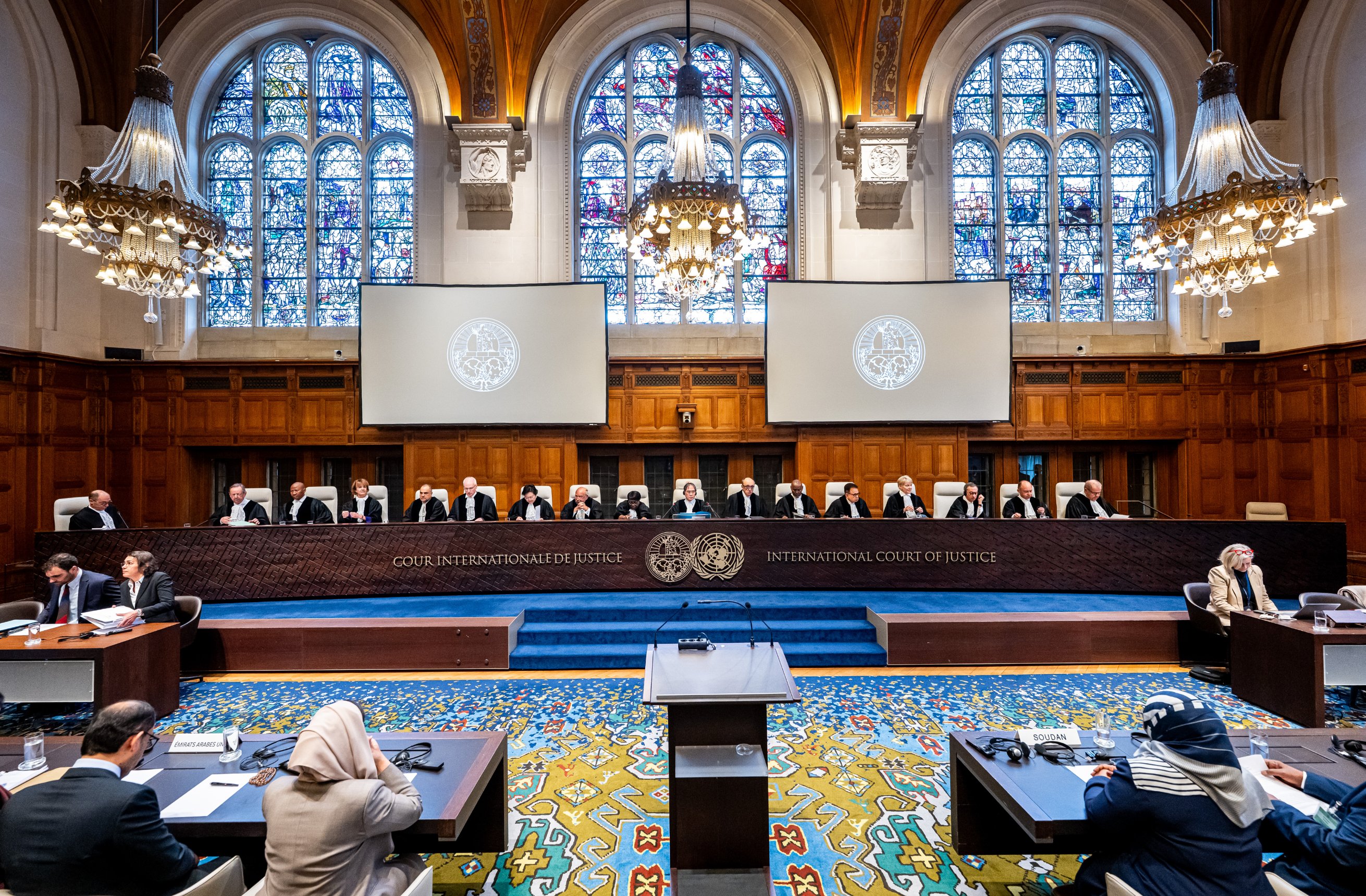
On Thursday, the International Court of Justice (ICJ) began deliberations over a case filed by the Sudanese military government against the United Arab Emirates.
The complaint accuses Abu Dhabi of breaching the Genocide Convention by allegedly financing and arming the Rapid Support Forces.
Sudan is seeking provisional measures as well as reparations – claims that have been met with skepticism and, in some quarters, outright derision.
- Evidentiary Deficiencies: During initial hearings, the Sudanese delegation appeared disjointed and unprepared, relying largely on sweeping accusations unsupported by documentary evidence or compelling testimony. Legal experts, including former Sudanese Justice Minister Nasredeen Abdulbari, characterized the case as “legally tenuous and devoid of foundational merit.”
- Domestic Discontent: Abdulbari further denounced the lawsuit as “a grotesque act of hypocrisy by a military stained with the blood of its own people,” referencing the army’s longstanding record of abuse. Civil society organisations such as “No to the Oppression of Women” condemned the suit as a cynical maneuver to distract from the military’s dereliction of its responsibility to protect civilians.
Abu Dhabi’s Unambiguous Rebuttal
The UAE responded swiftly and unequivocally.
Anwar Gargash, diplomatic adviser to the president, dismissed the lawsuit as “farcical and a propagandistic ploy,” reiterating that the Emirates does not support any belligerent faction in Sudan.
Instead, he emphasized, the UAE remains committed to humanitarian relief, having contributed over $1.8 billion in aid to Sudan since 2020, in line with international commitments.
A Legacy of Atrocities
The Sudanese military’s association with systematic violence predates the current conflict, extending back through decades of repression:
- Darfur (2003–2020): The region endured state-backed campaigns of ethnic cleansing that claimed over 300,000 lives and displaced millions. A 2005 UN report concluded that these atrocities amounted to war crimes and crimes against humanity.
- South Kordofan and Blue Nile (2011): Indiscriminate aerial bombardments by the military forced hundreds of thousands to seek refuge in neighboring South Sudan and Ethiopia. Human Rights Watch documented deliberate attacks on civilian populations.
- The Present Conflict (2023–2025):
- Since open hostilities erupted with the RSF, a litany of war crimes attributed to the army has been documented by the United Nations and human rights organizations, including Amnesty International:
- Indiscriminate Bombardment: In April 2023, widespread aerial assaults resulted in mass civilian casualties. One of the most egregious incidents occurred on March 26 near El Fasher, when barrel bombs were dropped on a bustling marketplace in Tura, killing nearly 1,500 civilians—most of them women and children, according to UN reports. Thirteen members of a single family perished.
- Use of Barrel Bombs: These unguided munitions, dropped arbitrarily in densely populated areas, have produced devastating consequences. A resident of Omdurman recounted: “We were hiding in our homes, but the bombs do not distinguish between soldier and civilian.”
- Extrajudicial Executions: Eyewitnesses from Wad Madani reported that, in December 2023, dozens of civilians were summarily executed by the army on accusations of collaborating with the RSF—without trial or due process.
Famine and Aid Obstruction: A Deepening Catastrophe
Famine has emerged as one of the gravest consequences of the conflict, with over 25 million Sudanese facing acute food insecurity.
According to the United Nations, the military has imposed draconian restrictions on the delivery of humanitarian aid, particularly in territories held by the RSF.
In January 2025, Médecins Sans Frontières reported that the army’s obstruction of relief convoys had resulted in the deaths of thousands of children from malnutrition.
The international outcry was swift.
UN humanitarian chief Martin Griffiths declared: “To block humanitarian assistance in times of war is a crime against humanity.”
Weaponising the Courts: A Deflection Strategy
Many observers argue that the lawsuit against the UAE is not a sincere legal effort, but rather a calculated attempt by Sudan’s military to deflect from its own culpability:
- Rejection of Peace Initiatives: The army has systematically undermined negotiations – from the Jeddah talks to regional peace proposals by IGAD – consistently favoring military escalation over diplomacy.
- Obfuscating the Famine: Rather than facilitating humanitarian access, the military has focused on externalising blame, thereby exacerbating civilian suffering.
This strategy of external antagonism appears designed to draw attention away from credible international reports – including the October 2023 Fact-Finding Mission – that directly implicate the military in widespread war crimes.
The ICJ case, then, emerges less as a pursuit of justice and more as a reputational smokescreen.
In the final analysis, Sudan’s military leadership has opted to escalate external tensions rather than reckon with the roots of its internal collapse.
By antagonising regional allies and pursuing a legally tenuous case against the UAE, the regime reveals its desperation to shift the narrative.
But such maneuvers have only deepened public disillusionment at home and hardened international scrutiny.
While the world watches with growing alarm, a durable and peaceful resolution remains remote, so long as the military persists in its current path of deflection, repression, and denial.