As Sudan plunges deeper into chaos, the scale of human suffering is staggering: over 12 million people displaced, famine sweeping across multiple regions, and the specter of ethnic cleansing haunting the plains of Darfur.
And yet, as families starve and civilians are slaughtered, the world remains eerily silent.
Sudan is burning, but it’s not trending.
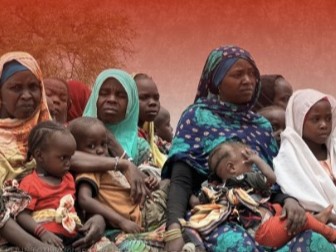
In the heart of the crisis lies Darfur’s Zamzam displacement camp, now a mass grave after the Rapid Support Forces (RSF) launched a brutal assault in March, killing at least 400 people.
The attack was no anomaly; it was part of a systematic campaign of terror.
According to reports by the Associated Press, survivors described how RSF fighters opened fire indiscriminately on women and children, looted supplies, and torched shelters. Entire communities were wiped out overnight.
Meanwhile, Port Sudan, once a safe haven and vital humanitarian corridor, is now under direct attack.
Last week, explosions rocked the city as RSF drones targeted key infrastructure, forcing aid agencies to suspend critical relief operations.
Reuters reported that the drone strikes struck close to warehouses storing food and medical supplies, compounding fears of an impending famine in eastern Sudan.
Despite these horrors, international media attention is scant.
A few headlines break through, but there is no sustained coverage, no global outrage, and no viral campaigns demanding intervention.
Compare this silence to the global response to Ukraine or Gaza, and the disparity is glaring.
Why does the world look away when Sudan suffers?
This silence isn’t just a media failure; it’s an indictment of global empathy.
Some analysts have pointed to “crisis fatigue” or the complexity of Sudan’s conflict as reasons for the lack of attention.
But beneath these explanations lies an uncomfortable truth: the lives of Black Africans are often deemed less worthy of outrage.
Sudan’s suffering is not an isolated oversight; it fits a long pattern of international indifference to African conflicts.
Human rights groups have repeatedly warned that the atrocities unfolding in Darfur may amount to genocide.
Médecins Sans Frontières (Doctors Without Borders) described the situation as “beyond catastrophic,” noting that they are treating malnourished children too weak to cry.
Yet these warnings have failed to mobilize the kind of urgent diplomatic or humanitarian response seen in other regions.
The humanitarian needs are staggering.
The UN’s World Food Programme estimates that nearly 18 million people face acute food insecurity. Hospitals have been bombed.
Humanitarian convoys have been ambushed. Aid workers have been killed. And yet, funding for Sudan’s humanitarian appeal remains dangerously low.
According to OCHA, the UN’s humanitarian coordination office, only 12% of the required funds have been secured so far in 2025.
This lack of action has deadly consequences.
As famine takes hold, it won’t be because food doesn’t exist, it will be because the world failed to care enough to deliver it.
The silence around Sudan also emboldens perpetrators.
The RSF, led by Mohamed Hamdan Dagalo (commonly known as Hemeti), operates with impunity, bolstered by external arms supplies and the absence of meaningful international sanctions.
Meanwhile, the Sudanese Armed Forces (SAF) continue shelling civilian areas in Khartoum, turning the capital into a wasteland.
Both sides are accused of war crimes, but neither faces serious accountability.
In this vacuum of accountability, civilians bear the brunt.
Women are being raped as weapons of war. Villages are razed. Children are recruited as fighters.
And as journalist Alex de Waal warns, “Sudan is not just sliding into state failure, it’s collapsing into a warlord-run archipelago of atrocities.”
Yet, there are voices refusing to stay silent. Sudanese activists, both inside the country and in the diaspora, have used social media to document atrocities and appeal for help.
But their pleas rarely break into mainstream global discourse.
Their hashtags trend only briefly, their videos lost in the algorithmic churn.
So what will it take for the world to pay attention?
History suggests that global outrage is often selective.
It prioritises conflicts with geopolitical stakes for the West or ones that capture powerful imagery for media consumption.
Sudan, it seems, has neither, despite being a site of immense human suffering and potential regional destabilisation.
But ignoring Sudan’s crisis is not just morally indefensible, it’s strategically shortsighted.
As famine, mass displacement, and state collapse engulf Sudan, the risks of cross-border instability, refugee flows, and extremism rise.
Neighboring countries like Chad, South Sudan, and Egypt are already feeling the pressure.
The international community must wake up before it’s too late. This means more than statements of concern.
It requires urgent diplomatic efforts to broker a ceasefire, sustained humanitarian access, and robust funding to avert famine.
It demands that perpetrators face real consequences for war crimes, including targeted sanctions and international prosecutions.
Above all, it requires the global media to stop looking away. Sudan’s suffering deserves to be seen, to be named, to be heard.
Every day that passes in silence is another day the world fails the people of Sudan.
The question isn’t whether the world has the capacity to act.
It’s whether it has a conscience.
*The writer of this article is Kevin Mofokeng, a developmental writer and digital PR strategist based in Gaborone, Botswana. The views expressed by Kevin Mofokeng are not necessarily those of The Bulrushes