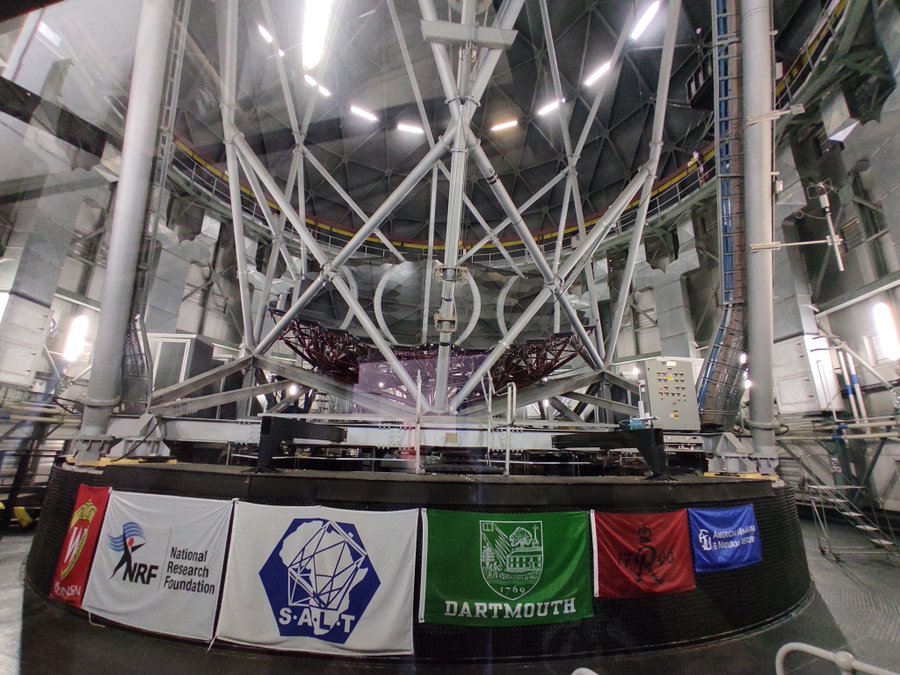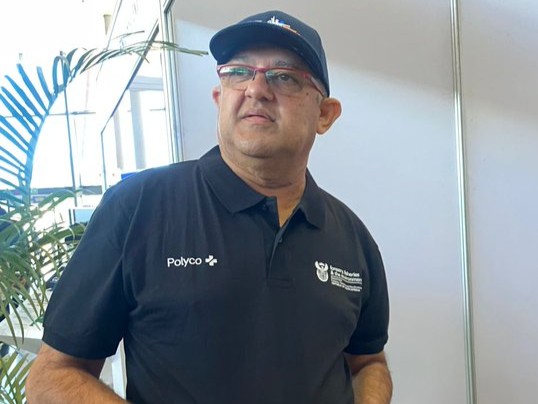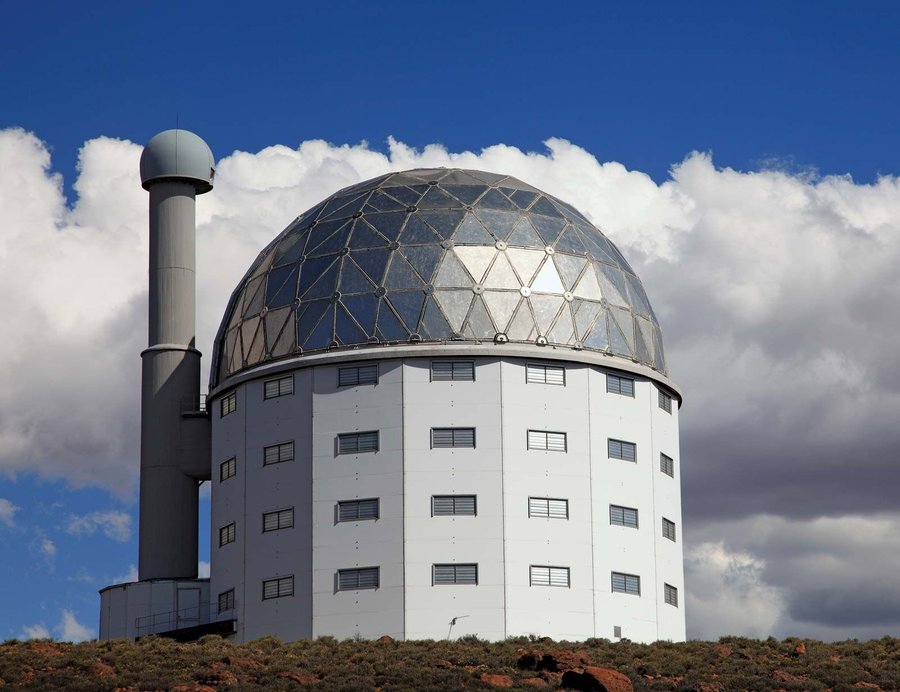
Johannesburg – The National Research Foundation (NRF) says everything is on track to celebrate the 20th anniversary of the inauguration of the Southern African Large Telescope (SALT).
A prestigious celebration has been scheduled for 10 November 2025 at the South African Astronomical Observatory (NRF-SAAO) site in Sutherland, Northern Cape, where SALT is located and operated.
As part of the celebration, SALT’s scientific achievements, global partnerships, and contributions to the advancement of astronomy on the African continent will be showcased.
SALT, nicknamed Africa’s Giant Eye on the Sky, is the largest single optical telescope in the Southern Hemisphere and amongst the largest in the world.
The 11 m telescope can detect the light from distant objects in the Universe, a billion times too faint to be seen with the unaided eye.
In the late 1990s, South Africa’s scientific leaders presented an ambitious vision: to construct a 10-metre-class optical telescope in the Southern Hemisphere as a flagship for the new South Africa.
In June 1998, the South African government committed US$10 million toward this dream.
Construction was completed in 2005, followed by a commissioning and performance verification phase from 2006 to 2009.
Since September 2011, full scientific operations have been underway, with the telescope now fully realising its vast potential as Africa’s Giant Eye on the Universe.
The South African Astronomical Observatory (NRF-SAAO), a research facility of the NRF, stated in its motivation that SALT “…would enable South Africa to remain internationally competitive in astronomy well into the 21st century and furthermore provide a focus for the development of basic space science on the African continent”. Some of its astronomical milestones are included below.
Over the years, SALT announced several astronomical milestones including:
- Kilonova of GW170817 (2017): SALT took part in the first multi-messenger event. It was among the first telescopes to observe the optical afterglow of the first detected neutron star merger, obtaining a crucial, early spectrum of the kilonova associated with the gravitational wave event GW170817. These data helped confirm heavy element synthesis models in the merger ejecta—a landmark in multi-messenger astronomy.
- Exoplanet Microlensing (2019): SALT played a crucial role in a campaign that used gravitational microlensing to discover new exoplanets. For instance, SALT spectroscopy supported the characterisation of a short-period exoplanet detected by the Korean Microlensing Telescope Network (KMTNet), demonstrating SALT’s strength in rapid follow-up of transient planet signals.
- Eight Super-Hot Stars Unveiled (2020): Using SALT, astronomers identified eight new extremely hot subdwarf stars—rare helium-burning stars with surface temperatures over 100 000° K. These discoveries provided insight into late stages of stellar evolution, with SALT’s UV-sensitive spectroscopy proving crucial in the analysis of their atmospheres.
- “Peekaboo” Galaxy Discovery (2022): SALT helped characterise a tiny nearby galaxy nicknamed the “Peekaboo Galaxy”, which had only recently emerged from behind a fast-moving star. SALT spectra showed the galaxy has extremely low metallicity, akin to galaxies in the early Universe. This finding, combining SALT and Hubble Space Telescope data, offers a unique local window into primordial galaxy conditions.
- Four-Star Multi-Stellar System (2023): SALT, in partnership with the University of Canterbury’s observatory, discovered an unusual quadruple star system with two pairs of closely orbiting stars. SALT’s spectra confirmed the gravitational binding of the four stars, providing a testbed for theories of multi-star formation.
A week from now, Monday, 10 November 2025, all eyes will be on the South African Astronomical Observatory (NRF-SAAO) site in Sutherland, Northern Cape, where SALT is located and operated.