
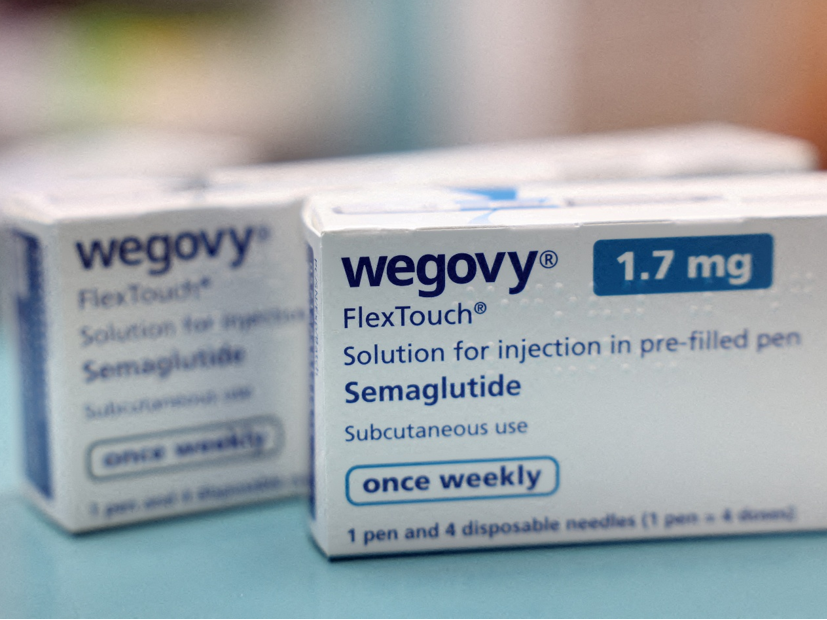
Johannesburg – Novo Nordisk, the Danish pharmaceutical giant, has unveiled new trial results showing that its oral semaglutide tablet, a potential new treatment option for obesity in South Africans, matches the effectiveness of the Wegovy injection.
Experts warn that the condition (obesity) is a chronic disease driving hypertension, type 2 diabetes, and more than 230 health complications.
In August, Novo Nordisk confirmed that Wegovy had been registered in South Africa by the South African Health Products Regulatory Authority (SAHPRA) for prescription use in eligible patients requiring medical support for weight management.
Speaking at the launch, Sara Norcross, General Manager of Novo Nordisk South Africa, said, “Wegovy is the first and only once-weekly GLP-1 currently registered for weight management in the country.”
Wegovy (injectable semaglutide) works by mimicking the hormone glucagon-like peptide-1 (GLP-1), which helps regulate appetite and food intake.
By activating the GLP-1 receptor, it increases feelings of fullness, reduces hunger, and slows the rate at which the stomach empties, leading to fewer calories consumed and sustained weight loss.
The latest findings, released recently, are from the OASIS 4 phase 3 trial, a significant study that tested a once-daily 25 mg oral semaglutide tablet in 307 adults living with overweight or obesity.
Novo Nordisk reported clinically meaningful improvements in blood sugar control, blood pressure, and cardiovascular risk markers, with participants who achieved at least 15 per cent weight loss showing the most significant health gains.
The company said the tablet demonstrated efficacy comparable to the injectable formulation already available in South Africa.
The results were presented in four scientific abstracts at ObesityWeek 2025 in Atlanta, United States, highlighting the breadth of data emerging from the oral semaglutide programme.
Norcross said the data strengthen the company’s evidence base for a potential oral treatment, adding, “The OASIS 4 results that we are sharing at this important meeting build on existing clinical trial evidence for semaglutide and extend findings beyond weight loss to suggested improvements in overall health.”
Additional analyses showed consistent weight-loss outcomes across different groups, including women before, during, and after menopause, as well as people who reported poor physical functioning at the start of the study.
Novo Nordisk added that the new OASIS 4 results strengthen the evidence base for oral semaglutide and provide further insight into how the tablet formulation performs across different patient groups.
The company reported that participants who achieved at least 15 per cent weight loss experienced the greatest improvements in blood pressure, lipid levels, and glycaemic control, reinforcing the potential of the once-daily 25 mg tablet to deliver significant health benefits.
“As recently published in the New England Journal of Medicine, the primary results from the OASIS 4 clinical trial demonstrated weight loss efficacy of investigational oral semaglutide 25 mg as a potential therapeutic option for people with obesity and overweight,” said Domenica Rubino, MD, trial investigator and Director, Washington Centre for Weight Management and Research in Washington, DC.
“It’s exciting to see these new results from the cardiometabolic post hoc analysis, which showed that while benefits were most pronounced in people who achieved greater than 15% weight loss, clear improvements in glycemic parameters and cardiovascular risk factors were observed in patients taking oral semaglutide 25 mg regardless of how much weight was lost, based on the groups observed.”
The press release notes that the findings were consistent across multiple analyses, including outcomes among women in different menopausal stages and participants who reported low physical functioning scores at baseline.
Novo Nordisk stated that these insights build upon existing research and represent a significant step in understanding the full clinical utility of the oral formulation.
The significance of this development stems from the scale of the obesity challenge in South Africa and the broad consequences of untreated excess weight.
Obesity in South Africa has reached a critical level, with 42.9 % of adult women and 18.2 % of adult men classified as living with obesity, according to the National Department of Health (NDoH) and allied data.
The NDoH’s 2023–2028 Strategy for the Prevention and Management of Obesity outlines how an elevated body-mass index is linked to 87% of type 2 diabetes cases, 68% of hypertension, 61% of endometrial cancer, and 45% of stroke in South African adults.
The importance of this development lies in the magnitude of the obesity challenge in South Africa and the wide-ranging consequences of untreated excess weight.
Minister of Health Dr. Aaron Motsoaledi, speaking to Daily Maverick in August, outlined the government’s position on rapidly evolving therapies.
Motsoaledi said: “Endocrine disorders, including diabetes mellitus (type 2 diabetes), have been prioritised for review in the current phase of the Standard Treatment Guidelines and Essential Medicines List.
“All identified medicines, including glucagon-like peptide-1 agents such as semaglutide (Wegovy), will undergo rigorous health technology assessments as part of a comprehensive package for diabetes, obesity, and cardiovascular disease management in South Africa.”
Public-health specialists warn that without broader access to effective treatment options, South Africa’s rising burden of obesity-related disease will continue to strain clinics and hospitals.
In its statement, Novo Nordisk said the OASIS 4 findings highlight the potential of an oral formulation to support patients who may not tolerate or prefer injectable therapy.
Sara Norcross, Novo Nordisk spokesperson for South Africa, said the results “extend findings beyond weight loss to suggested improvements in overall health”, emphasising the role semaglutide could play as part of long-term clinical care.
As South Africa prepares for the regulatory assessment of the tablet, the company maintains that expanding treatment pathways could help reduce preventable complications associated with obesity.
“Novo Nordisk has pioneered innovation in the obesity class for 25 years, and the oral semaglutide data presented at ObesityWeek reflect our drive to improve the lives of people living with obesity,” said Norcross.
She added that the OASIS 4 results “build on existing clinical trial evidence for semaglutide and extend findings beyond weight loss to suggested improvements in overall health”.
Oral semaglutide 25 mg (Wegovy® pill*) is not yet approved by SAPHRA for the treatment of obesity in South Africa.
In February, Novo Nordisk Inc. submitted a New Drug Application (NDA) for the once-daily pill formulation of Wegovy®in the US.
The US FDA review of this NDA is anticipated to be completed by the end of this year.