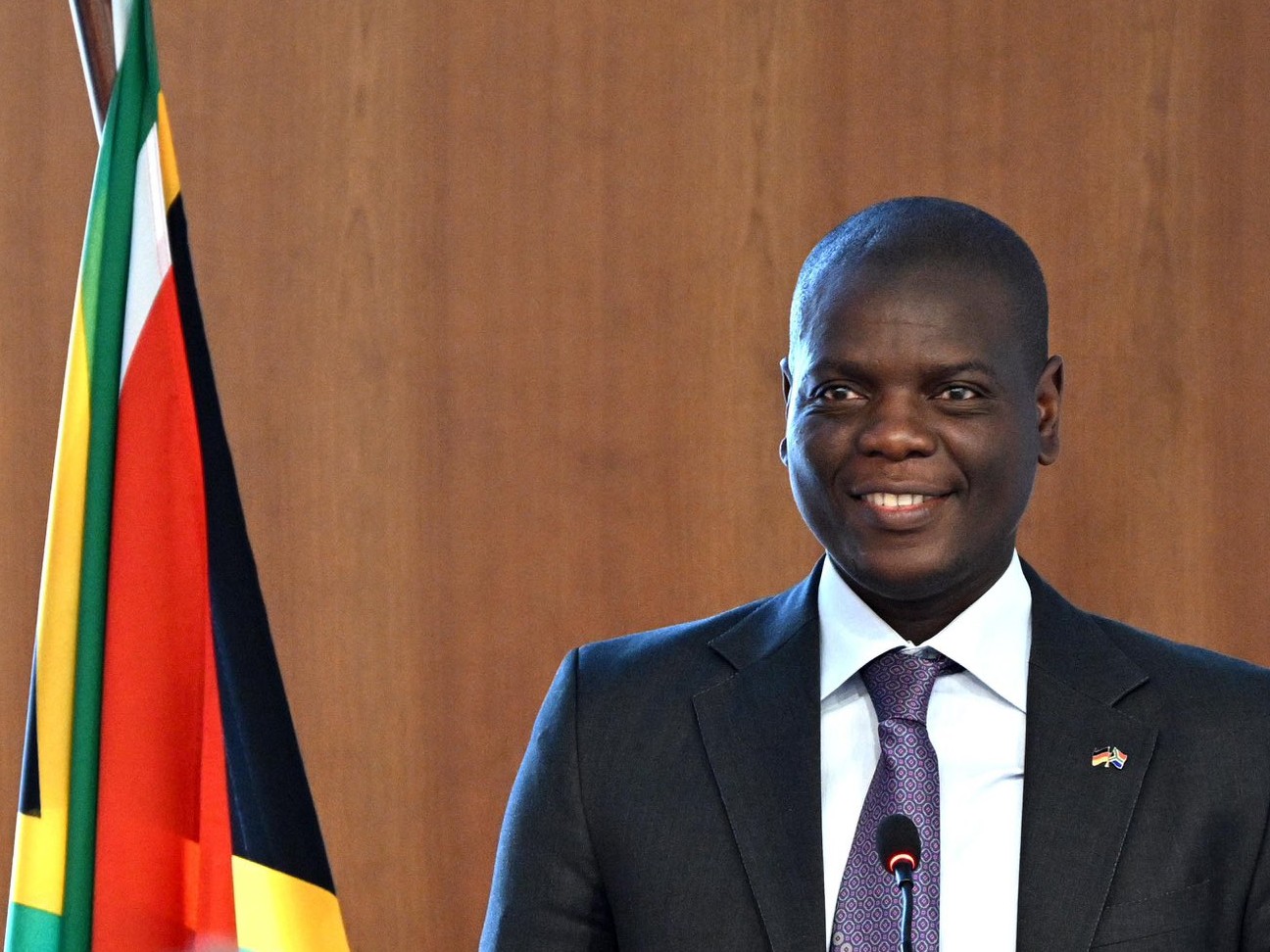
Africa4Palestine has accepted former South Africa Chief Justice Mogoeng Mogoeng’s apology for his pro-Israel remarks saying it was “indeed a victory for Palestinian activists.”
Mogoeng had been given until Thursday to apologise by the JSC for the offensive comments he made in June 2020 during a webinar hosted by the Israeli newspaper, Jerusalem Post.
Quoting Psalms 122, verse 6, which says: “Pray for the peace of Jerusalem, they shall prosper that love thee,” Mogoeng said as a Christian, “if I curse Abraham and Israel, the Almighty God will curse me too”.
Mogoeng added: “And I cannot as a Christian do anything other than love and pray for Israel because I know hatred for Israel by me and for my nation will, can only attract unprecedented curses upon our nation.”
The then chief justice’s remarks offended pro-Palestinian organisations including Africa4Palestine, SABDS Coalition, and the Women’s Cultural Group.
They complained about Mogoeng’s remarks and the Judicial Services Commission, which found that Mogoeng had violated its code of conduct.
Ahead of the deadline on Thursday Mogoeng said: “I, Mogoeng Mogoeng, the former Chief Justice of the Republic of South Africa, hereby apologise unconditionally for becoming involved in political controversy through my utterances at the online seminar (webinar) hosted by the Jerusalem Post on 23 June 2020, in which I participated”.
The apology has been accepted by the Africa4Palestine.
“The apology is even more significant given that he was compelled. He was forced, kicking and screaming to the apology table,” said Africa4Palestine in a statement Thursday.
“We see this as a victory over fanaticism and ego. We see this as a victory for the rule of law and an indication of the strength of our judiciary.
“It is a landmark apology which shows that even the Chief Justice is not above the law. It is a good day for the South African judiciary.
“And, this is indeed a victory for Palestinian activists.”
Africa4Palestine said the message was clear: “South Africa and South Africans are in support of international law and human rights, and to suggest otherwise is incorrect”.