Myanmar Muslims – also known as Rohingya – are stateless.
The international legal definition of “stateless” is, a person who is not considered as a national by any state under the operation of its law.
The Muslim minority in Myanmar has been struggling to gain recognition among other ethnic groups for over three decades.
About four percent of these ethnic groups identify as Rohingya.
Myanmar, also called Burma, is a country in Southeast Asia that is home to over 54 million people.
The Burmans form the largest group. They account for more than half of the population.
There are eight official groupings Burmans, Chin, Kachin, Karen, Kayah, Mon, Arakanese and Shan.
Over the years, there have been wars between the Burman and ethnic groups, especially with the Myanmar Muslims.
Burman and Buddhist culture are intertwined to create Myanmar identity and the education system present today.
In 1962, nationalism was developed.
As a result, ethnic groups, their languages and traditions began to experience isolation and suppression, which has been at the core of conflict in Myanmar.
Thus, for decades, Myanmars Muslims have been persecuted and victimised.
In 2010, education and identity were at the top of issues that came with Burmanisation, primarily due to the separation of ethnic groups.
The Rohingya have suffered severely since Myanmars independence, which ushered in party rule, isolation and the informal policy of Burmanisation.
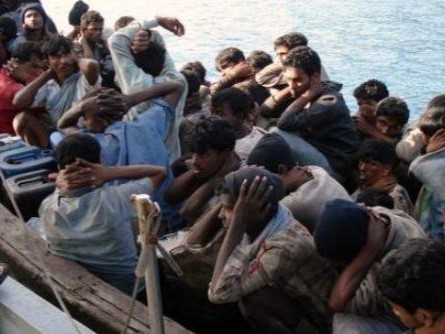
Since 2017, an estimated 943 000 people have fled Myanmar because of this conflict between the police and army on one side and the Arakan Rohingya salvation Army (ARSA), who were labled a terrorist group.
In turn, the police and army mounted a massive campaign against the Rohingya.
Consequently, the United Nations Human Rights Commission described the situation as a “textbook example of ethnic cleansing.
Since the beginning of the conflict, there has been a humanitarian crisis, resentment and prejudice that the Myanmar state is unlikely to resolve anytime soon.
The Rohingya have endured wave after wave of violence following the coup in 1962 that brought Ne Win to power.
If one identifies as Rohingya, many restrictions are summarily imposed on the individual by the authorities.
For example, a Rohingya can not get citizenship documents. Access to education and health is restricted and reduced freedom of movement within the country.
Since the 1990s, the Myanmar government has refused to recognise the Rohingya as an ethnic group that is part of the Rakhine State.
Instead, authorities refer to the whole Rohingya population as Bengali – someone whose linguistic, cultural or ancestral origins are from Bengal, Bangladesh.
Burmanisation is so pervasive, official history books on Myanmar do not acknowledge the existence of other ethnic groups such as the Rohingya and their identity.
Despite this, modern Myanmar has become identity driven, but then it at once invites and obligates people who self-identify as Rohingya to make collective claims to membership of the national-race schema, which generates hostility and contributes to the persistence of conflict.
This implies that not being able to identify as Rohingya reflects how this treatment has resulted in legal measures to deny Rohingya citizenship.
This treatment further forces ethnic minorities to adopt Burman culture to advance and erases identity.
The fact that citizenship is restricted suggests that there is no protection of identity, of which nationality is a key component of.
Citizenship would provide them with an identity which would allow them to exercise their full rights and privileges as a citizen of a country.
Since the Rohingya were barred from obtaining citizenship, which would reflect who they truly were, many of them had no choice, but to flee to Bangladesh. Subsequently, this led to 1.1 million Rohingya refugees in Bangladesh.
Nay San Lwin, co-founder of the Free Rohingya Coalition says: The situation of the Rohingya in Myanmar remains the same. Nothing has changed.
“In some cases, the condition is worse than before. Rohingya caught in the crossfire between the Myanmar Military and Arakan Army.
“As both entities are armed groups, the Rohingya need to follow instructions given by both.”
Both groups commit atrocities against the Rohingya.
Recently, at least 1 000 people were displaced by fighting between the Myanmar’s military and the Arakan Army.
A few numbers were killed and injured.
The restrictions on movement, livelihood, etc., are still in place.
As usual, Rohingya are under pressure to accept the National Verification Card (NVC), which was designed to issue for illegal immigrants.
“Although the regime has been discussing repatriation, the environment is still unsafe; besides that, no guarantee of restoring Rohingya rights, including ethnic and citizenship rights, and rights to return to their original villages,” said Nay San Lwin.
“In short, genocide is ongoing. Myanmar is not complying with the provisional measures ordered by the International Court of Justice (ICJ).
Regarding education, there is an uneven distribution – a historical denial of access assets, good quality education as well as the full participation of Myanmar Muslims.
This is reflected in the education system that was developed under military rule.
In modern Myanmar, Muslims still face educational challenges.
Muslim children attending government schools drop out around grade 5 due to the intense conflict and discrimination in the Rakhine state.
This shows discrimination within policies and denying access to education is the beginning of the role.
The system shows that some ethnic groups have a better chance of gaining a higher level of education than others.
Rohingya children are being deprived of education, which is tantamount to weaponising the denial of schooling in the decades-old conflict.
Bangladesh does not want formal education for the Rohingya because they do not wish to have them integrated long-term into the country.
However, before 2017, there was an arrival of an excessive number of Rohingya to Bangladesh, so education is taught informally.
Human Rights Watch accuses Bangladesh of barring the UN from providing any formal education to the Rohingya and they suggest, If they stay for 20 years, youll need a curriculum, but if its just a year or two, then its different there is no possibility for them to take the Bangladeshi curriculum.
This means there is no possibility of Rohingya acquiring any recognised education qualification.
The uneven distribution of education reflects a major selective abuse of human rights targeting the Rohingya people.
As a result, the lack of education has conspired to reproduce a cycle of poverty, and marginalisation.
Amnesty International says about 30 community-led schools have been shut down or dismantled by the authorities since December 2021.
Overall, Myanmar is still in the midst of a struggle and, even more so, with decades of intolerance an inclusive future ahead will not be achieved easily.
Myanmar will have to reflect on the issues dividing their nation and find ways of resolving them.
There is a long and hard road ahead.
But in the interim, the Rohingya should be free to celebrate their identity, and culture and be recognised as citizens of Myanmar.
Exiled Rohingya should be able to go back to Myanmar without being repatriated.
So far, over two million have been forced out using violence and rape.
Therefore, the attempts by Myanmar authorities to prevent Muslims from identifying as “Rohingya” is a significant attack.
These horrific acts of ethnic cleansing/genocide are happening under the radar of nations that promote human rights.