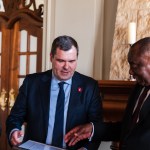
On Wednesday, 9 November 2022, the University of Johannesburg (UJ) conferred its final honorary doctorate (formally called the Philosophiae Doctor Honoris causa) in literature, to the Tanzanian-born British scholar-activist and author Professor Abdulrazek Gurnah.
This occasion took place, in a context of a week filled with other miscellaneous headlines on the national front.
Among these headlines, one may enlist the release of the much anticipated Judge Sisi Khampepe Report on racism and transformation at Stellenbosch University (SU), on Tuesday, 8 November 2022.
As a past Student Representative Council (SRC) leader, at the University of Zululand (UZ) during 2004/5, SU during 2009/10, and University of Johannesburg (UJ) during 2016, I share concerns of fellow sceptics, who among others were aware of how the demand for an independent inquiry was made by a student political organisation and whether or not the noted recommendations will be addressed.
My reservations among others emanate from the genesis of the demand, made by the South African Students Congress (SASCO) aligned to the ruling party African National Congress (ANC), instead of having originated from the SRC as the official leadership body of the entire student body.
So the Sisi Khampepe Report on racism and transformation at SU is in essence a commissioned report by SUs management, as mandated by SASCO instead of the SRC.
Besides such typical student politics, my concern on addressing recommendations, recalls the failure of previous recommendations that were made in the Report of the Ministerial Committee on Transformation and Social Cohesion and the Elimination of the Discrimination in Public Higher Education Institutions, released on 30 November 2008.
That report was chaired by Crain Soudien hence the common reference to the Soudien Report of 2008.
Notably, challenges of racism and transformation are not unique to South Africa’s universities.
Another noteworthy occasion was the announcement and celebration of the Sunday Times Top 100 Companies award which was hosted at The Empire conference and events venue in Parktown, Johannesburg on Thursday 10 November 2022.
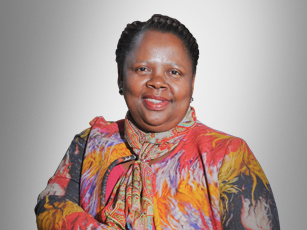
This year’s recipient of the aforementioned highly coveted business accolade was won by Gloria Serobe, who has become one of South Africa’s iconic business leaders, known for being an architect of women’s empowerment.
Serobe’s victory this year recognises her legacy as the co-founder (alongside colleagues such as UJs first Chancellor Wendy Luhabe) of the multibillion-rand Women Investment Portfolio Holdings (Wiphold).
Serobe’s victory of this revered award marks the milestone of cracking open the glass ceiling, which for the first time has ended the recurring feature of strictly male victors as an “old boys’ club”.
Elsewhere on Saturday, 12 November 2022 the 20th Nelson Mandela Annual Lecture, was delivered by Prime Minister of Barbados Mia Mottley, at Albert Luthuli Convention Centre in Durban.
Mottley’s impressive resume includes being the first female leader of Barbados and winning the United Nations 2022 Champion for Global Change.
It is from a backdrop of such a busy week in South Africa, whence UJ honoured its latest luminaries, hereby growing its exclusive community of illustrious alumni to be associated with the university.
The nominated and finally endorsed stellar candidates awarded are intended to be consistent with the vision and mission of UJ.
Kinta Burger the outgoing registrar of UJ explained, in a recent internal communiqué of 10 October 2022 the significance of honorary doctorates.
“An honorary doctorate is conferred upon an individual as an acknowledgment of their significant contributions to a specific field or outstanding service to society, which relates to the university’s vision, mission, values, and strategic goals and objectives,” said Burger.
It, therefore, is clarified by Burger that, “association with the university forms part of the reason why we confer an honorary doctorate”.
UJ’s association with Africa’s first Nobel laureate for Literature Wole Soyinka (awarded in 1986) springs to mind.
UJ appointed Soyinka as a distinguished visiting Professor in the Faculty of Humanities in 2017.
In a UJ’s internal communiqué (dated 28 March 2017) in addition to Soyinka’s guest lectures at UJ, the previous Dean of the Faculty of Humanities Alex Broadbent explained that, As a UJ distinguished visiting professor, Prof Soyinka will play a highly visible representative role in his global engagements away from Johannesburg, thus furthering UJs brand recognition and reach.
It was thus interesting to observe that as recently as Monday 18 February 2018, Nobel Laureate Robert Fry Engle (awarded Nobel Peace Prize in 2003), was conferred an honorary doctorate by UJ, for his extraordinary contribution to economics.
This ought to remind the UJ community and the broader South African public that Biophysicist Michael Levitt (awarded the Nobel Peace Prize in 2013) for Chemistry and Abdulrazek Gurnah (awarded the Nobel Peace Prize in 2021) for Literature, simply serve as the latest recipients of Nobel Laureates, to be awarded UJs prestigious honorary doctorate.
Interestingly Levitt is the only South African-born Nobel laureate, who has been awarded in the category of the Sciences to date.
UJ conferred Levitts honorary doctorate virtually on 13th October 2022.
Other luminaries who were also conferred honorary doctorates by UJ include Patrick Soon-Shiong a respected medical scientist and philanthropist, he also accepted the award virtually.
Khaled Ben Letaief a prolific Electrical and Computer Engineer, accepted his award in person on 12th October 2022. Chimamanda Ngozi Adichie an award-winning author, accepted her award virtually on 14th October 2022 and Robert Doyle Bullard (Environmental Justice) accepted his award in person on the 14th of October 2022.
Ironically Tshilidzi Marwala the outgoing Vice-Chancellor of UJ, was absent at Gurnah’s specially organised graduation ceremony, as he had travelled to the University of Venda (UNIVEN), to accept an honorary doctorate in science, which was awarded to him on Friday 10 November 2022.
*The author of this article Dr. Tshepo Mvulane Moloi is a Postdoctoral Research Fellow at Ali Mazrui Centre for Higher Education Studies (AMCHES) at the University of Johannesburg. The views he expresses in this article are not necessarily those of The Bulrushes