Johannesburg – Don’t let aggressive food advertising campaigns make you fall prey to the excess of the festive season.
The festive season is almost here which means supermarket shelves will soon be piled with even more tasty treats than normal – from sugar-laden sweets to biscuits, cakes, and drinks – and with so many temptations, it’s hard for consumers to say no.
“Over the past 30 to 40 years, highly processed and unhealthy foods have become increasingly accessible and affordable, leading to a global increase in lifestyle diseases such as diabetes, heart disease, and obesity, especially in the poorest and most vulnerable communities and households,” says Nzama Mbalati, Programmes Manager at the Healthy Living Alliance (HEALA).
“The festive season is a key time where consumers fall prey to aggressive advertising campaigns by large food companies promoting foods that are full in flavour but low in nutritional value.
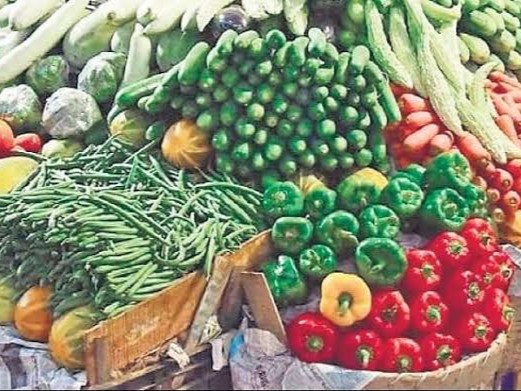
“That’s why we strongly encourage consumers to focus on eating real, unprocessed foods over the upcoming holidays.”
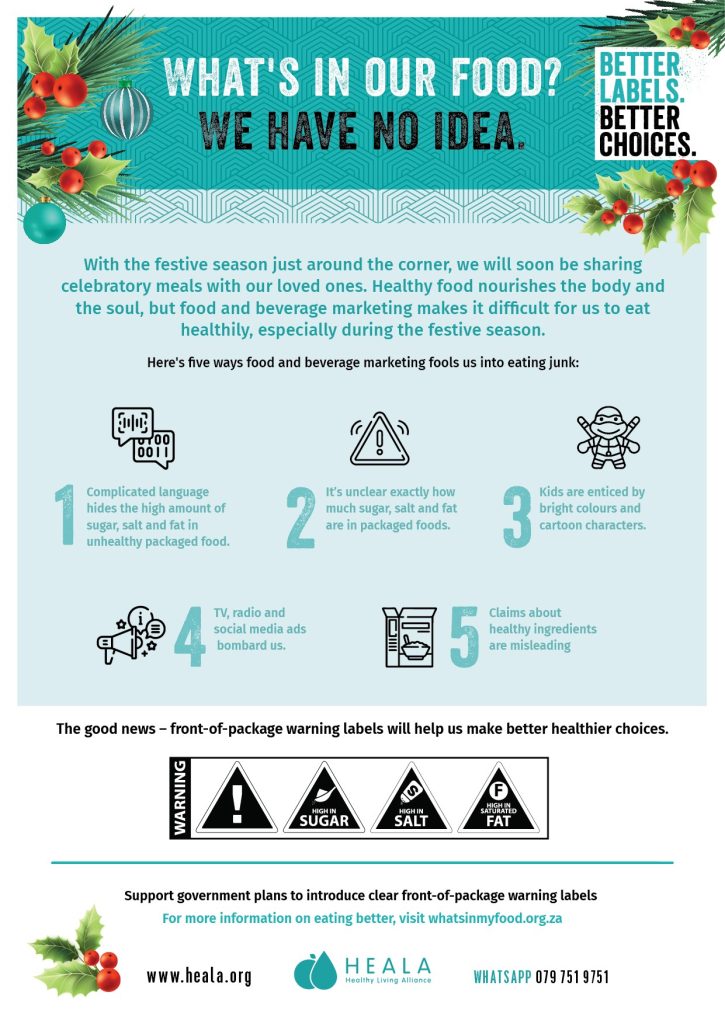
One of the biggest challenges for consumers is that food labelling isn’t clear or consistent, making it hard to tell what’s actually on your plate.
Ingredients are often printed in a painfully small font, and if you don’t have a degree in chemistry, it is almost impossible to understand the components of what you are buying.
Complicated language hides the high amounts of sugar, salt and fat in packaged food, as well as the variety of chemicals used to protect the flavour of the food and preserve it during storage.
Another problem is “healthwashing”.
With more people demanding healthy snacks, manufacturers are jostling for position in the health and wellness space and claiming specific health benefits.
Food items are being marketed as “high protein”, or “low fat”, but many of these claims are misleading.
Because there is no single regulatory authority for food labelling, it is easy for marketers to mislead consumers with half-truths that give them a false sense about the benefits of products.
“No matter what the front of the food package promises you, from lowering your cholesterol or being made with whole grains, ignore it,” says Mbalati.
“Those messages are marketing claims and may be deceptive. Instead, you need to pay attention to what is on the side or back of the package,” says Mbalati.
“What’s on the front is purely a sales pitch; the nutrition panel and ingredient list is where you’ll find what’s really in the product. That’s where you can check how much sugar, salt, and fat it contains.”
Television, radio and social media advertising are powerful mediums for marketing food and beverages, and marketers use them to target consumers, particularly children, with the hope that they will in turn influence their families’ food choices.
Foods that are highly processed are the most addictive, and that’s what makes people reach out for more, maximising the sales and profits of manufacturers, particularly over the festive season.
“Companies are free to promote unhealthy food and drink products to children both online and on TV and radio, especially during popular family TV shows,” says Mbalati.
“This has a profound impact on children’s food preferences, consumption and behaviours, and is leading to the expansion of our national waistline.”
Being overweight and developing obesity are key contributors to the prevalence of lifestyle diseases.
Obesity, a chronic lifestyle disease itself, is closely linked to many other diseases.
1. In South Africa, 68% of women, 31% of men and 13.5% of children are overweight or obese.
2. Because women suffer a disproportionate burden of obesity, this not only affects their health but also that of their children.
Top tips to reduce your sugar intake:
Avoid soft drinks and other sugar-sweetened beverages, which are among the top sources of added sugars.
Reach for fruits instead of sweets and chocolate, biscuits or other sweet treats.
Read ingredient labels. Sugar is often hiding in places you wouldn’t expect, such as pasta sauces and sandwich bread.
Added sugars have a lot of different names which are often not easily understood. When reading labels, keep an eye out for terms like corn sweetener, corn syrup, dextrose, fructose, glucose, high-fructose corn syrup, honey, lactose, malt syrup, maltose, molasses, raw sugar, and sucrose.
“The festive season comes with a lot of tasty treats which you can still enjoy in moderation,” says Mbalati.
“But where possible, try to choose minimally processed, low sugar foods and plenty of fresh vegetables, fruits (especially berries), nuts and seeds, fish and seafood and olive oil.
“Cut back on soft drinks and limit your alcohol consumption too, as drinks like cocktails can be very high in sugar. By making good food and drink choices, you can have a happy holiday and start the new year on a healthy note too.”
Visit www.whatsinourfood.org.za for more information on healthy food choices.