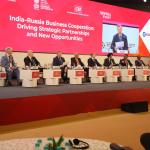
As we go into the Investment Conference this week, I am reminded that attracting investment is partly a sales job.
No matter how good the investment case, it must be made, and investor concerns engaged with.
It requires constant care to position the “brand” of South Africa as an excellent opportunity for investors, one that offers decent returns and manageable risks.
Last week was not the best runup to the conference, to put it mildly.
There were several blunders in how government communicated to the market.
Perhaps the most painful to watch was the debacle around the exemption given, and then withdrawn, to Eskom to allow it to not report fruitless & wasteful expenditure in its annual financial statements.
The way it was communicated to the market with the impression created that the exemption was to enable the withholding of information from rating agencies, was a serious blunder.
It damages government’s reputation as an honest counterpart to investors.
One of the most important investment cases we should be making is in the transition of our energy sector.
That case was not helped by electricity minister, Kgosientso Ramokgopa, last week when he reported on his tour of Eskom’s 15 power stations and the reasons they have suffered such underperformance.
While it is completely right that the stations should be managed to improve performance, the minister was widely quoted saying that their lives should be extended through greater government investment while more should be invested in coal mines to produce more coal.
This would not be about running the stations better, but about breaking with the plan set out by the National Electricity Crisis Committee (NECOM) based on the existing decommissioning schedule for Eskom plants.
While the minister may not have intended to imply a swing in his focus from renewables to coal-based generation, his comments are at risk of being interpreted like that.
Investors who are planning to pour billions of dollars into the project of transitioning our economy will have been alarmed.
It is not just foreign investors, though.
South African companies are contending with the fact that they will increasingly find it difficult and more expensive to export their goods because of the carbon profile of the energy required to manufacture those goods.
The European Union (EU), among others, is moving towards a carbon tariff system that will penalise imports from countries with a high carbon intensity of production.
The EU is our biggest trading partner, but also the region to which we export goods with the most value-added, such as vehicles.
Sticking to the transition plans is therefore important for domestic companies to be able to invest, confident that the power they consume in future will enhance their international competitiveness.
The minister I’m sure is well aware of the progress being made in ramping up renewables production, which is where the focus should be.
Indeed, one of the PR opportunities was that Nersa released data showing 1.2GW of new electricity production was registered in March, bringing the total for the quarter to 2.4GW.
That is half the nameplate capacity of Medupi, registered in a single quarter (though it will take perhaps two years for the mix of wind and solar plants to be built and become operational).
That is quite some achievement, yet there was no press release and no comment on it from the minister.
Why?
If ever there was an opportunity to credibly tell the story of our progress toward resolving load shedding this was it.
It shows how renewables are the future of electricity production in South Africa, not expanded coal mines or extended lives of ancient power plants, none of which can be funded anyway.
Instead, the bad PR continued, with the sudden end of the state of disaster announced, at the same time that government was facing litigation from advocacy NGOs about the validity of it.
The unavoidable impression is that government did not have good grounds for announcing a SOD [state of disaster] and that it was completely unnecessary in dealing with the electricity crisis.
Readers will know that I was sceptical about the SOD in the first place.
This could have been so different. We could have placed the NECOM plan front and centre of government communications, as it should be.
We should talk not of exempting Eskom from disclosure requirements, but of its progress in restructuring to unbundle an independent grid operator.
We should talk of the rapid build rate of renewable energy plants, much of it led by the private sector, diversifying our energy production base, not of digging up more coal.
We should talk of government improving the environment for global investors to back the transition of our economy.
That, I hope, is the message that emerges from the Investment Conference.
We are not going into it with the wind in our sails after last week, but it is the investment case that must be made, and it is a reflection of reality.
Government needs to signal to the world that it is committed to transition.
In doing so it would also signal to domestic companies that a brighter future awaits and they too can be investing.
*This column was first published in the Business Leadership South Africa (BLSA) weekly newsletter. The author Busisiwe “Busi” Mavuso, is the CEO of BLSA.
*The views Mavuso expresses in this column are not necessarily those of The Bulrushes