From the streets of Johannesburg to the deserts of Sudan, chaos reigns supreme.
Murder, criminality, and the vilest acts of violence plague the African continent, leaving its inhabitants helpless and terrified.
This shameful reality is a far cry from the hopes and aspirations of African children, and it serves as a stark reminder of the political work that remains to be done.
The military conflict between the Sudan Armed Forces (SAF) and the Rapid Support Forces (RSF) is the latest chapter in Africa’s troubled history.
This ferocious battle for power and control has caught the attention of the world, but sadly, the African Union (AU), the very body that should be taking the lead in finding a solution, is nowhere to be found.
Instead, the US and Saudi Arabia have taken up the mantle of peace brokers, leaving Africa’s fate in the hands of outsiders.
This is a bitter pill to swallow for the continent’s inhabitants who rely on the AU to ensure peace, stability, and economic growth.
As the African Union sits idly by, Sudanese prisoners, including former President Omar al-Bashir, walk free from their cells.
This is just one example of the wanton criminality that is tearing Africa apart.
The future of Africa hangs in the balance, and it’s time for the continent to take a stand.
The African Union must step up and lead the way toward a brighter future, one that is free from violence, corruption, and political instability.
The time for action is now, and Africa must rise to the challenge if it hopes to survive and thrive in the 21st century.
Mother Africa has been grappling with the legacy of colonialism that has divided and fragmented the continent for far too long.
But as Africa’s “Agenda 2063” strives to map out a bold vision for the future, the African Union (AU) appears to be missing in action as the people of Sudan suffer from violence and unrest.
The AU, often referred to as the African UN, was created to promote peace, stability, development, and economic growth on the continent. Yet, despite the noble ambitions of Agenda 2063, the AU is failing to live up to its mandate.
The question is, where is the AU in Africa’s hour of need?
Addis Ababa, the AU’s headquarters, is still rife with divisive discourse along the lines of Francophone and Anglophone Africa, perpetuating the harmful legacy of colonialism.
Meanwhile, the rest of the world is becoming increasingly globalized, presenting an opportunity for Africa to compete effectively.
But to do so, the continent must unite and support one another.
As the death toll in Sudan rises, Africa’s unity has never been more critical. African solutions to African problems must be at the heart of any response to the crisis.
It’s time for the AU to step up and show leadership in achieving the vision of Agenda 2063, and to ensure that the people of Africa are not left behind.
In Sudan, death and destruction continue to ravage the capital Khartoum as the warring factions refuse to budge from their positions, each convinced they will emerge victorious.
The conflict that erupted on April 15 has already claimed almost 500 lives and left nearly 5 000 people injured, with many suffering permanent injuries.
UN Secretary-General, Antonio Guterres, has expressed his anguish over the dire situation, calling it “heartbreaking.”
He also voiced fears that the conflict could spread to Sudan’s seven neighboring countries, all of which have seen violent clashes over political instability in the last decade.
According to Guterres, the conflict could trigger suffering for years to come and set the continent’s development back by decades.
Sudan’s troubled past includes a civil war that led to the secession of South Sudan, and the country was still in the process of reconstruction and development when a sudden conflict broke out two weeks ago.
The UN’s humanitarian office has had to cut back on some of its operations due to ongoing fatal clashes between the country’s military factions.
Shockingly, at the time of the conflict, one-third of the Sudanese population required humanitarian aid, and this number is increasing daily.
The UN’s envoy to Sudan, Volker Perthes, recently briefed the UN Security Council and stated that neither side appears ready to negotiate in good faith.
Both the Sudanese Armed Forces (SAF) and the Rapid Support Forces (RSF) believe that a military victory is possible, and both factions are more concerned with ruling the country than with putting its people first.
Their short-sighted goals are causing immense harm to their country and decimating its natural resources, essential for development.
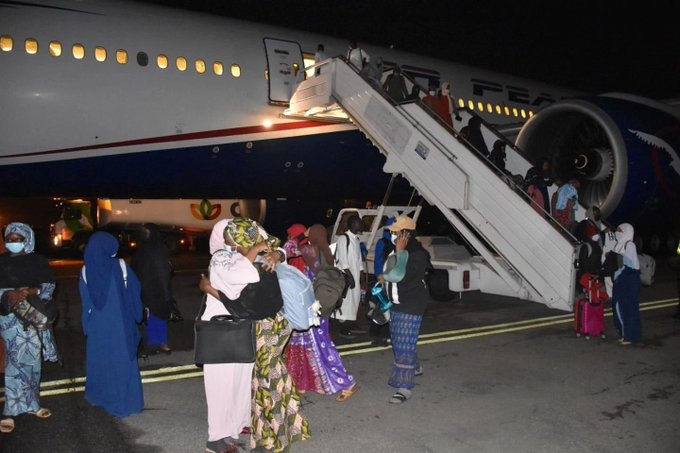
As the international community focuses on the plight of foreign nationals trapped in the conflict, media scrutiny has increased.
However, the danger of the situation cannot be understated, and UN Secretary-General Antonio Guterres has warned that the conflict could spill over into Sudan’s neighboring states, causing immense suffering and setting back development for years.
Sudan must find a way to end this conflict and work towards a stable, prosperous future for its people.
Sudan, the land of the Pharaohs and the ancient kingdoms of Kush, is today a nation grappling with the curse of oil.
For a nation whose wealth lies in the ground, the promise of riches has proven to be a poisoned chalice.
As the latest conflict rages on, the murky world of geopolitics is adding fuel to the fire. It’s not just the Sudanese who are fighting over the country’s natural resources.
Powerful Western nations are vying to get their hands on the oil.
Sudan’s bilateral ties with Russia and plans to build a new port in the north have reportedly raised the ire of the US, leaving some to speculate that the war is a proxy battle between superpowers.
As the fighting continues, the African Union’s silence is deafening.
The continent must unite and confront the international community as a united front if it wants to determine its geopolitical direction.
The EU has shown the power of continental solidarity in shaping Europe’s approach to world politics, but Africa must stand up for itself to avoid being dictated to by outsiders.
As the conflict in Sudan unfolds, questions remain unanswered. Who is backing the paramilitary bloc of the army?
What is the war being fought over?
The truth will come out, but at what cost to the Sudanese people and their beautiful land?
Europe’s reliance on the US for political and economic support is undeniable.
In exchange for NATO’s military protection, heavily funded by the US, Europe serves as the biggest vehicle in spreading and maintaining US hegemony.
This curious relationship is a marriage of convenience, lacking true sovereignty and driven by self-serving interests.
To address this geopolitical challenge, Africa must first reconfigure its internal relations.
Returning to former South African President Thabo Mbeki’s African Renaissance is key to repositioning the continent both internally and externally.
Doing away with strict adherence to Westphalian borders and prioritising a free-trade continental zone can help Africa retain its true identity while also promoting unity.
In light of the ongoing conflict in Sudan, the African Union must step up and play a leading role in ending the violence.
Back in 2019, Sudan was suspended from participation in AU activities until the effective restoration of civilian authority.
It’s time for the AU to wake up and prioritise the development of the African child by utilising the continent’s natural wealth.
The challenges facing Sudan are grave and require immediate action but addressing them can be the first step towards a more united and prosperous Africa.
*The writer of this article is Kevin Mofokeng, a Developmental Writer and digital PR strategist based in Gaborone, Botswana. The views expressed by Kevin Mofokeng are not necessarily those of The Bulrushes