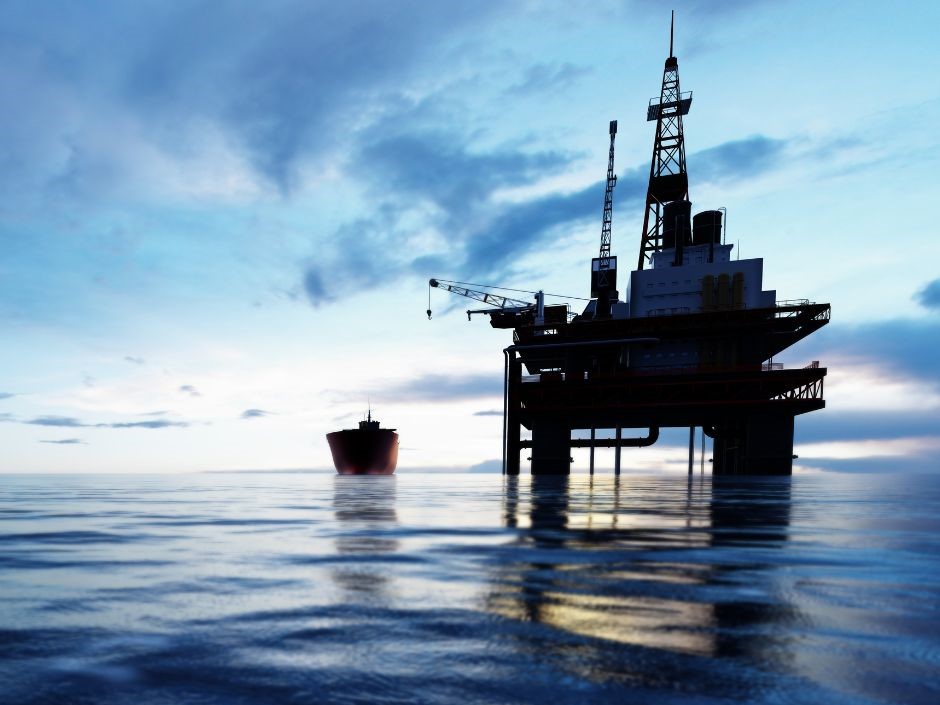
Johannesburg – At any given time, an average of 90% of the oceans around South Africa (our Exclusive Economic Zone – EEZ) are under lease for oil and gas exploration or extraction.
Applications for exploratory and extractive drilling rights by oil and gas giants are being approved yet at the same time are being objected to by many stakeholders, including NGOs, coastal communities, and fishers.
Unfortunately, this push-back by stakeholders appealing against decisions to approve drilling or exploration has been compromised by the lack of a realistic oil spill model to evaluate risks and impacts.
A South African, non-profit organisation (NPO), WILDTRUST, focused on the conservation of the natural world, has spearheaded a project titled “Oil Spill Model for South Africa’s Exclusive Economic Zone”.
The project aims to develop a model to predict the nature, behaviour, and trajectory of oil spilled from offshore oil and gas extraction.
This will provide realistic scenarios for future assessment of environmental, social, and economic risks of major blow-outs and routine spills from drilling sites being pursued in South Africa’s Ocean.
The project, funded by the Energy Transition Fund and driven by WILDTRUST, is working closely with Research Associates at the University of Cape Town including:
- Ocean Modeller, Dr. Giles Fearon;
- Nelson Mandela University;
- Prof Annalisa Bracco at the Georgia Institute of Technology;
- Danielle Reich at Shoal’s Edge Consulting; and
- the South African Environmental Observation Network (SAEON).
“An oil spill model is essential as it helps avert as much risk as possible and this should be a priority for all countries, not just South Africa,” said Dr. Jean Harris, Strategic Lead of the WILDOCEANS programme at WILDTRUST.
The Deepwater Horizon oil spill of April 2010 in the Gulf of Mexico saw approximately 4 million barrels spilled from a BP well over 87 days, making it the largest accidental marine oil spill in history.
With so much of South Africa’s Ocean space being made “available” for oil and gas exploration or extraction – we need to consider the fact that an oil spill in our waters is a real possibility.
“Applications to explore and extract oil and gas are subjected to an Environmental Impact Assessment (EIA) process, but it often grossly under-represents the likely negative environmental impacts, doesn’t assess climate risk, and is funded by industry applicants,” says Harris.
Ocean Modeller on the project Dr. Giles Fearon, says: “There is great value in an oil spill model which is capable of taking into account the complex and highly dynamic oceanographic features within South Africa’s EEZ, and how oil from potential deep-water blowout scenarios is likely to behave once released into this environment”.
Dr. Fearon added: “The results of the study will provide stakeholders with an independent assessment of the potential risks posed by deep-water blow-out spills from offshore oil and gas extraction.
“Model results indicate that a 15-day blowout of light crude oil off the east coast of South Africa would have an approximately 80% chance of necessitating beach clean-up operations and a greater than 50% chance that oil concentrations would exceed the threshold for mortality of shoreline life.
“The fast-flowing Agulhas Current, which hugs the east coast of South Africa, would transport oil large distances, hindering predictions of where oil would make contact with the shoreline, further complicating clean-up efforts in the event of a spill.”
Dr. Fearon said the strong connectivity of our oceans means that a blow-out spill on the east coast could necessitate beach clean-up operations as far away as the west coast.
“The minimum time to shoreline impact could be as little as three days for the east coast of South Africa, increasing to about 10 days for the south coast and 30 days for the west coast,” explained Dr. Fearon.
Commenting on environmental challenges, Dr. Harris said: “South Africans are already seeing the extreme effects of climate change in our country due to greenhouse gases – droughts, storms, floods, and impacts on fisheries and biodiversity,” says Harris.
“Scientists predict that we have less than 10 years to prevent over-shooting global warming thresholds and seeing irreversible damage to the planet as we know it.
“Promoting additional extraction of oil and gas seems highly questionable. Should a blowout or spill occur in our waters, damage to these areas would severely compromise biodiversity, fisheries, and tourism.”
Dr. Harris said this oil spill model for South Africa is a powerful tool to be used in the civil society campaigns underway in South Africa to stop the exploration and exploitation of fossil fuels.
He said it will allow for better assessments of potential damage and create an environment, where it is more difficult for approvals to be obtained by big industries for risky proposals that threaten marine biodiversity (and marine protected areas), natural resources, fisheries, tourism, and coastal community livelihoods.
The WILDTRUST oil spill model for the offshore environment of South Africa will provide an objective and scientifically defensible reference for the assessment of risks when decisions are made and for future oil spill modelling studies in the region.
The model will also help generate awareness among and disseminate information to decision-makers, the public, and affected stakeholders about the risks associated with an oil spill from offshore exploration and extraction.