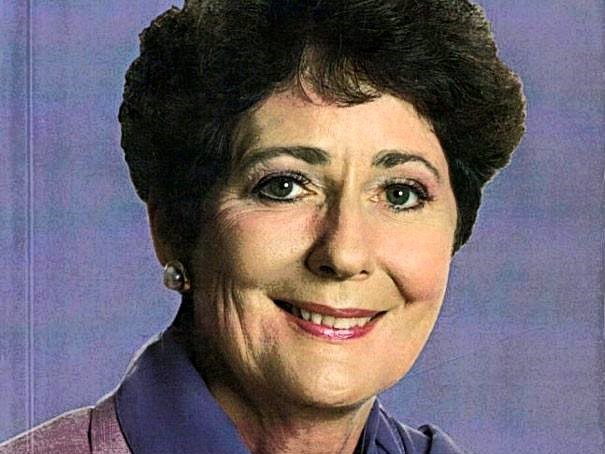
Pretoria – Ex-security guard Luyanda Mboniswa – who is serving a life sentence for the murder of former First Lady Marike de Klerk – will be released on parole at the end of the month.
The Department of Correctional Services (DCS) announced late Monday that it was “in a position to confirm parole placement of offender Luyanda Mboniswa, effective 30 August 2023”.
Mboniswa was a 21-year-old security guard at the Dolphin Beach apartments in Blouberg, Cape Town when he attacked and murdered Marike inside her apartment on 3 December 2001.
Because the Dolphin Beach apartments were a luxury secured complex, initial reports suggested that the former first lady had taken her own life.
However, it was later established that Mboniswa violently gripped Marike’s neck, breaking several bones in her throat and causing a blood vessel to burst in her eye.
A steak knife was found embedded in her back and she also suffered several wounds to the head.
On the day of the murder, Marike’s ex-husband, former president FW De Klerk, was in Stockholm for a celebration of the centennial of the Nobel Peace Prize.
Although Mboniswa was acquitted of a rape charge, a pathologist was not able to rule out penetration.
Mboniswa was convicted for the murder of Marike, robbery with aggravating circumstances, and housebreaking. He was sentenced to life in prison.
This week, on Monday, the DCS said Mboniswa had met all the criteria to be released on parole.
“In compliance with the Correctional Services Act 111 of 1998, Mboniswa was considered for parole placement having served the minimum required time,” said the DCS.
“The parole placement process started from the preparation of the profile by the Case Management Committee and consideration by the Correctional Supervision and Parole Board.”
The National Council for Correctional Services also dealt with the profile before its submission to the Minister of Justice and Correctional Services for a decision.
The minister is empowered by Section 78 of the Correctional Services Act 111 of 1998 to make a determination on those sentenced to life.
“Mboniswa will be admitted into the system of community corrections, whereby he is expected to comply with a specific set of parole conditions for the rest of his natural life,” the DCS said.
“He will be assigned a monitoring official to render supervision duties. Normal parole conditions will apply, such as being restricted to his magisterial district.
“He is also not allowed to have contact with the family of the victim and shall not change his residential address without informing the monitoring official.”
The DCS emphasised that parole placement forms part of the total rehabilitation programme in correcting the offending behaviour and may include continuation of programmes in the system of community corrections.