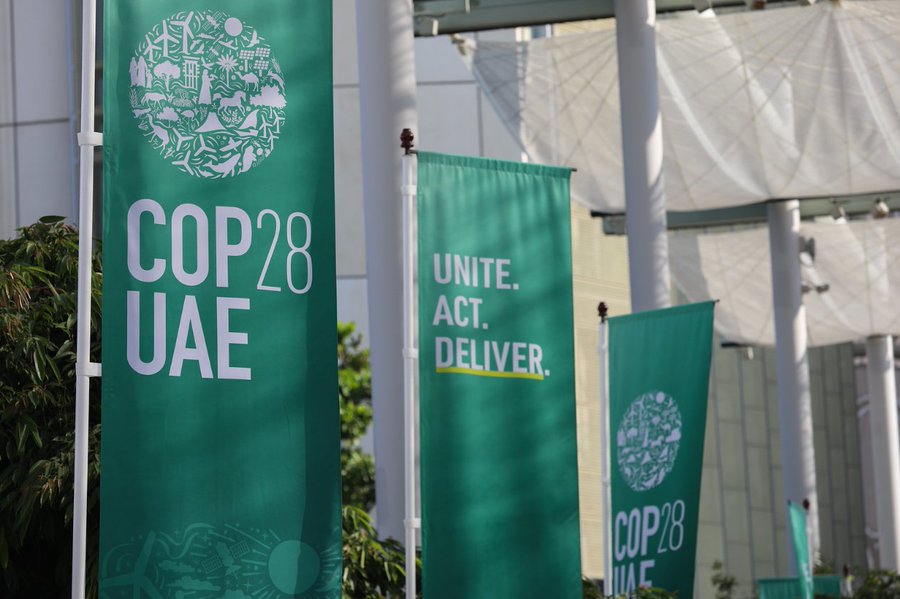
In the dynamic second week of COP28, the spotlight shifted onto pivotal discussions embracing youth empowerment, education, and crucial talks on nature conservation and food security.
After intense debates encompassing climate finance, energy transition, health, and peace, attention centered on forging critical agreements.
As the world eagerly anticipates the final outcome from Dubai, let’s take a moment to highlight the significant milestones achieved during the latter part of the UN climate summit.
On December 8th, the focus at COP28 was on the younger generation and their pivotal role in shaping climate actions.
This special day aimed to empower youth to actively influence decisions made during COP28 and in future climate initiatives.
Here’s a breakdown of the key highlights: Youth Engagement: YOUNGO, the official youth constituency to the UNFCCC, introduced the inaugural Youth Stocktake.
This comprehensive analysis emphasizes enhancing youth involvement in climate diplomacy, presenting strategies to bolster their role in decision-making processes at COP.
Education Commitments: 38 nations pledged to integrate climate education into their National Determined Contributions (NDCs) and National Adaptation Plans (NAPs).
Through the Greening Education Partnership Declaration, in collaboration with UAE, UNESCO, and UNICEF, the focus spans across Greening Schools, Learning, Capacity, and Communities.
Health Investment: The UAE announced a substantial $220 million funding initiative aimed at improving youth health in Africa, recognising the pivotal role of quality health and education in fostering a prosperous future for the continent’s young population.
Conservation Initiatives: Act 30, launched by IUCN, IIFB, and Esri, brings together scientific experts and Indigenous representatives to assist governments in conserving biodiverse areas.
This supports the 30×30 target, aiming to conserve 30% of various ecosystems by 2030.
Forests and REDD+ Partnership: The Jurisdictional REDD+ Technical Assistance Partnership (JTAP) was introduced to aid tropical forest countries in accessing finance and preserving forests.
However, recent studies have raised concerns about the effectiveness of REDD+ projects in carbon reduction and their impact on vulnerable communities.
Controversies: OPEC expressed concerns about undue pressure on the fossil fuel industry in the COP28 final agreement draft, highlighting worries about the potential phase-out of fossil fuels.
This sparked discussions about targeting emissions rather than energy sources in climate policies.
While initiatives to empower youth and integrate climate education have gained traction, debates around fossil fuels continue, highlighting the complex challenges in achieving consensus at COP28.
On December 9th at COP28, the spotlight was on crafting strategies for nature, land use, and ocean conservation to safeguard biodiversity hotspots and natural carbon reservoirs.
Here are the key highlights from the day: COP29 Venue Confirmed: Baku, Azerbaijan, was announced as the host city for next year’s climate summit, marking an important decision amid discussions on climate action, albeit in a fossil fuel-producing state.
Finance and Nature: The State of Finance for Nature Report by UNEP revealed stark disparities, with finance flowing into activities harmful to nature surpassing investments in nature-based solutions by over 30 times.
This highlights a significant gap in prioritising sustainable practices over harmful activities globally.
Biodiversity Endorsements: 16 countries, including Canada, Brazil, Colombia, and the United Kingdom, endorsed the COP28 Joint Statement on Climate, Nature, and People.
This statement calls for accelerated action in line with global agreements such as the Paris Agreement and the Land Degradation Neutrality Targets.
Fossil Fuel Subsidies: A coalition, led by the Netherlands and joined by nations like Canada and France, aims to strategize the elimination of fossil fuel subsidies.
This comes after COP26’s agreement to phase out “inefficient” subsidies, although major contributors like the US and China didn’t join this new coalition.
Activism and Protests: Outside the Blue Zone, a significant protest occurred, advocating for fossil fuel phase-outs, climate justice, a Gaza ceasefire, and support for developing nations and sustainable agriculture.
Diplomatic Conversations: Chinese climate envoy Xie Zhenhua and US counterpart John Kerry engaged in extensive discussions at the Chinese pavilion, symbolising hope for a more ambitious outcome at COP28, given their representation of major global economies and emitters.
Amid calls for bolder climate actions, diplomatic engagements between key nations and active protests underscored the diverse range of discussions and actions shaping the COP28 landscape.
On December 10th, COP28 put the spotlight on food, agriculture, and water to tackle global food and water security while aiming to stay on track for the 1.5-degree Celsius target.
Here are the key highlights from the day: Adaptation Concerns: Delegates from vulnerable nations expressed worry over the draft text of the Global Goal on Adaptation, citing its lack of ambition in addressing the necessary response to 1.5-2 degrees Celsius of warming.
Specific global targets, notably the crucial 30% land protection by 2030, were absent in the latest version.
Food Security Commitments: 18 additional countries signed the Emirates Declaration on Sustainable Agriculture, Resilient Food Systems, and Climate Action, bringing the total signatories to 152.
This commitment involves formally integrating food and agriculture into national climate plans and boosting funding.
Additionally, the UN Food and Agriculture Organization (FAO) introduced a groundbreaking Global Roadmap to 1.5C for food systems, outlining urgent actions in domains like livestock, soil and water, and reducing food loss and waste.
Transforming Food Systems: Brazil, Cambodia, Norway, Sierra Leone, and Rwanda emerged as founding co-chairs of the Alliance of Champions for Food Systems Transformation (ACF).
This coalition aims to overhaul national food systems, ensuring access to affordable, nutritious, and sustainable diets worldwide.
These nations committed to aligning their Nationally Determined Contributions (NDCs) and action plans with updated pathways for food system transformation by 2025, emphasizing annual reporting on progress.
Amid concerns about adaptation goals, significant strides were made in commitments to sustainable agriculture, with countries and international organizations forging alliances and launching initiatives to transform global food systems for a healthier and more sustainable future.
On the penultimate day of COP28, negotiations for the final agreement took center stage, unveiling key developments:
COP28 Final Agreement: The awaited draft was released after a delay, introducing language urging nations to reduce fossil fuel consumption and production, a notable inclusion marking a first in COP deals.
However, it stopped short of explicitly calling for a phase-out, a demand voiced strongly by activists and several developing nations.
While maintaining focus on nature-based solutions and the Kunming-Montreal Global Biodiversity Framework, it acknowledged calls for resilient food systems.
Nonetheless, critics highlighted the absence of language concerning food system transformation in the mitigation section.
Biodiversity Conference Announcement: Colombia confirmed its hosting of the sixteenth edition of the UN Convention on Biological Diversity.
This comes nearly a year after the historic adoption of the Global Biodiversity Framework in Montreal, uniting 196 governments in a crucial global commitment to biodiversity conservation.
As negotiations culminated toward the final agreement, discussions underscored the complex balance between addressing critical issues like fossil fuels, biodiversity, and resilient food systems while navigating diverse perspectives and demands from stakeholders.
*The writer of this article is Kevin Mofokeng, a developmental writer and digital PR strategist based in Gaborone, Botswana. The views expressed by Kevin Mofokeng are not necessarily those of The Bulrushes