London – The Democratic Republic of the Congo (DRC) has experienced an extreme level of violence in 2023 as the country’s long-awaited national elections are being disputed.
The conflict has involved militant groups over territory and the country’s rich natural resources in the eastern provinces, high-level political tensions, and ongoing confrontation with Rwanda, which has contributed to the ongoing deadly conflict.
As a consequence, according to the UN, the number of internally displaced people “climbs to 6.9 million people across the country – the highest number recorded yet,” it said in a statement.
Since 1996, the conflict in DRC has resulted in 6 million deaths, which came after the Rwandan genocide, whereby Hutu extremists killed more than 800 000 minority Tutsi and 200 000 moderate Hutu.
This resulted in Hutu extremists forming militia groups in the DRC.
At the same time, Tutsi militias formed various groups.
Since then, The DRC has been a hotbed of fighting, which has lasted for three decades.
However, in the early 2000s, one prominent group to surface was the March 23 movement (M23), which has been a huge force in the DRC and which the US and UN say is backed by Rwanda.
President Paul Kagame of Rwanda has repeatedly denied any involvement in the fighting in DRC.
Another flashpoint is the mining of precious minerals, especially cobalt.
The DRC is one of the world’s go-to countries for materials such as cobalt, which is key to the transition from fossil fuels.
Mining companies are expanding, and cobalt is a strategically sought-after mineral for batteries that charge electric cars and other widgets.
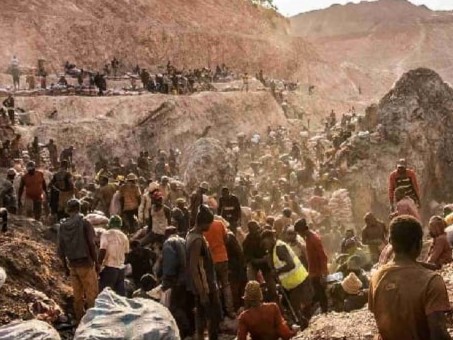
In Kolwezi, there are two provinces, Lualaba and Upper Katanga, that are mostly exploited for cobalt and where people are living off less than $2 a day.
As the demand grows, the more mining it impacts local people.
Among the many ills, there are no schools, and no safe drinking water.
Crops are not growing as well as they used to.
Artisanal mining for cobalt has become the preferred source of income for locals.
However, the DRC government places limits on how much cobalt a person is allowed to mine.
Many of these miners complain about the limits and the very low prices they are paid for the cobalt.
Disgruntled locals say they are not being properly compensated for the cobalt and much less for their labour.
Some homes in Kolwezi are being demolished to make way for more mining operations, but, again, residents complain they are not benefiting.
Cobalt fetches much higher prices in Europe when compared to what the artisanal miners in DRC earn for the highly sought-after mineral, which is an essential part of the lithium-ion batteries that give electric vehicles the range and durability needed by consumers.
Who is buying tainted cobalt?
The question is, internationally who is buying the cobalt produced by the exploited artisanal miners in the DRC?
Many of the cobalt mines in the DRC are owned by the Chinese.
However, once the cobalt is on the international market, it becomes difficult to find out how it was sourced.
Child Labour
Another problem is that the risks and abuses are not being mitigated.
Human rights abuses and risks are not being recorded and mapped.
Instead of children spending their days attending school or playing, they are involved in cobalt mining to earn something – no matter how small – to take home.
The DRC government appears to be taking a blind eye to the matter.
Corruption is a problem
Corruption is another big problem contributing to the sad state of affairs in which locals are exploited and the DRC loses revenue running into billions of US dollars.
The shenanigans involving cobalt mining and selling show that there is another side to going green.
Cobalt is nearly 100 percent recyclable.
Exploitation of DRC miners
Presently, foreigners are making the most money from cobalt on the back of poor miners in the DRC.
There are people in the DRC who are suffering immensely working under traitorous conditions from the dust that goes into the lungs and causes coughing and respiratory diseases.
Changes need to be made on the ground when it comes to due diligence.
In addition, consumers need to be properly informed about where materials that are used to make their devices are from and how they were obtained, especially cobalt, and how it is used in electric cars.
The world should no longer ignore the plight of poor cobalt miners in the DRC, which has just undergone elections, with results expected
The election proclamations will be made province by province, and on 31 December 2023, after which the electoral commission will publish the provisional results in general.