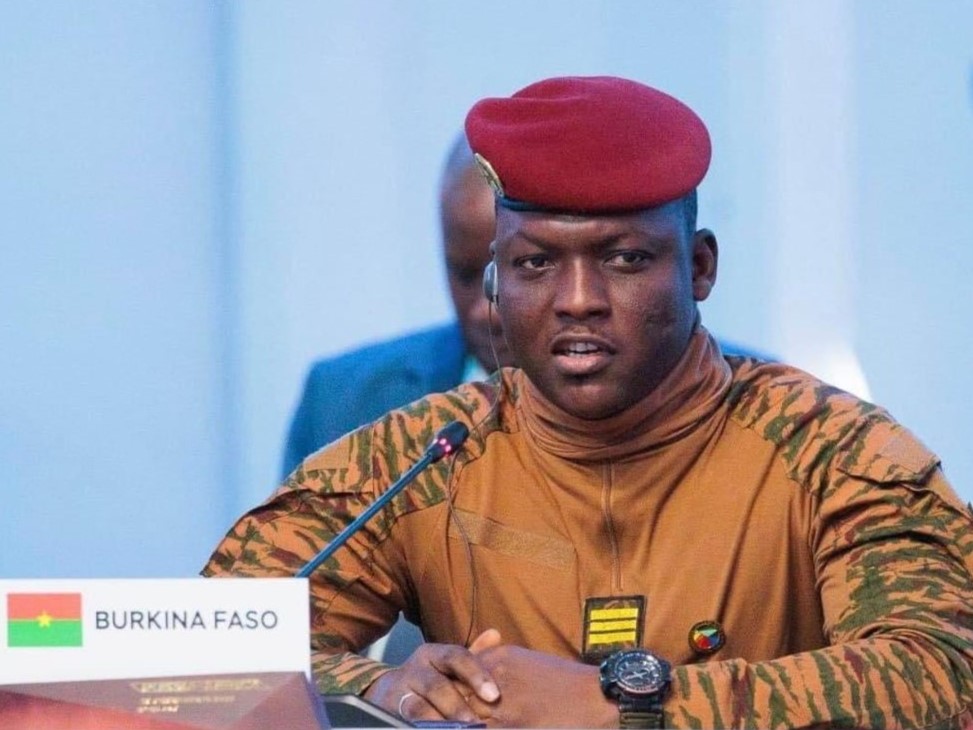
Embracing a profound sense of unity and shared purpose, Premier Appoinaire Joachim Kyelem of Burkina Faso eloquently expressed a transformative vision during a joint conference in Niamey, Niger’s capital.
He proclaimed, “Irrespective of our origins in Mali, Niger, or Burkina, our destinies are intertwined. Together, we chart our course; it falls upon us to shape our collective future.”
This stirring declaration marked a pivotal moment in the region’s history.
On September 16, 2023, Mali, Niger, and Burkina Faso solidified their commitment by inaugurating the Alliance of Sahel States (AoSS) through the historic “Liptako-Gourma” Charter.
Under the stewardship of military leaders who ascended to power through coups, these neighboring nations embarked on a journey towards solidarity, establishing a framework for collective defense and mutual aid.
This bold initiative intertwines military and economic resources to confront shared security challenges and uplift the welfare of their citizens.
The AoSS stands as a testament to the region’s resolve to forge a brighter, more secure future through unity and cooperation.
Following the implementation of punitive measures by ECOWAS against the Alliance of Sahel States (AoSS), including restrictions on financial transactions, an energy embargo, suspension of commercial flights, border closures, and various economic and diplomatic constraints, the AoSS made the significant decision to withdraw from the community.
Members of the AoSS have pointedly criticised ECOWAS, attributing their departure to what they perceive as a departure from the founding principles of the organisation and an inclination towards subservience to foreign interests, particularly those of France.
Meanwhile, ECOWAS has cited the failure of AoSS member states to restore civilian governance following coups as justification for its actions.
This complex scenario underscores the tensions and divergent perspectives within the region’s geopolitical landscape.
The Alliance of Sahel States (AoSS) grapples with multifaceted challenges. In 2023, Burkina Faso witnessed a staggering toll of over 8 000 reported fatalities, echoing civil war-like conditions.
Shockingly, the incidence of political violence-induced deaths doubled, positioning Burkina Faso as second only to Nigeria in West Africa.
Furthermore, Burkina Faso stands out globally as the most affected country by terrorist attacks, surpassing even Afghanistan, Iraq, and Israel.
In Niger, amidst a backdrop of relative improvement, the first half of 2023 saw a notable 39% reduction in political violence compared to the preceding six months.
Enhanced security operations contributed to a 49% decline in attacks targeting civilians.
However, despite these strides, a concerning 13% of Niger’s population faces acute food insecurity, with an additional 28% at risk of slipping into this precarious category.
Meanwhile, in neighboring Mali, a concerted offensive by the Malian Armed Forces (FAMa) alongside the Wagner Group prompted a geographical shift in violence towards previously insurgent-held territories in the north.
This offensive reignited rebellions among primarily Tuareg and Arab armed factions operating under the banner of the Permanent Strategic Framework (CSP).
Recent developments indicate a gradual expansion of the conflict across the Northern regions of Timbuktu, Gao, and Kidal.
The dire humanitarian situation in the Central Sahel, encompassing Burkina Faso, Mali, and Niger, remains a pressing concern.
An estimated three million individuals endure forced displacement, both internally and externally, underscoring the profound human cost of the region’s instability.
In light of the formidable challenges facing the Alliance of Sahel States (AoSS), strategic initiatives could be pursued to address these pressing concerns.
Cooperation with Russia presents a potential avenue for bolstering security and stability in the region.
Recent developments, such as the lifting of sanctions on Niger by ECOWAS for humanitarian reasons, underscore the strategic importance of member states like Niger, particularly due to its significant uranium reserves.
The decision by Niger to terminate its military alliance with the U.S.A., coupled with accusations of clandestine uranium deals with Iran, highlights shifting geopolitical dynamics in the region.
This development, alongside the expulsion of French troops from Niger, suggests an evolving landscape of alliances and partnerships.
Against this backdrop, recent agreements between Russia and Niger, as well as with Burkina Faso and Mali through the Wagner Group, indicate burgeoning military cooperation aimed at stabilising security in the Sahel.
Additionally, discussions between Russia and Mali in sectors such as agriculture and energy signal the potential for broader collaboration beyond security matters.
As the AoSS navigates these complex geopolitical currents, strategic engagement with Russia could offer avenues for enhancing security, economic development, and regional cooperation.
By leveraging partnerships with global actors like Russia, the AoSS may be better positioned to tackle the multifaceted challenges confronting the Sahel region.
Collaboration with China presents a promising avenue for the Alliance of Sahel States (AoSS) as it seeks to address the multifaceted challenges confronting its member nations.
China’s adherence to a policy of “Non-Interference of Internal Affairs” positions it as a significant player in the region.
The endorsement of China’s pivotal role by the President of Burkina Faso underscores the depth of bilateral cooperation and appreciation for China’s support in navigating security crises and advancing economic and social development.
With abundant reserves of uranium, oil, lithium, and natural gas, the AoSS member states possess resources that attract the attention of major global economic players.
By fostering partnerships with China, the bloc stands to benefit from the influx of resources necessary to enhance economic and security stability within the region.
By leveraging China’s economic prowess and commitment to non-interference, the AoSS can potentially access crucial investments and infrastructure development initiatives.
Such collaborations have the potential to bolster the region’s resilience against security threats while catalysing sustainable economic growth and development.
As the AoSS navigates the complexities of its geopolitical landscape, strategic engagement with China offers a pathway toward realising its goals of fostering stability, prosperity, and resilience across its member nations.
Through mutual cooperation and shared objectives, the partnership with China holds promise for addressing the pressing challenges facing the Sahel region.
The evolving landscape of trade dynamics in Africa demands a redefinition of bloc priorities toward fostering trade, development, and sovereign resilience.
The expulsion of Niger from the AGOA trade agreement by the U.S. underscores the shifting alliances and economic dependencies in the region.
Niger’s subsequent outreach to China, Turkey, Iran, and Russia highlights the strategic repositioning of African nations amidst geopolitical changes.
Within ECOWAS, intra-trade remains alarmingly low at 2.77 percent, indicating a significant reliance on external partners.
Burkina Faso’s trade statistics exemplify this dependency, with Switzerland emerging as its primary export partner, overshadowing intra-regional trade contributions from Mali and Ivory Coast.
Such dynamics underscore the imperative for stronger intra-regional trade ties within ECOWAS and other regional blocs.
Despite challenges, the Alliance of Sahel States (AoSS) maintains vital trade links within Africa, particularly Mali’s reliance on Senegal for wheat imports.
However, the looming presence of China and Russia in trade partnerships underscores the need for strategic foresight and proactive engagement by African nations.
Africa’s response should transcend reliance on external sanctions, which have proven ineffective and detrimental.
The African Continental Free Trade Area (AfCFTA) offers a transformative avenue for intra-African trade and investment.
Uganda’s suspension from AGOA presents an opportunity for AfCFTA member states to capitalise on lost trade opportunities, redirecting trade towards intra-African markets.
The consequences of sanctions, as witnessed post-Niger coup, highlight the vulnerability of African nations to external disruptions.
Shortages in medical supplies, reduced education financing, and increased food insecurity underscore the urgent need for regional resilience and cooperation.
Fragmentation poses a grave threat to Africa’s security, trade, and economic stability.
African nations must consider every challenge as an opportunity for collective growth and prosperity.
By leveraging initiatives like AfCFTA and prioritising intra-regional trade, Africa can chart a course toward sustainable development and sovereign resilience.
*The writer of this article is Kevin Mofokeng, a developmental writer and digital PR strategist based in Gaborone, Botswana. The views expressed by Kevin Mofokeng are not necessarily those of The Bulrushes