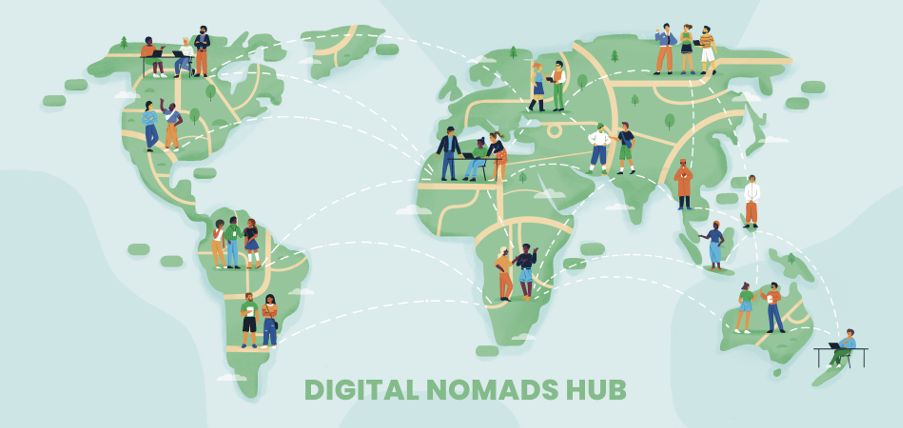
Johannesburg – African countries should allow digital nomads and other skilled workers to “cross their borders”, says Specno – a leading provider of world-class technical solutions.
Specno helps businesses effectively address and manage their challenges to improve efficiency, profit margins, and growth.
“African countries should not restrict, hinder, or outright bar digital nomads and skilled workers from crossing their borders,” said Daniel Novitzkas, Chairperson at Specno.
“Especially when these digital nomads offer the skills and talents required to help grow our continent’s digital economy.
“Sadly, South Africa does this repeatedly, and it harms our progress and efforts to digitally transform our economy and businesses.”
The past decade has seen the emergence of a new group of skilled workers – digital nomads.
This labour force can exploit the freedoms allowed by a mostly laptop-based work process, and offer a unique opportunity to develop and grow Africa’s digital economy in 2024.
In the African context, there is an acknowledgment and embrace of this ideal among several intergovernmental organisations.
The goal is an integrated and continent-wide system that promotes the free movement of labour across borders to grow different sectors of their economies.
Article 10 of the East African Community, for example, explicitly encourages the unfettered movement of people, goods, labour, services, and capital between member states.
“The Department of Home Affairs has reported that, between 2015 and 2021, a yearly low average of 2 200 skilled workers entered South Africa, implying a rejection rate of 52%; for business visas, this figure is as high as 68%,” said Novitzkas.
“In the same breath, the very body enforcing this restrictive regime has taken up the charge to implement digital nomad visas, which it only launched formally in February 2024.”
So, what more can be done in the face of this kind of governmental impediment?
“In the interim, local businesses can outsource these skills to agencies, which offer specialised digital training to their own employees,” said Novitzkas
“This human-based import substitution is best demonstrated in an industry as dynamic as that of software development.”
Not all companies – and especially not those small-to-medium-sized businesses that are set to continue to grow – can realistically maintain the force of talented in-house developers they require to operate and adapt to the business’s digital needs.
“This is particularly crucial given that companies’ digital needs evolve at the same breakneck pace as the wider digital landscape itself,” concludes Novitzkas.
Commenting on the same matter, Jacques Jordaan, CEO at Specno said: “Companies should actively seek out partners that offer continual training, education, and upskilling to their in-house teams – these would be the agencies that recognise the skills gap created by our visa regime, yet have taken a proactive South African approach to plug it”.
Embracing these partners will not only improve one’s business development goals but will also help champion the growth of our country’s digital transformation sector – even when government lags behind.