Intense clashes between military factions have ravaged Sudan, leading to widespread famine threats.
Diplomats must strongly urge the main conflicting parties to agree to a ceasefire promptly.
If not, internal divisions within these factions may thwart any attempts to halt the violence.
As Sudan approaches a somber anniversary, ongoing warfare and the looming threat of famine paint a dire picture.
The past year has seen a violent power struggle between armed factions, resulting in thousands of casualties and widespread hunger.
With the country’s stability teetering and new militias entering the fray, the urgency to end the conflict grows.
Despite renewed diplomatic efforts from the U.S., UN, and African Union, there’s a lack of cohesive action.
It’s crucial for all influential parties, including Arab states, to unite in pushing for peace.
Meanwhile, global leaders must step up aid efforts and ensure access to food supplies to prevent a humanitarian catastrophe.
In April 2023, conflict erupted in Khartoum when tensions over integrating the Rapid Support Forces (RSF) into the army boiled over.
Abdel Fattah al-Burhan and Mohamed Hamdan Dagalo “Hemedti”, who had jointly taken power in 2019, clashed as neither wanted to yield on merging their forces.
Under mounting pressure to restore civilian rule, their rivalry escalated, leading to a devastating nationwide civil war.
This marked a grim departure from Sudan’s history of conflicts primarily confined to its peripheries.
Hemedti’s RSF quickly gained the upper hand over the army, seizing control of much of Khartoum early in the conflict.
Their momentum persisted as they expanded their influence across Greater Khartoum and even captured Sudan’s main oil refinery, boosting their resources.
They also extended their control to Darfur and launched offensives in other regions like Kordofan.
Surprising many, they struck southeast of Khartoum, capturing Wad Medani, a key city.
By year’s end, there was speculation about their next move, with some fearing an assault on the army’s stronghold in Port Sudan.
The RSF’s momentum has hit a snag, as they stretch their forces thin across multiple fronts.
Despite their significant fighting capabilities, clashes in various regions, particularly in Kordofan and Omdurman, have strained their supply lines and resources.
Moreover, their inability or disinterest in effectively governing areas under their control has led to widespread resentment and fueled recruitment for opposition forces.
Meanwhile, the army has launched counter offensives, using combat dones to reclaim territory in Greater Khartoum.
The battle may soon extend to other parts of the capital and critical sites like the oil refinery.
However, progress in retaking Gezira has been slower, hampered by defensive operations led by local militias aligned with the RSF.
As the RSF and army establish their territories, Sudan faces escalating humanitarian crises.
RSF advances often lead to the collapse of remaining state services, leaving only army-held areas with functioning institutions.
Areas under RSF control suffer from rampant looting and atrocities, causing mass displacement and halting livelihoods like farming.
This has devastated domestic food production, while challenges in trade have squeezed food imports, exacerbating the situation.
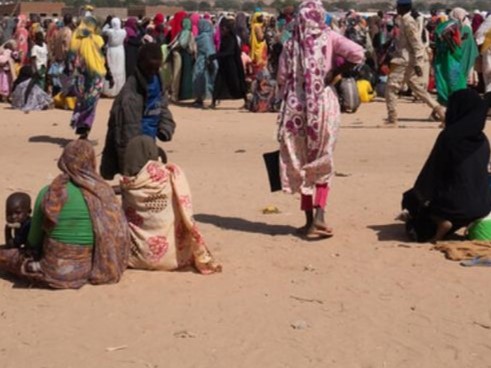
Sudan is in the midst of a severe humanitarian crisis, with 18 million people, over a third of the population, facing acute food shortages.
Both sides of the conflict have hindered relief efforts by restricting access to affected areas.
Most affected regions, including Greater Khartoum and Gezira, are trapped in active conflict zones.
Civilians bear the brunt of this crisis, with the RSF imposing hefty fees on aid convoys or pilfering supplies, and the army blocking relief to RSF-controlled areas.
Urgent action is needed to prevent famine, but challenges in data collection and connectivity have hindered assessment updates since December.
Security remains precarious in Sudan, with several regions facing heightened conflict risks.
Tensions are particularly high in North Darfur, where the RSF clashes with non-Arab armed groups, some of whom now support the army.
Divisions within armed groups in Darfur also raise concerns for intra-group conflict.
In the east, the army’s coalition includes various groups, including popular resistance forces and Islamist militias, but maintaining control over this diverse coalition is challenging.
There’s a risk of further fragmentation within the army’s ranks, potentially exacerbating the conflict.
As more groups become involved in the conflict, Burhan and Hemedti face challenges in controlling their allied militias.
The potential fragmentation of the civil war complicates efforts for high-level negotiations.
Ethnic tensions are escalating, particularly between Darfuri Arabs and Sudan’s riverine peoples, as well as Arabs and non-Arabs in Darfur.
The proliferation of weapons, increased atrocities, and hate speech fuel calls for the annihilation of enemy-aligned communities.
Ethnically driven violence, like the mass killings in West Darfur by the RSF and targeting of Arabs by the army in other regions, is likely to escalate if the conflict persists.
Sudan has become a battleground for regional proxy conflicts, with Egypt backing the army and the UAE supporting the RSF.
Iran provides weapons to the army, while Eritrea generally supports the army to prevent RSF advancement toward its borders.
Ethiopia, allied with the UAE, leans towards the RSF.
These external involvements risk escalating violence and extending the conflict beyond Sudan’s borders.
The deteriorating situation has already affected South Sudan’s oil exports and could destabilize neighboring countries like Chad, Ethiopia, and Eritrea.
The power vacuum also raises concerns about jihadist activities in Sudan and intensifies tensions over Red Sea control among regional powers.
Diplomatic efforts to end the conflict in Sudan have been slow and ineffective.
Initial talks in Jeddah, mediated by Riyadh and Washington, aimed for humanitarian ceasefires but achieved little progress.
Subsequent attempts by the Intergovernmental Authority on Development (IGAD) and back-channel negotiations led by Egypt and the UAE also failed to produce meaningful results.
Face-to-face meetings in Manama resulted in a declaration of principles committing to a civilian government, elections, and a unified armed forces.
However, these talks stalled as leaked information caused internal strife among Sudanese leaders.
Despite the challenges in conflict-ridden areas, there’s hope for a stronger international push for a ceasefire.
The U.S., UN, AU, and IGAD have appointed new officials to lead their efforts, including Tom Perriello and Ramtane Lamamra.
Mohamed Ibn Chambas chairs a high-level AU panel, while Lawrence Korbandy serves as IGAD’s special envoy.
These appointments signal a renewed commitment to ending the war.
Egypt and the UAE could play a crucial role in ending the conflict, given their influence over the warring parties and improving relations.
However, challenges remain, including the need for coordinated diplomatic efforts.
The secretive Egyptian-Emirati initiative and the more public Jeddah process could either reinforce or compete with each other.
Bridging these gaps requires strong leadership from the U.S., supported by efforts from the UN, EU, and other stakeholders.
Additionally, the current mediation efforts have sidelined other important regional and international actors, hindering a coordinated approach to peace in Sudan.
Moreover, resistance from Sudan’s leadership, particularly from Burhan, poses a significant challenge to negotiations.
Burhan’s reluctance to negotiate, combined with uncertainties regarding alliances and potential army splintering, further complicates the peace process.
Disagreements persist between the two sides regarding ceasefire conditions and the political framework post-truce, including the integration of armed forces.
These unresolved issues continue to impede progress towards ending the conflict.
The U.S., Saudi Arabia, Egypt, and the UAE hold significant influence over the warring parties in Sudan and must urgently push for a ceasefire and humanitarian aid access.
With the country facing chaos and mass starvation, time is critical.
Talks in Jeddah should expand to include all relevant parties, with a focus on achieving an immediate and lasting ceasefire.
If Jeddah talks falter, alternative negotiation tracks should complement each other to maintain pressure on both sides.
The goal is to swiftly reach a deal, utilizing all available channels and intensifying pressure on the belligerents.
Immediate action is needed to prevent starvation in Sudan.
Influential parties must urge the conflict parties to allow unrestricted food aid to reach affected communities.
If leaders remain uncooperative, alternative methods, such as funneling funds through local volunteers, should be explored.
Donors should increase support for the severely underfunded aid response, with the upcoming humanitarian conference in Paris providing an opportunity for coordinated action.
However, the most effective solution remains a stable ceasefire, allowing relief supplies to reach all parts of the country and potentially leading to a permanent end to hostilities.
The road to rebuilding Sudan will be challenging, but halting the carnage and preventing further suffering is an urgent priority.
*The writer of this article is Kevin Mofokeng, a developmental writer and digital PR strategist based in Gaborone, Botswana. The views expressed by Kevin Mofokeng are not necessarily those of The Bulrushes