Nearly 60% of South African voters registered their disapproval of the African National Congress’ (ANC) stewardship of the government in the 29 May 2024 election by voting for other political parties.
Just as significantly, more than 40% of the entire South African electorate showed their disapproval of the ANC-led socio-economic conditions in the country by not voting at all.
“This is a clear sign that the people of South Africa want something new, something that makes governing in a democracy possible,” says a long-time American observer of the South African political scene, Godfrey Harris, a former staffer serving the 36th U.S. President Lyndon Johnson.
“The political parties have to start by showing they are serious about their work.
“There is no better way of doing that than by eliminating the acronym “GNU” referring to the Government of National Unity.
“The serious business ahead should not have to contend with the humour and ridicule that references to the word ‘GNU’ have engendered.
“Why not use the term ‘Grand Coalition’ to demonstrate that a new way is on the way.”
He suggests that rather than have a technical committee sort through the manifestos of each party, the party leaders should choose the single most important element of their manifestos for implementation by the new government.
Admittedly, the primary wish of each party will make for a complex job of “sorting out which of these is of the highest priority in terms of national need,” notes Harris.
“Where should South Africa put its attention and its resources?” asks Harris.
“Is it foreign policy? Is it in immigration?
“Perhaps it involves health care or education?
“Should the electricity delivery system be fixed or the water delivery system set right first?
“If the water system is selected, is money for it better spent now than money for a new school, a wider road, or a new airport terminal?”
Harris says that these “are hard questions” to answer. But, he adds, that’s why politicians get paid big amounts of rand.
He notes that the “answers are easier to come by when a single policy statement of one party is arrayed against a single statement of another party: An education goal should be put up against a health objective.
“In such cases, the national interest is easier to discern when, one-on-one, the final decision will satisfy the most people, solve the most problems, and achieve the most goals.”
“The trouble in South Africa is that the politics became tilted by the interests of groups that stood to gain the most from the decisions reached,” notes Harris.
He adds that interest groups soon learned that they could influence the final decisions of government by providing extra research, public opinion polls, gifts to the favourite charities of decision makers, and sometimes much more.
“The hope is that the new Grand Coalition, as a very first step, will return the decision-making process where it started: Based on reason and logic and not undue influence,” says Harris.
How does that happen given the habits learned over the last 30 years?
Harris suggests that the decision makers have to pass legislation that declares that whenever there are two or more public needs competing for all or part of the same amount of available money, the Cabinet must put together, publish, and then eliminate all claims, one against another, until the Cabinet has declared the most important goal in the national interest.
“The only thing that any citizen of a democracy can hope for is that the decisions are made as honestly, openly, carefully and sincerely as possible,” says Harris.
“The decisions will not be perfect, perhaps, but they will be the best that humans can make without undue interference.
“Let us hope that the Grand Coalition meets this standard in all of its decisions.”
He says that the non-conflicting items of the manifesto of each party in the Grand Coalition can become the immediate goals of the new government.
“A committee of the cabinet needs to give a rand value to these manifesto initiatives,” suggests Harris.
”How much will they cost and where will the money come from?
“Will they require fresh legislation?”
Those in conflict must be compromised between or among the parties.
The ability to reach compromises at the outset of the government’s work will signal to the public that democracy is working and that the Grand Coalition is going to find ways to meet the voters’ needs.
Meanwhile, many South Africans view the Grand Coalition government as the means to significant life-changing socio-economic initiatives.
“As a consequence, the initiatives longest promised and most often ignored ought to be moved to the front of the line,” suggests Harris.
He recommends that there is an urgent need to start with the disadvantaged rural communities that have co-existed with wildlife and “whose needs from natural resources have not been met for the past 30 years.”
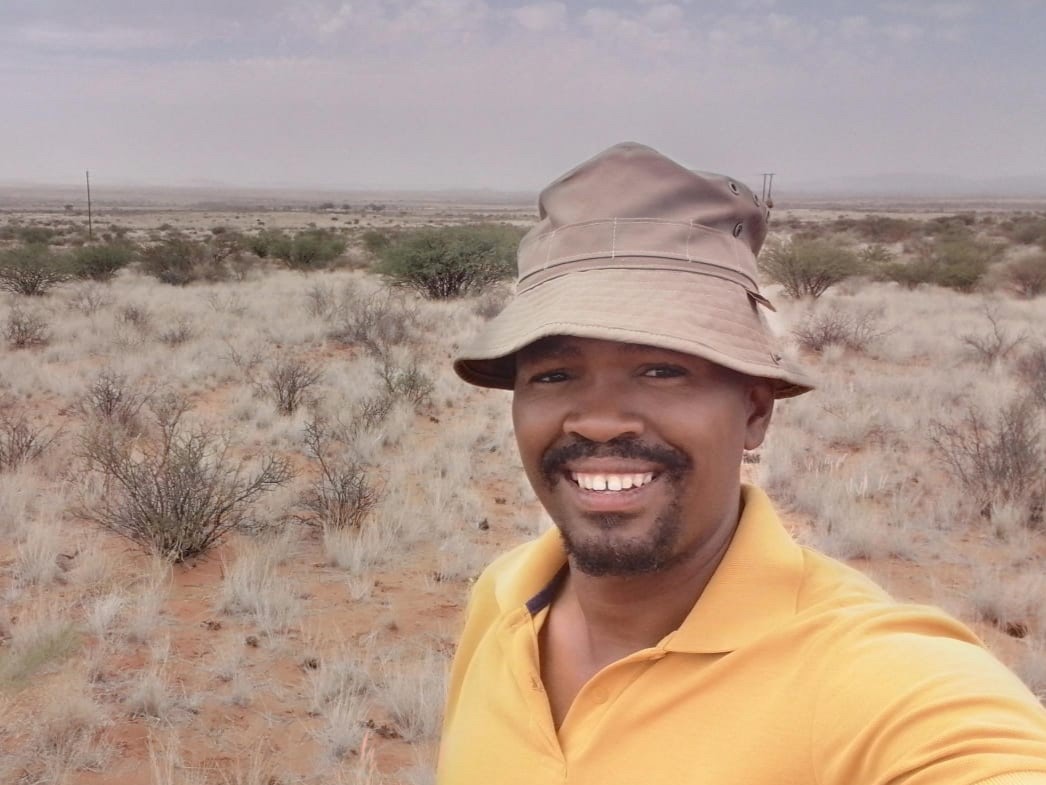
A young nature conservationist from South Africa’s Northern Cape Province and Managing Director of Kalahari Earth Keepers International, Brain Miennies, has already written a letter to President Cyril Ramaphosa expressing concern about “whether or not the [new] South African government will support [the] need [of local communities] to start benefiting significantly from their natural resources.”
“Unfortunately, the [proposed coalition government] comprises different parties, especially the DA [Democratic Alliance] which doesn’t support massive natural resources benefits [going] to the communities while the ANC recently declared its support for it,” notes Miennies.
“Accordingly, the next five years might [be another five years of] the non-delivery of massive natural resources to the communities co-existing with wildlife and the general South African public.”
Harris also sees the challenge of unmet needs.
“After the first round of setting out the priority desires of the participating parties, there will be many unmet needs,” acknowledges Harris.
“Perhaps tourism development or deep sea conservation will be absent.
“When these missing elements are identified, all parties should be asked to send their manifesto points on the issue to the President for analysis by the relevant ministry.”
*The writer of this article is Emmanuel Koro, a Johannesburg-based independent international award-winning environmental journalist who writes extensively on environmental and developmental issues in Africa. The views expressed by Emmanuel Koro, are not necessarily those of The Bulrushes