Harare – A few days ago whilst taking my morning walk back home I spotted a falcon perched on a mutohwe tree (snot tree) a few metres away.
I’ve always been fascinated by birds of prey so I tiptoed towards the tree to get a clearer view. Inevitably, the bird flew away when I got too near for comfort.
I shared this news with my inquisitive girlfriend when I got home.
“What’s the difference between a falcon and a hawk?” she asked. I didn’t quite know.
“Oh, so what do you call a falcon in Shona?”
“Is it not a Kondo?”
I laughed hard when she suggested this as I knew for sure it wasn’t the correct name.
You see, I envy that she is multilingual but it tickles me each time she makes blunders with Shona.
So I cherish such moments of triumph.
“Look it up then”, she suggested.
Well, a kondo is a hamerkop and a falcon is a rukodzi. Apparently a hawk is also called rukodzi (I am still to confirm this).
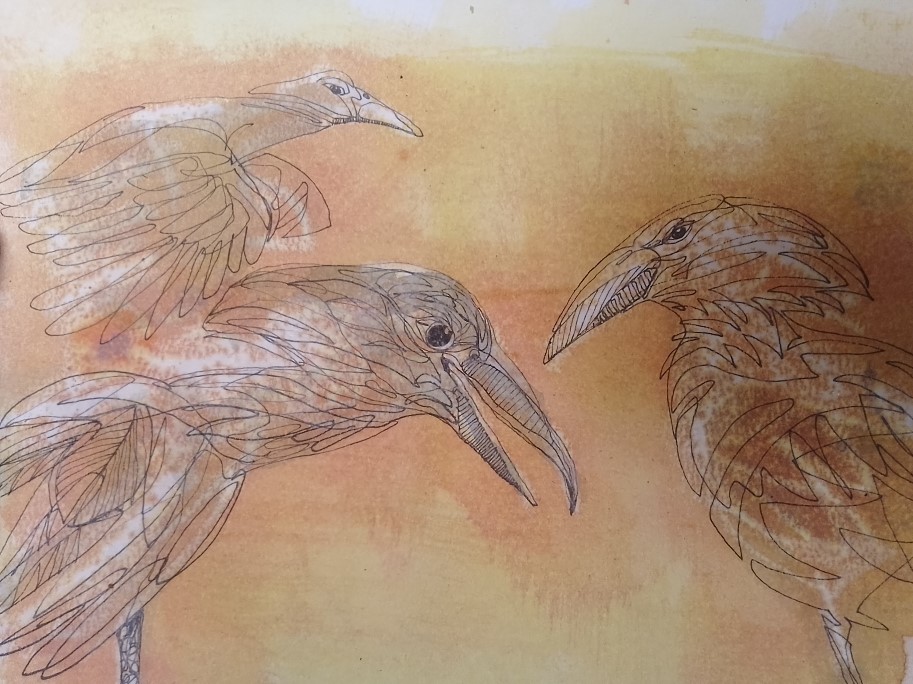
The hamerkop is a brownish bird with a peculiar hammer like head and lives on wetlands.
Next day I took my usual morning route.
As I got near the same mutohwe tree I looked up and saw a crow in hot pursuit of a brownish bird which was carrying what looked like a long snake.
The duo disappeared into an acacia tree next to a perennial stream.
Out of curiosity I followed and saw a disinterested crow but no brownish bird.
As I looked closer I saw a gigantic nest.
The nest was made of sticks, grass, pieces of fabric, bones, and maize stalk leaves.
I realised that the brownish bird had escaped into the nest and what I thought was a snake was actually a long maize stalk leaf.
I rushed home to share the news about this monumental nest.
Later, we realised that the brownish bird was actually a hamerkop! What a bizarre coincidence.
Doing more internet research and asking peers revealed some interesting but disturbing things about the bird.
The hamerkop is hunted for magic and medicinal (magicomedicine) use in West, Central and Sub Saharan Africa.
This got me interested as I have been doing research on indigenous rituals such as divination, witchcraft and animal sacrifice.
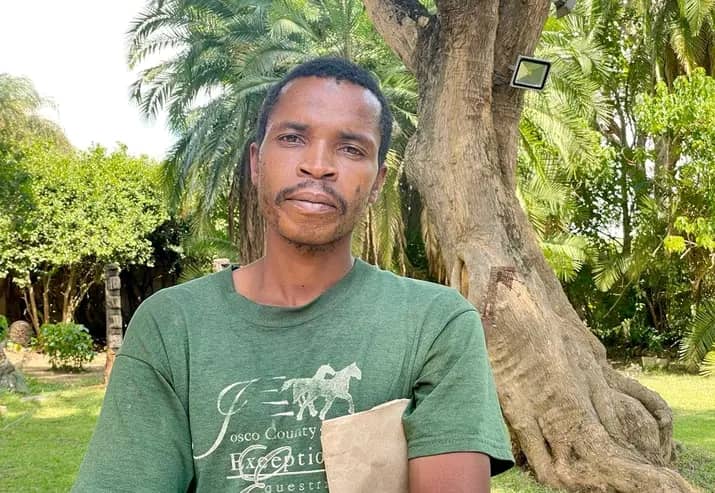
One of the people I consulted is one Hector Mukwasi, a Harare Polytechnic graduate from Shamva.
He was in the same class as Masimba Hwati, Gareth Nyandoro and Munyaradzi Mazarire (MHSRIP).
Hector is a visual artist, potter, dreamer, botanist, taxidermist, mentor, eccentric, and philosopher.
“Well, I don’t know much but I have some hints,” he said.
Hector went on to explain that the hamerkop sometimes uses bones as part of its nest.
At times these may be human bones.
Others hunt for the nest to look for coins and other shiny objects collected by the birds.
Snakes may also lay eggs in abandoned nests so that is a danger.
A mention of the bird brought up a lot of anxiety in some people.
“Kondo ine ziso ribodzi. Uye ikachema pamusha kunofiwa!” (A hamerkop has one eye. And if it makes its call at a homestead a person will die!).
Of course, a hamerkop doesn’t have one eye.
I started reflecting on this bird and other wetland birds.
There had been a lot of destruction of wetlands in Zimbabwe in recent years.
How can a contemporary artist like myself contribute to the rescue and conservation of this important habitat and water filter?
How can I help to raise more awareness ahead of the important Ramsar Convention on Wetlands 2025 to be held in Victoria Falls, Zimbabwe?
I commend efforts such as the Mutare Rivers Rehabilitation Initiative.
They are doing a great job in awareness and conservation of wetlands here in Mutare.
I also commend artists who are contributing to this cause.
Of course more work needs to be done.
A few days after seeing the hamerkop, my girlfriend asked one of her difficult questions: “What does the term Kusungwa mbira dzakondo mean?”
I realised I had heard this phrase all my life but never thought about what it really meant.
Kusungwa is to be restrained, mbira is a popular indigenous piano like instrument held in both hands, dzakondo means belonging to kondo.
Loosely speaking, this may sound like “To be held like a kondo’s instrument”.
I took some time to think about this and concluded that this may have to do with a peculiar behaviour of the hamerkop, where one may stand with its feet on top of another’s wings seemingly restraining it.
This may happen with three birds also. Such behaviour is called stacking.
I can’t wait to know more about similar birds.