Unlike neighbouring villages, Lesoma, Botswana, is the only one where wild animals are not causing crop destruction.
The animals that had forced the Lesoma Village residents to be on 24/7 crop vigil are no longer a threat or nuisance.
Residents from the village can now rest during the day and do other chores.
Even schoolchildren have more time to do their studies.
Botswana’s greater Pandamentenga community is comprised of several villages but only Lesoma Village is now free of wild animals.
But how and what is so special about Lesoma Village?
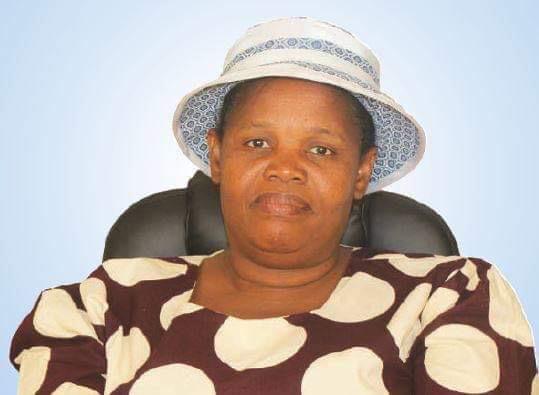
Botswana’s Pandamentenga hunting community’s chieftainess Rebecca Banika explained that, “the answer lies in Lesoma Village’s wise use of its share of international hunting revenue” to fund the fencing of crop fields to prevent crop destruction by wild animals.
“Over the years, we have observed how commercial farmers in our area prevent wildlife crop destruction by fencing their farms,” said Chieftainess Banika of the Pandamantenga hunting community in an interview this month.
“Accordingly, we have decided to do the same to earn income from agricultural production through international hunting.”
Chieftainess Banika said that in 2012, the Pandamantenga residents of Lesoma Village decided to use international hunting revenue to finance the fencing of all their crop fields to address the wildlife-crop-destruction problem.
So, they are currently the only ones from Pandemantenga who have used income from hunted wildlife to fence their crops, in order to prevent wildlife-crop-destruction.
What a relief!
In Botswana, the democratisation of hunting revenue use is demonstrated by the arrangement that each village uses its international revenue as it wishes but responsibly.
Other Pandamatenga villagers envy the Lesoma Village residents’ well-deserved break from watching over crop fields day and night.
Accordingly, Chieftainess Banika said that all the villagers of the Pandamantenga hunting community recently agreed to use their international hunting revenue to significantly reduce the wildlife-crop-destruction problem.
They also want international hunting income to quickly relieve them of the difficult 24/7 watch over their crop fields to prevent wildlife crop destruction.
“The Pandamantenga crop fields fencing project will begin as soon as the environmental impact assessment exercise has been completed,” said Chieftainess Banika.
“The Kavango Zambezi Transfrontier Conservation Area (KAZA) Secretariat, headquartered in Kasane Town of Botswana neighbouring the iconic and world-renowned Chobe National Park will also support the crop fields fencing project with P4 million [US$301,825.52].”
“The crop fields fencing initiative will significantly improve food security and also the standard of living of Pandamantenga residents,” she said.
Chieftainess Banika said that international hunting income “has great potential” to bring exponential agri-business growth to the Pandamantenga hunting community.
“Pandamantenga is the breadbasket of Botswana,” said Chieftainess Banika.
“The rains are above average and the rich black soil is good for retaining moisture for quite a long period.
“This helps sustain the crops even when the rains are low, so Pandamantenga is Botswana’s agricultural hub and that is why the government has also set aside land for large-scale commercial agriculture here, but it is separate from our hunting land.”
Chieftainess Banika said that the crops grown in Pandamantenga include wheat, sweet sorghum, sunflower and cowpeas.
Meanwhile, Chieftainess Banika said that having found the solution for wildlife-crop-destruction the Pandamantenga hunting community now hopes to earn significant income from crop production.
Elsewhere in Botswana’s hunting communities, there is no other community known to have set aside international hunting funds to fence crop fields.
Ms Claudia Nchunga of Botswana’s wildlife-rich Chobe District, Kavimba Village said that elephants and buffaloes move into the village daily.
“This makes it impossible to practise viable agricultural production,” she said. “I have not grown crops for the past five years because wildlife always destroys crops.”
Her village falls under Chobe Enclave Conservation Trust (CECT) which runs an office that manages a multi-million bank account of Kavimba, Satau, Mabele, Parakarungu and Kachikau villages.
Botswana villages choose how they want to use their international hunting income but none of the CECT villages has decided to use it to fence their crop fields.
However, all the Pandamantenga hunting community villages recently agreed on one thing – to use international hunting revenue to modernise their agricultural production.
This initiative is producing life-changing results.
Chieftainess Banika said that when international hunting was introduced to the Pandamatenga hunting community in 1999, they used the income to buy a community tractor and tractor planters.
Chieftainess Banika said that Pandamantenga also used international hunting revenue to buy “a modern and powerful community tractor valued at P1.5 million (US$112,800.73) in 2022.”
“In the past, we used to plough the fields using ox-drawn ploughs,” she said.
“The purchase of a tractor and tractor planters was a significant developmental paradigm shift from old to modern agricultural production methods.”
Chieftainess Banika who is Botswana’s first woman chief said that before the purchase of a community tractor, residents in her community planted crops on a maximum of three hectares.
In contrast, the use of the community tractor has significantly increased the hectarage on which each household plants its crops from three to 12.5 hectares.
Their harvest has also increased, leading to food security in Pandamantenga.
“The Pandamantenga residents are now producing more food and are selling their produce to the Botswana Agriculture Marketing Board which is mandated to provide a market for locally grown crops,” she said.
Chieftainess Banika said that “poverty is disappearing” from the Pandamantenga hunting community.
“In terms of poverty, you don’t find much poverty because hunting income is also being used to give bursaries to local students who are selected annually by our community social worker,” she said.
“Some of these students have graduated at university level and are working in government and some are university lecturers and now have income to support their extended families in the village.
“We have also produced a professor in finance who is now teaching at the University of Botswana.
“So, you can see the socio-economic impact of the international hunting income on our community.”
Turning to how international hunting benefits are promoting the anti-poaching culture in Pandamatenga Chieftainess Banika said: “We don’t have any poachers from the village and we employ community male and female game scouts and we use our international hunting income to pay their wages.
“We see the wild animals as our source of income.
“The Pandamantenga community is earning millions from international hunting annually and we also get meat from hunted animals and distribute it to the community to ensure a healthy diet.”
*About the Writer: Emmanuel Koro is a Johannesburg-based independent international award-winning environmental journalist who writes extensively on environmental and developmental issues in Africa.
*The views expressed by the author of this article, Emmanuel Koro, are not necessarily those of The Bulrushes