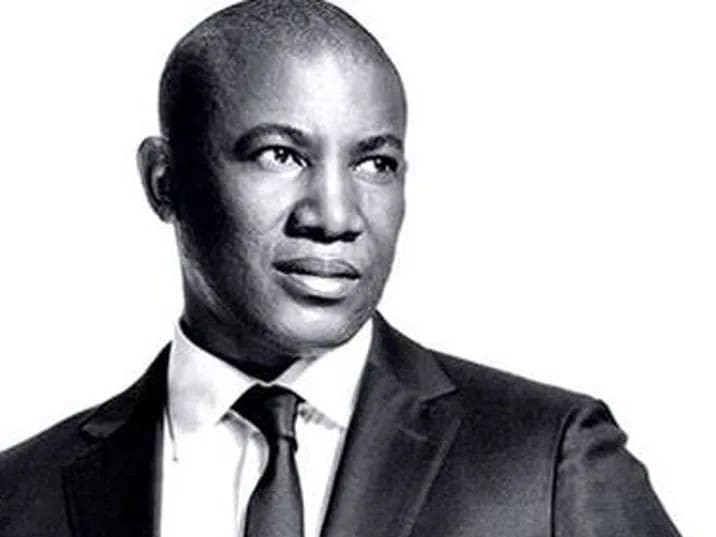
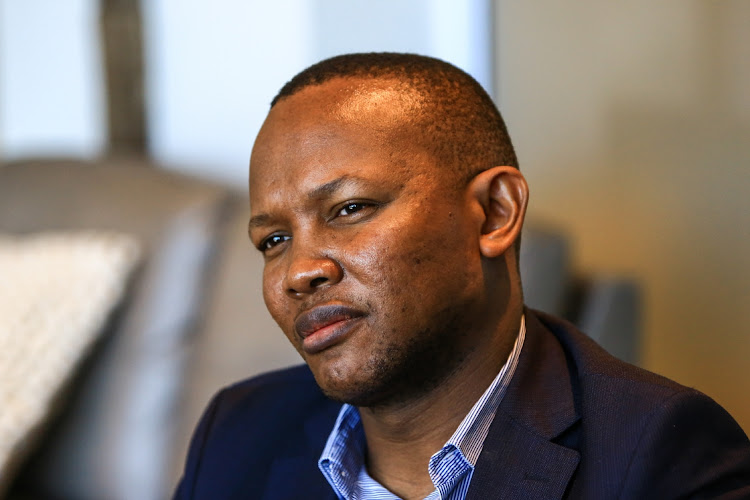
It is both disappointing and dishonest that some are trying to pin YeboYethu’s woes on Nkosana Makate, the inventor of Vodacom’s “Please Call Me” service.
YeboYethu, the Black Economic Empowerment (BEE) vehicle of Vodacom, has been pushing the narrative that compensating Makate fairly for his billion-rand idea will destroy the livelihoods of its black shareholders.
This is nothing but a diversionary tactic.
Makate has been embroiled in a relentless legal battle with Vodacom for over 16 years, fighting for fair compensation for his revolutionary Please Call Me service, which he developed in while employed at Vodacom.
The service, which allows users to send a free message asking for a call back, has raked in billions for Vodacom.
Yet, despite this monumental contribution, Makate is still battling for his rightful payout.
In a landmark ruling on 6 February 2024, the Supreme Court of Appeal dismissed Vodacom’s appeal and ordered the telecom giant to pay Makate between 5% and 10% of the total revenue Please Call Me generated over the last 18 years.
The payout could range from R29 billion to R63 billion, according to Vodacom’s own estimates.
In court papers Makate counsel argued that he wants to be paid R9.4 billion.
But instead of resolving the matter, Vodacom is playing delay tactics, dragging the case to the Constitutional Court in an attempt to overturn the Supreme Court of Appeal ruling.
Now, YeboYethu’s BEE investors are being told that if Makate wins, their investment could collapse.
This narrative is not only misleading but also deeply troubling.
Last week, the Constitutional Court dismissed YeboYethu’s attempt to join the high-stakes legal battle between Vodacom and Makate as a friend of the court (amicus curiae).
Last month, it did the same with Vodafone, Vodacom’s parent company.
YeboYethu, created in 2008 has around 80,000 indirect shareholders. These are ordinary black South Africans who were meant to benefit from Vodacom’s success.
Instead, the entity has been struggling under the weight of an unsustainable debt structure, and its financial troubles have nothing to do with Makate.
YeboYethu raised concerns that paying Makate billions of rand would severely impact its ability to pay dividends to its shareholders, but this claim is disingenuous.
The truth is that YeboYethu has been on life support for years, riddled with debt that has eroded its capacity to generate meaningful returns for its investors.
In 2008, when Vodacom Group facilitated the BEE transaction through YeboYethu, Royal Bafokeng Holdings, Thebe Investments, and an employee share ownership programme, the deal was valued at R7.5 billion.
However, by 2018, YeboYethu had failed to acquire the 6.25% stake in Vodacom SA due to mounting debt.
The BEE deal was recapitalised to acquire a 5.51% stake in Vodacom Group at a massive debt value of R16.4 billion.
To finance this, YeboYethu relies on Class A and B preference shares, currently valued at R8.9 billion.
But here’s the catch – YeboYethu has no voting rights at Vodacom Group until the full debt is repaid.
Meanwhile, Vodacom enjoys the benefits of a Level 1 BEE rating, enabling it to secure lucrative government contracts, spectrum licenses, and other business opportunities.
YeboYethu, on the other hand, is drowning in debt.
YeboYethu has been haemorrhaging money for years. In 2023, the company incurred losses of R3.1 billion, followed by another R2.1 billion loss in 2024.
Finance costs are eroding its income, rising from R572 million in 2023 to R712 million in 2024.
The losses on debt remeasurement are staggering, R4.3 billion in 2023 and R2.6 billion in 2024.
In 2023 and 2024, the loss per share was 5,884 cents and 4,004 cents, respectively.
Interest costs have ballooned to 97% of YeboYethu’s income, making it nearly impossible to pay off the R8.9 billion debt due in October 2028.
In fact, the current debt structure almost guarantees bankruptcy.
The share price of YeboYethu is trading far below its net asset value.
When YeboYethu entered into its recapitalisation agreement with Vodacom Group in 2018, projections for Vodacom’s share price were R152.50.
However, the actual share price has been consistently lower, making it increasingly clear that YeboYethu’s debt is unsustainable.
Another collapse, similar to the one in 2018, seems inevitable.
Despite the fact that Vodacom declared R14 billion in dividends in 2024, YeboYethu is still in deep financial distress.
The problem is not Makate; the problem lies in the flawed financial engineering behind YeboYethu’s BEE deal.
This deal was designed to benefit Vodacom while leaving the black investors with the crumbs.
The Makate distraction
So why is YeboYethu making Makate the scapegoat?
It’s simple: to divert attention away from its own structural failures.
YeboYethu’s troubles have nothing to do with the billions owed to Makate.
This BEE scheme has been on the brink of collapse for years due to poor financial management and a flawed debt structure that only benefits Vodacom.
This is reminiscent of the dynamics described by Isabel Wilkerson in her book “The Warmth of Other Suns”, where she notes that oppressive systems have a way of turning people against each other for “an extra scrap of privilege.”
By pitting YeboYethu’s Black shareholders against Makate, Vodacom is “fostering” a form of corporate “black-on-black” violence.
The real issue here is not Makate’s payout; it’s the unsustainable financial structure of YeboYethu’s BEE deal.
Vodacom has benefitted enormously from this arrangement, while YeboYethu’s black investors have been left to bear the burden of debt.
Makate must not be made a scapegoat for YeboYethu’s failures.
It’s time for Vodacom to own up to its obligations – both to Makate and to the 80,000 black investors it has shortchanged.
*This article first appeared in our sister publication TechFinancials
* The views expressed by the author of this article Gugu Lourie, the founder and editor of TechFinancials are not necessarily those of The Bulrushes