
Orania – Residents of the Afrikaner-only town of Orania in the Northern Cape on Monday celebrated “Promise Day”, the day that is known to the rest of South Africa as the “Day of Reconciliation”.
The Promise Day programme in Orania included local church leaders conducting sermons and leading the singing of Christian hymns.
As President Cyril Ramaphosa delivered his speech urging reconciliation and unity in the Western Cape, the Afrikaner community of Orania gathered to observe the “pledge that our ancestors made in Bloedrivier in 1838.”
Previously referred to as Dingaan Day by Afrikaans-speaking South Africans, December 16 was officially named Reconciliation Day after the end of apartheid in 1995.
The day is a national holiday meant to foster unity among South Africans of all races.
For Orania inhabitants, the day is observed as a victory over black people and a point of reference for the advancement of Afrikaner nationalism.
It was on December 16 1838 when King Dingane kaSenzakakhona Zulu’s warriors attacked Afrikaner settlers on the banks of the Ncome River in KwaZulu-Natal.
But the gunfire from the Afrikaners overwhelmed Dingane’s warriors, leading to the death of at least 3 000 of them.
The clash resulted in the warriors’ blood flowing into the river turning it red, hence the reference to the Blood River.
According to Orania’s posts on the enclave’s official Facebook page, the day has a religious character.
“However, the day also has a national character because we as Afrikaners have commemorated and maintained that day, namely because of the vow, every year since the events of 1838.
“We once again give glory to God annually, for the miraculous victory that He gave in the hands of that bunch of Tractors [voortrekkers], against an overwhelming superpower of the Zulus.
“In Orania we celebrate the day as a Sabbath, and the celebrations are held jointly with a worship service and a festival speech.”
Orania was founded in 1990 by apartheid architect Hendrik Verwoerd’s son-in-law Carel Boshoff along with other Afrikaner families.
Boshoff died in 2011.
Today, Boshoff’s grandson Wynand Boshoff is a Freedom Front Plus (FF+) Northen Cape Member of Parliament.
Boshoff’s grandfather’s dream was to get like-minded Afrikaners seeking self-determination and autonomy to live in one place.
The statues of apartheid leaders such as Verwoerd and Paul Kruger occupy a prominent place in Orania, while the old South African flag is hoisted across the town’s buildings.
Orania has its own currency called the Ora.
So far the ANC-led government has tolerated the existence of Orania and the town and its history have never come up in the government’s Reconciliation Day speeches.
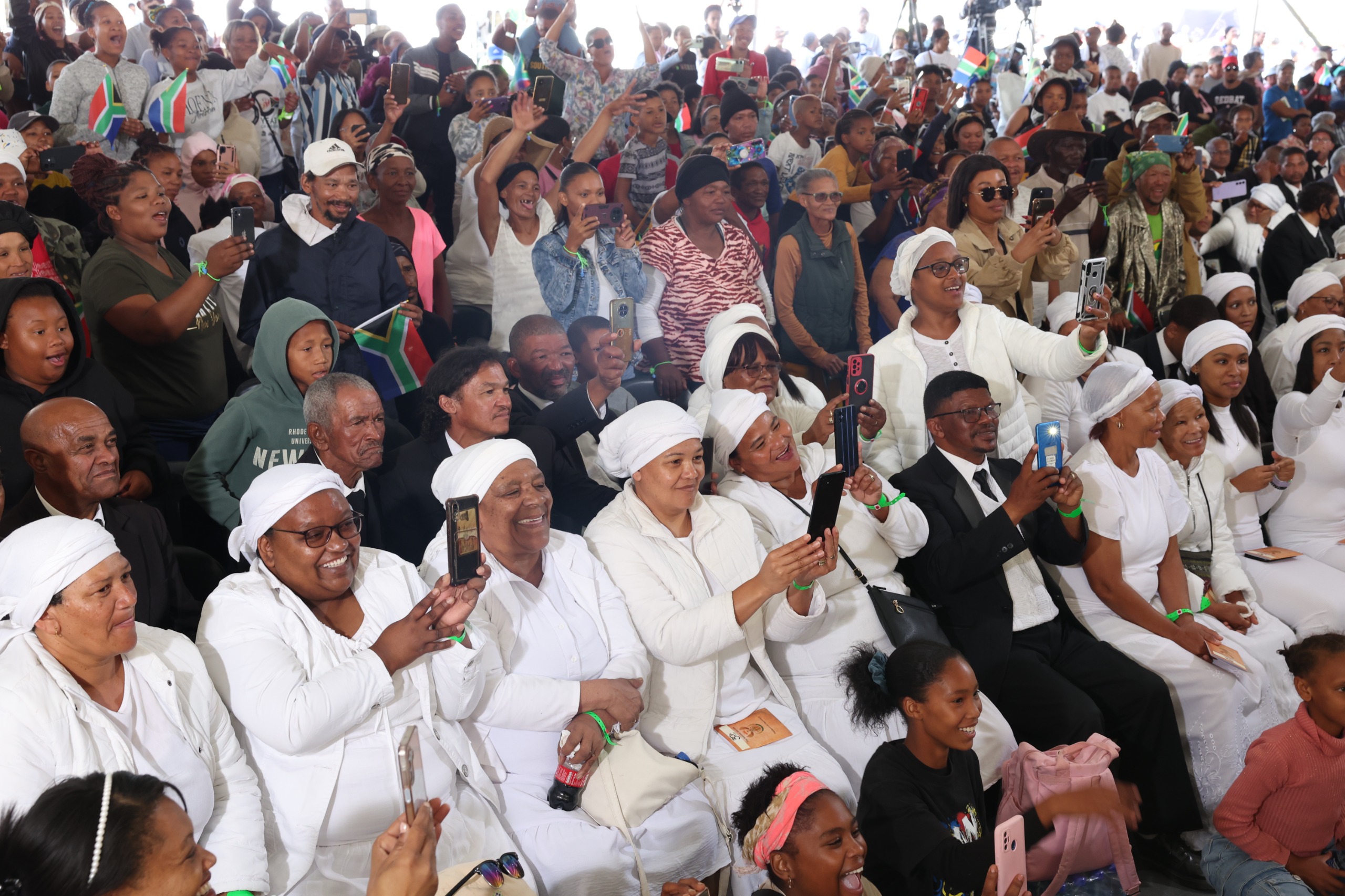
Ironically, some 700 km away in Vredendal, the Valley of Peace, President Ramaphosa was calling for unity among all South Africans in his speech.
He said Reconciliation Day was an “occasion where we remember and celebrate our journey as a country towards nation-building, healing, social justice and forgiveness.
“This Day of Reconciliation is dedicated to ‘healing historical wounds and forging new futures’.
“For much of our history, this day – the 16th of December – stood as a symbol of the wounds of our history.
“For some it was a celebration of victory.
“For others, it was a painful reminder of conquest and dispossession.
“Since the advent of democracy, we have sought to do away with symbols that are divisive.
“We chose to mark the 16th of December as a day of reconciliation. A celebration of our unity in diversity.”
But in Orania, the more things change the more they stay the same.