Johannesburg – South Africa has recorded more than 8 700 IgM-positive (immunoglobulin M) cases of Rubella, mostly among children.
The National Institute for Communicable Diseases (NICD) on Wednesday, (18 December 2024, said the reason for the large number of cases this year, compared with previous years, was that many children entered 2024 without prior exposure to rubella, or without being vaccinated against the disease.
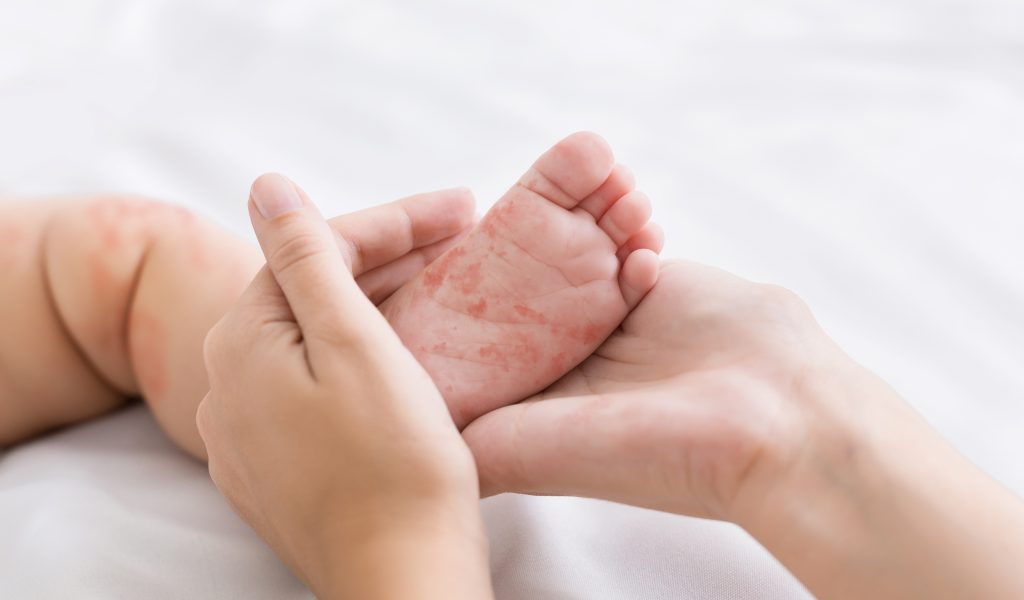
A prominent symptom of Rubella is a rash that usually starts on the face and moves down the rest of the body.
The NICD said South Africa was experiencing a significant surge in fever-rash samples for testing, indicating a pronounced increase in rubella cases nationwide.
“As of week 40, over 8 700 IgM-positive cases have been identified. Notably, 98% (8543/8723) of these cases have affected children under 15, with the majority occurring in the five to nine-year age group,” said the NICD in a statement.
Dr. Kerrigan McCarthy, the Pathologist at the Centre for Vaccines and Immunology (CVI) at the NICD, stated that an unprecedented number of rubella cases in 2024, surpass the figures from fever-rash surveillance since 2015.
This surge was attributed to a large number of children entering 2024 without prior rubella exposure or vaccination.
Dr. McCarthy said a large number of children entered 2024 without rubella immunity.
“If children are not vaccinated against rubella and never come into contact with the rubella virus through natural infection, they will remain susceptible to rubella,” said Dr. McCarthy.
“Vaccination against rubella was separate from our routine EPI programme before 2024.”
The National Department of Health (NDoH) was rolling out the combined measles-rubella vaccine, which will be administered to six and 12-month-old children as soon as each province finishes its stock of measles-containing vaccine.
The non-pharmaceutical interventions applied during the SARS-CoV-2 pandemic interrupted the transmission of rubella.
For 2020-2022, almost no rubella cases were identified from the NDoH/NICD fever-rash surveillance.
Regarding clinical aspects of rubella infection, in children and adults, rubella is a self-limiting infection that presents with fever, a maculopapular rash, myalgia, enlarged lymph nodes, headache, and conjunctivitis.
Occasionally, persons may develop joint pain (arthralgia), low platelets, and mild encephalitis.
The health department said rubella serology and PCR testing should be conducted in the following circumstances:
- When a pregnant woman in her first trimester of pregnancy is exposed to a case of rubella.
- When a test is required to rule out a diagnosis of rubella in a patient who is severely ill and is admitted to hospital.
- When a neonate is suspected of having congenital rubella syndrome.
The specimen should be marked “Priority sample, URGENT testing required”.
An email should also be sent to Busisiwe Masengemi: BusisiweM@nicd.ac.za (NICD receiving office), Jayendrie Thaver: jayendriet@nicd.ac.za and Lillian Makhathini: LillianM@nicd.ac.za (both from CVI laboratory) requesting urgent testing.
All cases of congenital rubella syndrome should be notified to the NICD using the Notifiable Medical Conditions (NMC) notification forms found at NMC.