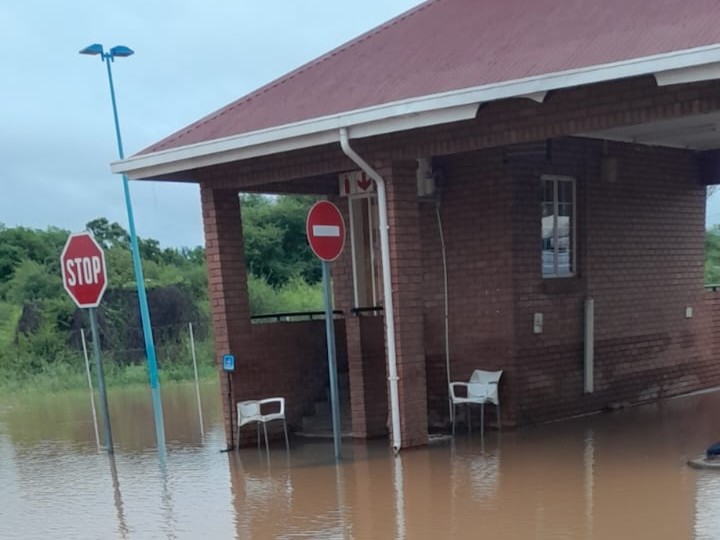
Johannesburg – The border operations between South Africa and Botswana at Grobler’s Bridge Port of Entry have been temporarily suspended due to adverse rainy conditions.
Announcing the move, late Tuesday,(4 January 2025), Border Management Authority (BMA) Commissioner Dr. Michael Masiapato said, “operations at Grobler’s Bridge Port of Entry have been temporarily suspended due to adverse conditions caused by high water levels as a result of the rainfall”.
The BMA said increased water level has reached a point where it significantly compromises the safe and efficient functioning of the port.
As a precautionary measure, all vehicles within the operational space of the port have been cleared to ensure the safety of all individuals and equipment.
“Following consultations with our Botswana counterparts and thorough deliberation by the Port Management Committee, it has been decided that the temporary suspension of operations is necessary to prioritise safety,” said Dr. Masiapato.
“This decision reflects our unwavering commitment to the well-being of our personnel, travellers, and all stakeholders.
“We assure the public that the situation is being closely monitored on an hourly basis, and regular updates will be provided.”
For diversion of movements, Stockpoort and Platjan Ports of Entry can be used as alternatives by travellers and small vehicles as these are non-commercial ports.
For cargo movements, travellers and truck operators are advised to use Skilpadshek, Ramatlabama, Beitbridge and Kopfontein as alternative Ports of Entry.
Travellers are to note the operating hours of the ports as follows:
Non-Commercial Ports of Entry
- Stockpoort Port of Entry – 06:00-18:00
- Platjan Port of Entry – 06:00-18:00
Commercial Ports
- Skilpads:ek Port of Entry – 06:00-00:00
- Kopfontein Port of Entry – 06:00–00:00
- Ramatlabama Port of Entry – 06:00-22:00
- Beitbridge Port of Entry – 24 hours
“The BMA apologises for any inconvenience caused by this suspension and appreciates your understanding and cooperation during this period. Your safety remains our top priority,” said Dr. Masiapato.