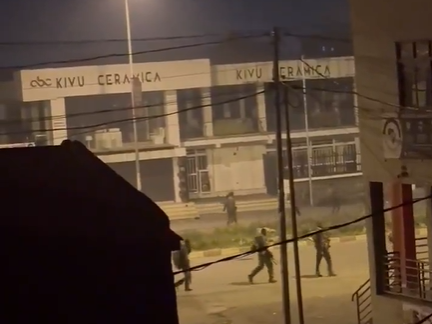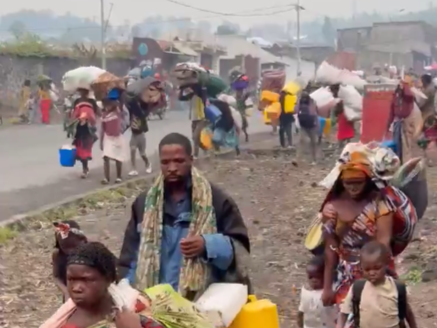
Kinshasa – The Humanitarian Coordinator in the Democratic Republic of the Congo (DRC), Bruno Lemarquis, has expressed his profound concern regarding the intensification of ongoing fighting around the city of Goma and its growing impact on civilians.
Since the renewed M23 offensives near Goma on 23 January 2025, hundreds of thousands of people have once again been forced to flee multiple active conflict zones, with reception and assistance capacities already overstretched.
The UN Office for the Coordination of Humanitarian Affairs (OCHA) said several displacement sites on the outskirts of Goma, hosting more than 300 000 people, have been completely emptied within hours.
Humanitarian actors, including essential personnel who remain operational in Goma, are doing everything possible to address the needs of the most vulnerable civilians despite an alarming deterioration of security in displacement sites and certain neighborhoods of the city.
The proximity of fighting to densely populated areas and the use of heavy artillery impose intolerable risks on civilians.
The emergency capacities of Goma’s hospitals are overwhelmed, despite support from humanitarian actors, including the ICRC and MSF.
As of 24 January 2025, Goma’s Ndosho General Hospital was treating over 256 injured individuals, including 90 civilians, most suffering from severe injuries caused by gunfire and artillery strikes.
This far exceeds the hospital’s 146-bed capacity, even after reinforcements provided by humanitarian partners.
On behalf of the humanitarian community in the Democratic Republic of the Congo, I call on all parties to the conflict to immediately halt the military escalation.
This violence exacerbates the suffering of populations in eastern DRC and worsens the already precarious conditions of civilians.
As the United Nations Secretary-General emphasised on 23 January 2025, urgent de-escalation was essential.
“The humanitarian community urges the international community to intensify efforts to address the rapidly worsening humanitarian and security crisis,” said OCHA in a statement released on Sunday, (26 January 2025).
While awaiting the cessation of hostilities, OCHA called for temporary humanitarian pauses in the most affected and at-risk areas to facilitate the evacuation of the wounded and civilians from active combat zones.
“On behalf of the humanitarian community, I remind all parties to the armed conflict of their obligations under international humanitarian law: civilians and essential civilian infrastructure must never be targeted,” said OCHA DRC Humanitarian Coordinator Lemarquis.
“All parties to the conflict are obligated to ensure unimpeded humanitarian access to those in need and to guarantee the safe passage of civilians fleeing active combat zones.
“Civilians must be able to access humanitarian assistance safely and with dignity.”
Lemarquis added: “This requires humanitarian actors to remain as close as possible to affected populations in conditions that allow them to deliver the life-saving assistance required.
“It is also imperative to enable the restoration of basic services in the city of Goma, including access to water, electricity, and healthcare, to meet the essential needs of populations affected by the conflict.”