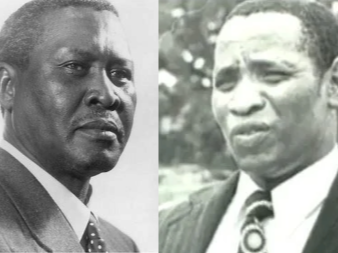
Johannesburg – The National Prosecuting Authority (NPA) is re-opening inquests into the deaths, during apartheid, of former African National Congress (ANC) president Chief Albert John Mvumbi Luthuli and human rights lawyer Mlungisi Griffiths Mxenge.
The NPA Director of Public Prosecutions in KwaZulu-Natal (KZN), Advocate Elaine Harrison will re-open both inquests on Monday, (14 April 2025), in the Pietermaritzburg High Court.
In a statement made available to The Bulrushes late on Wednesday, (9 April 2025), the NPA said the inquests will take place concurrently in different courtrooms.
“Following the collaboration between the NPA KZN Truth and Reconciliation Commission (TRC) Unit and the NPA TRC Unit at the National Office, the Directorate for Priority Crime Investigation, and the National Archives, the NPA will be presenting evidence before the court in an attempt to have the initial findings, into the deaths of Chief Luthuli and Mxenge, overturned,” the statement said.
Evidence will be led by Advocates from the NPA TRC Unit in KwaZulu-Natal (KZN).
The purpose of inquests is to determine how a person died and if anyone should be held responsible for their death.
“The Prosecutors in KZN have provided regular updates to both the Luthuli and Mxenge families, on the developments in these matters,” the statement said.
“We have employed this approach to all TRC matters.”
The NPA said together with its partners it would endeavour to address the atrocities of the past and assist in providing closure to the families of the victims of these crimes.
Chief Albert Luthuli
Chief Albert John Mvumbi Luthuli was born in 1898, He became a public figure in 1937 when he was appointed by the then Department of Native Affairs as the Chief of the Zulu tribe in Groutville.
In 1944 he became a member of the African National Congress (ANC) and later became the President General of the same organisation.
In showing resistance against Apartheid legislation in force at the time, Albert Luthuli (Chief Luthuli), Nelson Mandela and other leaders of the ANC organised various protests including the Defiance Campaign of 1952.
The actions of Chief Luthuli were considered to be those of a terrorist by the then Government and as a result, his appointment as a Chief was revoked.
After being stripped of his title, he was then placed under various banning orders which ultimately restricted his movements to Groutville where he could not be in the company of more than one person at a time, except that of his immediate family members.
Despite the revocation of his title by the then Government, he was still referred to as Chief Luthuli by local and international communities at large.
In 1960, Chief Luthuli was awarded the prestigious Nobel Peace Prize.
He continued to advocate for equal rights amongst all race groups within South Africa through various speeches and writings until his untimely death on 21 July 1967.
It was widely reported that he died soon after being struck by a goods train.
An inquest was held on 19 September 1967 and was presided over by Magistrate C.I. Boswell.
The court found that there was no evidence which disclosed any criminal culpability on the part of any of the employees of the South African Railways or anyone else.
Mlungisi Griffiths Mxenge
Mlungisi Griffiths Mxenge was born on 27 February 1935. On 29 March 1966, Mxenge was detained for 180 days, where the security police informed him that it was not their intention to charge him.
They required him to give evidence against two people with whom he had contacted, namely Mr. Arenstein and Mr. MD Naidoo. Mxenge refused to give evidence.
He was then charged with furthering the interests of a banned organisation, namely the African National Congress (ANC) in contravention of Act 44 of 1950 (The Suppression of Communism Act).
He was convicted on 09 February 1967 and sentenced to a two-year term of imprisonment on Robben Island.
He was released on 08 February 1969 but placed under various banning orders. He managed to complete his LLB degree in the same year.
In 1970, he enrolled as an articled clerk at a law firm in Durban but upon completion of his articles, the then Government refused for Mxenge to be admitted as a practicing attorney based on his previous conviction and banning orders.
It was only in 1974, after numerous applications to the then Minister of Justice, that Mxenge was admitted as a practicing attorney. In 1975, he opened his own legal practice in Durban.
He represented members of the ANC such as Joseph Mdluli and members other political formations.
He was an active member of the Release Mandela Committee and served as a member of Lawyers for Human Rights.
Mxenge was a founding member of the South African Democratic Lawyers Association.
In November 1981, Mxenge was assassinated in Umlazi near Durban.
He had been stabbed 45 times and his throat slit. The perpetrators behind the murder of Mxenge could not be established even though an inquest into his death was held on 15 July 1982.
The perpetrators who killed Mxenge were revealed nine years after his death through a confession drafted by Butana Almond Nofemela.
In 1997, Nofemela together with David Tshikalange and Dirk Coetzee were found guilty of the murder of Mxenge, however, they were granted amnesty by the Truth and Reconciliation Commission before they could be sentenced by the High Court sitting in Durban.
This resulted in the discontinuation of the trial proceedings.
However, last year on 13 May 2024, the Justice Minister announced the reopening of the inquests after recommendations from the National Director of Public Prosecutions.
Section 17A(1) of the Inquests Act 58 of 1959 states as follows: “The minister (of Justice and Constitutional Development) may, on the recommendation of the Attorney General concerned, at any time after the determination of an inquest and if he/she deems it necessary in the interests of justice, request a judge president of a provincial division of the Supreme Court to designate any judge of the Supreme Court of South Africa to reopen that inquest, where upon the Judge thus designated shall reopen such inquest.”
The NPA said together with its partners it would endeavour to address the atrocities of the past and assist in providing closure to the families of the victims of these crimes.