As we head towards the 20th meeting of the parties to the UN’s Convention on International Trade In Endangered Species of Wild Fauna and Flora (CITES) late this year, we need to wonder why the survival of nearly all of the smaller species are forgotten while the well-being of megafauna such as elephants, rhinos and lions get most of the attention.
For billions of years, animals and plants have adapted to the conditions of their changing environments.
Some have survived, reproduced, and flourished without any intervention by humans. Others, for whatever reason, died and became extinct.
But now humans are involved in every aspect of the life cycle of every species.
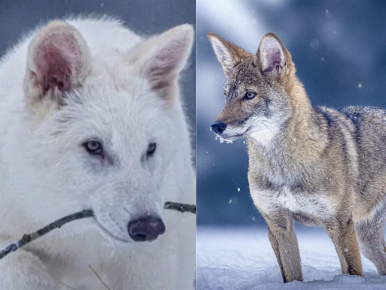
For example, this month, American scientists reported bringing back to life an extinct species of wolves known as dire wolves.
Using ancient DNA, modern gene splicing, wolf embryos, and dogs as surrogate mothers, they have produced three delightful puppies with the dire wolf’s distinctive white coat.
In the process, they have also raised great hope for animal enthusiasts everywhere that other extinct species can be brought back to life.
In response to this possibility, American political specialist and managing director of the Ivory Education Institute, Godfrey Harris, asks a simple question: “Why? What is the value of interfering with nature to bring back imperfect clones of extinct species?”
Harris adds, “I am sure one reason is technical: Can the scientists do it. Nobel prizes are tantalising rewards. Fair enough.
“But does society really want to bring back extinct species?
“Will we be better off with mammoths roaming around in space barely big enough for the elephants we have?
“Will the reappearance of a cloned Xerces blue butterfly effect the survival of the threatened Monarch butterfly or add more than aesthetic pleasure to humans?
“In short, how exactly will the world benefit from having a new, ‘sort of’ dire wolf on the planet once again?”
Harris further mused: “Is man operating with artificial intelligence — capable of improving on nature’s course over the past millions of years?
“Will we — or our robotic creations — be capable of controlling the extinct species in the future?”
Harris noted that de-extinction through cloning may become the next big ‘money machine’ for the extremist animal rights groups.
Think how much cash might be raised to “protect” an adorable baby sabre tooth tiger or bring a velociraptor chick out of its egg?
How would de-extinct wildlife fit into the new environment they would find? What dangers would they pose for those who live near to wherever they are set loose?
Humans, as the dominant species on earth, had long accepted the fate of other species that got extinct. On the other hand, a few unthinking or desperate humans pushed some animals beyond their natural capabilities.
Hence, the Society for Prevention of Cruelty to Animals. It came along in the 1860s and unleashed a torrent of specialised organisations dedicated to the care, protection, and long-term welfare of one species after another.
“In the process, the concept of extinction has been forgotten,” notes Harris. We are now doing everything possible to save every major species.”
In the U.S., a bridge across a major 10-lane high-speed freeway is being built at a cost of more than 100 million dollars so that male cougars (a wild cat) can move safely from one range of mountains to another to find female companions with different genes to improve the chances of the species’ survival.
Many will say that this is the price of having messed with their habitat in the first place.
But who pays for a giant tree that falls across a beaver’s dam or hippo’s lake as a result of a hurricane, tornado, earthquake, or flood?
How might the $100 million spent on that animal bridge be used for human housing or health care?
Are humans playing God by deciding which species survive and which animals to protect?
Moreover, should we continue to ignore all the types of biting spiders, wriggling worms and flying bugs that are also going extinct?
Scientists estimate that there may be as many as 5.5 million insect species and that 1% to 2% — 55,000 to 110,00 — are going extinct annually. What effect does that have on human beings?
Under CITES we have turned a blind eye to the issue since few want to see pests thrive. But more importantly, they are useless in raising money that the giant NGOs rely on for their own survival.
Even though ugly insects and unseen microbes as well as bees are enormously important to generating an important part of our food supply, we don’t do much to save the lot of them — except for the beautiful butterflies — from extinction.
Shouldn’t we take the opportunity to ask ourselves, as the 20th convention of CITES approaches in November this year, whether we are interfering with nature too much?
If the answer is yes, the conclusion must be that it’s also time to give sustainable trade in wildlife and their products another chance.
Surely, then, the huge ivory tusk and rhino horn stockpiles can be the source of finance for wildlife conservation in Southern Africa.
The tariff war started by the U.S. with the world gives Southern Africa a chance to use one of its principal assets to the fullest — its wildlife. It should.
But despite some interesting new ideas on how to begin legal and responsible trade in species in danger of extinction, Southern African wildlife management authorities are frozen in fear of trying anything new.
They have forgotten one of Harris’s rules, which was shared with them recently, when he benevolently offered them legal loopholes to unlock trade in rhino horn and ivory without violating the current CITES trade ban on these wildlife products:
Good ideas die from a lack of oxygen if there is no one available to provide the effective leadership that fruition requires.
That is shameful in light of what is coming in terms of population demands and tourism opportunities.
Without permanent and legal trade in their own wildlife products, can African countries thrive or claim to be independent, politically or economically?
*The writer of this article is Emmanuel Koro, a Johannesburg-based independent international award-winning environmental journalist who writes extensively on environmental and developmental issues in Africa. The views expressed by Emmanuel Koro, are not necessarily those of The Bulrushes