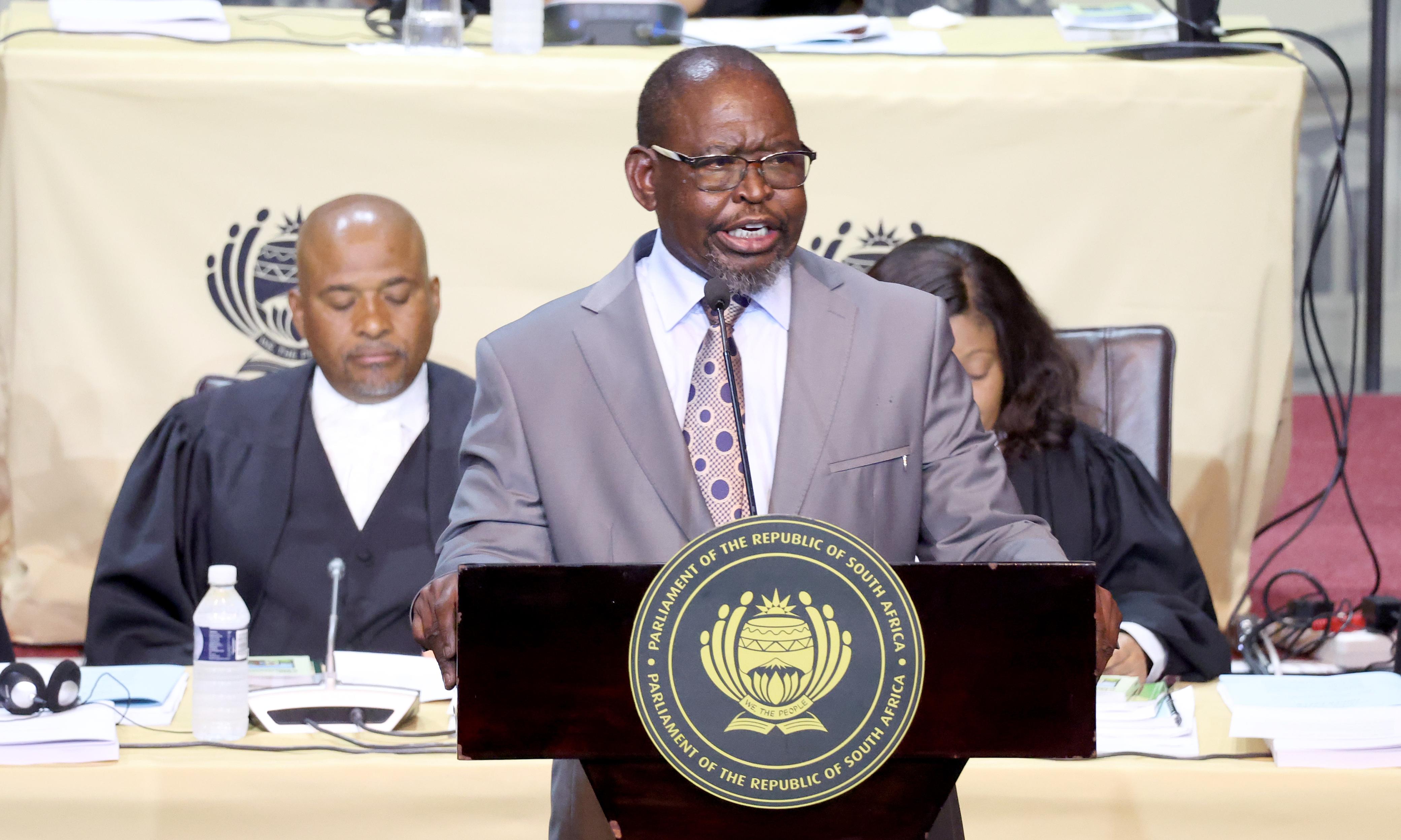
Cape Town – It was a case of third-time lucky on Wednesday for Finance Minister Enoch Godongwana, whose revised budget proposal got a pass from all major parties in the Government of National Unity.
After two rejected proposals, Minister Godongwana was quick to point out that “a national budget is not merely an accounting exercise measuring what we earn, what we spend, and what we borrow as a nation.
“It is a reflection of the difficult trade-offs needed to balance fiscal sustainability while addressing our developmental goals.”
With the outright rejection of a Value Added Tax (VAT) proposed 2 percentage point hike on 12 March, the minister has had to look elsewhere to plug the shortfall.
The minister proposed an inflation-linked increase to the general fuel levy.
“For the 2025/26 fiscal year, this is the only new tax proposal that I am announcing,” Minister Godongwana announced.
“This is the first fuel levy increase in three years.
“It means from the fourth of June this year, the general fuel levy will increase by 16 cents per litre for petrol, and by 15 cents per litre for diesel.
“Unfortunately, this tax measure alone will not close the fiscal gap over the medium term.”
Minister Godongwana, however, said his budget proposal supports sustainable finances, the social wage and investments in economic growth.
“This is not an austerity budget. It increases non-interest expenditure by an average of 5.4 per cent over three years,” he explained.
“In real terms, this is 0.8 per cent growth. It is also a redistributive budget.
“It directs 61 cents of every rand of consolidated, non-interest expenditure towards the social wage.”
The finance minister said this money will fund free basic services like electricity, water, education, healthcare, affordable housing, as well as social grants for those in need.
“This budget invests over R1 trillion in critical infrastructure to lift economic growth prospects and improve access to basic services,” Minister Godongwana revealed.
He said the 2026 Budget will therefore need to propose new tax measures, aimed at raising R20 billion.
“We have allocated an additional R7.5 billion over the MTEF, to increase the effectiveness of the South African Revenue Service (SARS) in collecting more revenue,” said Minister Godongwana.
“Part of this allocation will be used to increase collections from debts owed to the fiscus.
“SARS has indicated that this could raise between R20 billion to R50 billion in additional revenue per year.”
The minister said another part of the additional allocation to SARS will be used to improve modernisation.
“This will include targeting illicit trade in tobacco and other areas, which should boost revenue over the medium term,” he said.
“As SARS utilises this investment to raise additional revenue, which I believe can be at least R35 billion, the R20 billion to close the current revenue gap will not have to be raised through taxes.”
The minister urged all South Africans, individuals, small business operators, and large corporates, to honour their tax obligations.
“We recognise the urgent need to do more to achieve this goal,” the finance minister said.
“Our commitment to collect taxes must be matched by better efficiency in how that money is spent.
“It must be matched by much stricter oversight that quickly identifies problems and provides timely solutions when things go wrong
“We are not deaf to the public’s concern about wasteful and inefficient expenditure.”
In the absence of President Cyril Ramaphosa and Deputy President Paul Mashatile, Acting President Gwede Mantashe witnessed a sanguine budget presentation.
Reacting to the budget proposal, the second largest party in the Government of National Unity – the Democratic Alliance – said it “cautiously welcomes the revenue and expenditure proposals in the Minister of Finance’s Budget Speech.
“We see this as a pathway to a National Budget which we should be able to support when it comes time to vote.”
The GOOD party said: “The third iteration of Budget 2025 delivered by Minister of Finance Enoch Godongwana today largely succeeds in absorbing a R69 billion fiscal gap occasioned by dropping the proposed 0.5% VAT increase without defunding improved social and infrastructure spend altogether”.
The GOOD party added: “To some extent, it’s a holding budget to settle months of instability since the first version of the budget was rejected in March.
“The real work lies ahead, in eliminating waste and reforming the budget-making process.”
However, the budget proposal has drawn sharp criticism from opposition parties, with the uMKhonto weSizwe Party and the Economic Freedom Fighters condemning it as an “austerity budget” and an “indictment against the poor” that fails to address economic inequality or create jobs.