Cape Town – The GOOD Party says President Cyril Ramaphosa owes the nation an update on progress, if any, on the diplomatic relationship between South Africa and the United States.
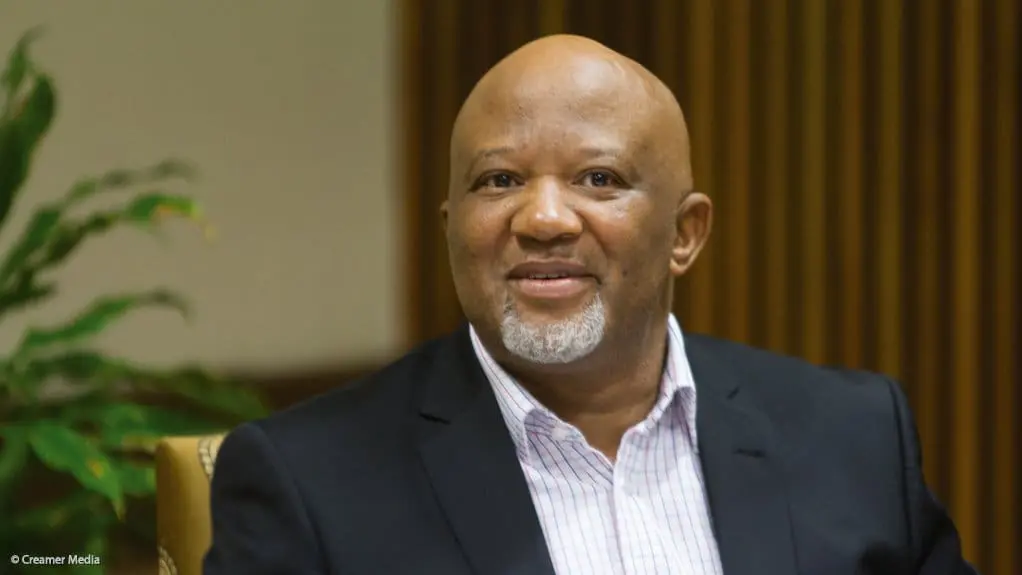
Earlier on Tuesday, 15 July 2025, the Democratic Alliance (DA) announced that President Ramaphosa was, for months, aware that the “Special Envoy” to the U.S., Mcebisi Jonas, was not welcome in Washington, DC.
“With just two weeks to go before the devastating 30% tariffs take effect, the DA can confirm the United States of America denied Mcebisi Jonas a diplomatic visa in May this year,” said Emma Louise Powell, DA Spokesperson on International Relations & Cooperation.
Responding to the claim, GOOD Secretary-General Brett Herron said: “If the President has retained Mcebisi Jonas as his Special Envoy to North America despite knowing for months that the U.S. government had denied him a diplomatic visa, as alleged by the DA, it does not augur well for South Africa’s hopes to dissuade Washington from imposing a minimum 30% trade tariff from next month”.
Herron added: “While it is doubtful that a South African envoy or ambassador acceptable to President Trump’s administration would have made any difference to the US’s tariff decisions, it seems fairly obvious that it would be to South Africa’s benefit to have a trusted point person in Washington.
“If Jonas’ absence from the President’s delegation to the White House in May was due to visa restrictions, the public should have been honestly informed.
“Continuing to present him as an active envoy in such circumstances can only be described as deception and a betrayal of trust.”
Commenting on the matter, AfriForum lamented that shortly after President Ramaphosa appointed Jonas as special envoy to the U.S. in April, Jonas’ previous inflammatory remarks, in which he labelled President Donald Trump a “racist” and a “narcissist,” resurfaced, raising serious questions about Jonas’ suitability for the role.
Ernst van Zyl, Head of Public Relations at AfriForum, said the latest revelations confirm that South Africa has been without diplomatic representation in Washington for more than three months, during one of the country’s most serious diplomatic crises since 1994.
“It also explains why absolutely no progress has been made so far in reaching a critical trade deal with the U.S.,” said Van Zyl.
“In the meantime, devastating sanctions in the form of reciprocal tariffs on exports to the U.S. will be imposed on the country within about two weeks, after the 90 days granted to renegotiate it have been wasted.”
AfriForum has been at odds with the Government of National Unity (GNU) for several months.
In February this year, a delegation of AfriForum and Solidarity representatives met with President Trump’s administration at the White House in Washington, DC, and urged them to act against the African National Congress, the largest party in the GNU, for adopting the controversial Expropriation Act.
AfriForum is being investigated for high treason after four complaints were laid against the organisation wth the South African Police Service.
Meanwhile, the DA said it will be writing to the Speaker of Parliament to request an urgent parliamentary briefing from the Presidency on the failed Jonas appointment.
The DA said it will take all necessary steps to demand the immediate appointment of a credible envoy, capable of repairing the immense damage that has now been done.
Some experts have predicted that increased import tariffs in the U.S. will reduce demand for South African exports, which could lead to job losses among local manufacturers.
However, extensive analysis of recent U.S. tariffs shows that foreign exporters generally do not lower their prices to absorb tariff costs.
Instead, the financial burden passes almost entirely to American businesses and consumers.