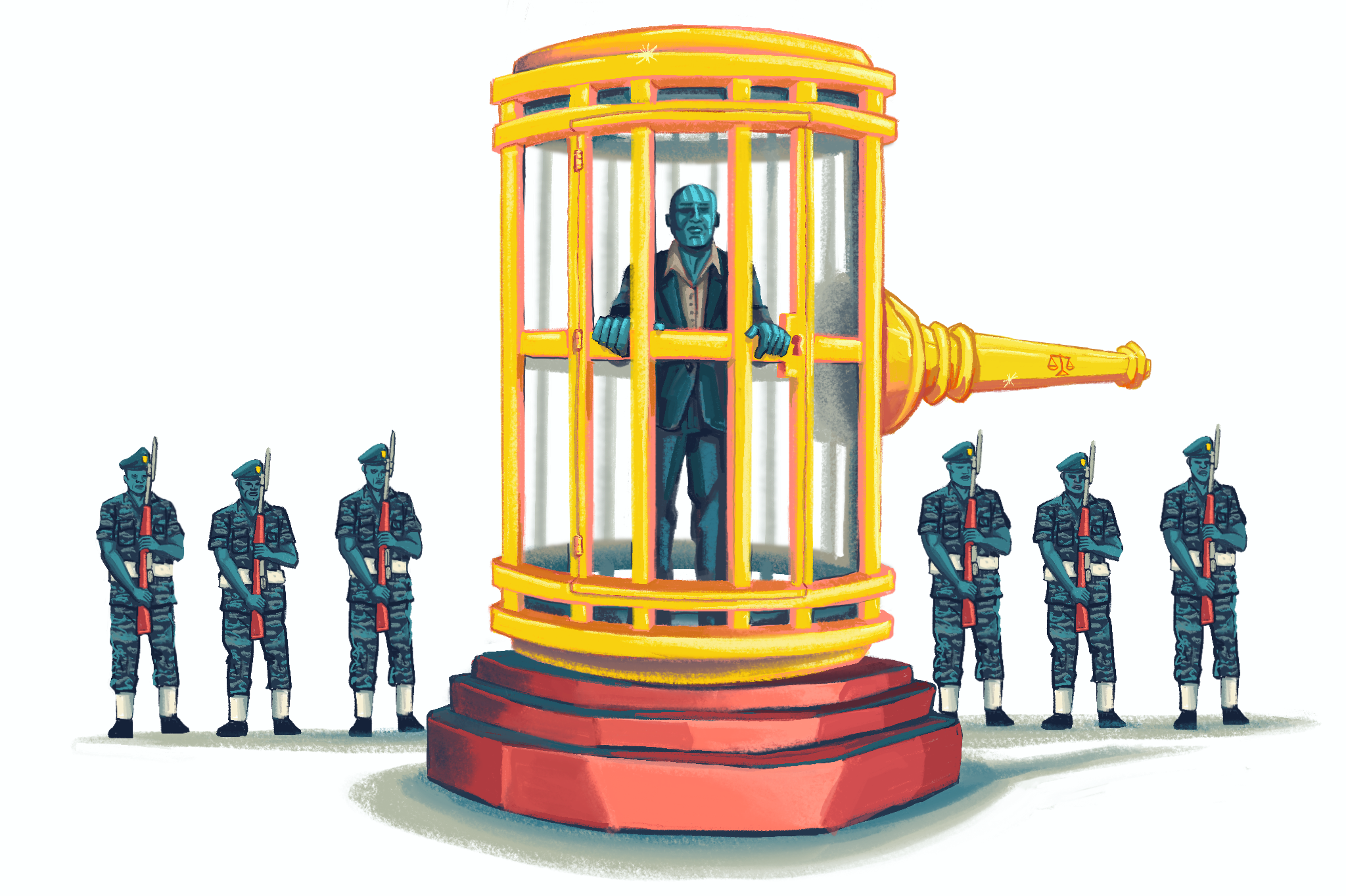
Uganda – In January, Eron Kiiza, a human rights lawyer, represented opposition leader and four-time presidential candidate Kizza Besigye in military court. Soldiers blocked his entry and directed him to sit in a different section. Kiiza refused.
They forcibly removed him, and minutes later, he was arrested and placed next to Besigye – as a defendant, facing charges of treason.
He was convicted of contempt of court and sentenced to nine months in prison.
There was no trial, says Kiiza, who is out of prison on bail.
The same month, Uganda’s Supreme Court ruled that trying civilians in military court — a practice on the rise in recent years — is unconstitutional.
There are anywhere from a few hundred civilians, according to government numbers, to a few thousand civilians, according to lawyers, who are currently in military custody.
President Yoweri Museveni said on social media that the January ruling is “wrong,” adding that trying civilians in the military court was a way to protect Ugandans from what he called “criminals armed with guns.”
In June, Uganda’s Parliament passed a law allowing the practice, a move critics are calling an act of revenge after the January ruling.
They worry the law will stifle political opposition and stoke fear ahead of the January 2026 general elections.
Colonel Chris Magezi, acting spokesperson for the Uganda Peoples’ Defence Forces, said on television in May that the judiciary is overwhelmed, so trying some cases that threaten national security in military courts is essential.
He pointed to a 2023 disarmament in Karamoja, where armed residents were attacking neighbors and conducting raids across the border with Kenya.
“There’s an urgent security problem to deal with in Karamoja that should hold,” he said.
“In civil courts, when they are released, they go back to the community and commit crimes again.”
‘A one-man show’
The law allows the court-martial of civilians in cases of suspected treason, as well as cattle rustling, murder, aggravated robbery, and more.
But critics say the law opens the door to widespread civilian arrests.
Nkunyingi Muwada, a member of Parliament for Kyadondo East, says the bill is Museveni’s attempt to dismantle the court system and create a new system within the military courts to remand opposition politicians and activists.
“It’s obvious that this bill is in preparation of 2026 election,” Muwada says, adding that Museveni wants the political realm to remain “a one-man show.”
Sarah Bireete, executive director for Centre for Constitutional Governance, a regional constitutional watchdog, says the bill’s hurried passage didn’t allow for public participation.
“The clerk to Parliament sent an advert one day before the bill was tabled,” she says.
“We were required to analyse the bill and file it in a matter of hours.
“We submitted a memorandum hoping to be invited to the committee. We were never invited.”
Opposition supporters from the 2021 general elections have been in court since then.
“The regime wants this same court in place for the same purpose,” Bireete says.
Security or oppression?
Civilians are concerned that the law makes them vulnerable. Namukasa Khadija, a Wakiso resident, says she’s debating whether to participate in the upcoming elections.
“I saw the arrest, the brutality against opposition supporters, especially Bobi Wine supporters, by the armed forces in the last 2021 elections,” she says.
“I saw the brutality against journalists in the recent Kawempe North election, and I don’t know if I am ready to attend any political rally in the 2026 elections because I don’t think it will be safe.”
Others, though, are confident the law will promote national security.
Anthony Akol, a member of Parliament for Kilak North, says the bill will protect Ugandans from armed robberies and those who use military attire to commit crimes.
“The law is good,” he says, “but the problem is that citizens of Uganda don’t trust this government.”
He, like Magezi, points to Karamoja.
“Some who have guns and use them to rob people and others put on army uniform and try to steal from people,” he says.
“I have no problem if such a person is arrested.”
Kiiza, the human rights lawyer, says the bill’s main purpose is to deny Ugandans’ involvement in what should be a fair, democratic election.
“Political activists and opposition supporters will be arrested and remanded to prison without trial,” he says.
“This only happened because the military started to engage in politics.”
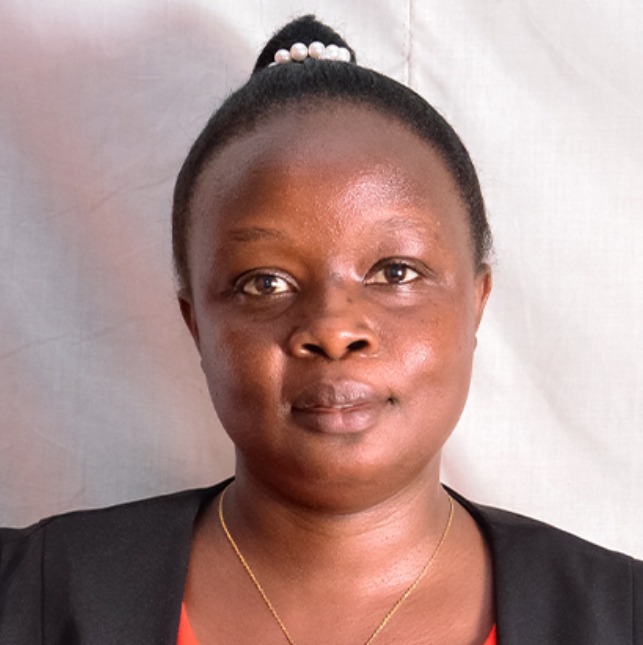
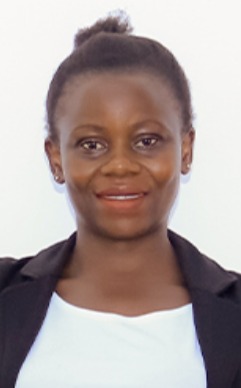
Nakisanze Segawa is a Reporter-in-Residence based in Kampala, Uganda. She specializes in reporting on LGBTQ+ issues.
Born in Luweero and raised in Uganda’s capital, she holds a degree in Mass Communications from Muteesa I Royal University.
Known for her powerful photography and deep community access, her 2015 story about school policies that forced Black girls to keep their hair short – while girls of other races could grow theirs long – provoked widespread social media outcry and led to a policy change.
Apophia Agiresaasi is a Reporter-in-Residence based in Kampala, Uganda. She has been covering human rights and global health stories for over a decade.
In 2020, she was part of the team honored with the Media Hero of the Year Award by the Stevie Awards for their coverage of the Covid-19 pandemic.
*Apophia Agiresaasi is a Reporter-in-Residence based in Kampala, Uganda.
*Nakisanze Segawa is a Global Press Journal Reporter-in-Residence based in Kampala, Uganda. She translated some interviews from Luganda
*This story was originally published by Global Press Journal, which delivers bold, investigative, and in-depth explanatory reporting on the world’s most urgent issues