Johannesburg – South Africa has joined the global community in celebrating World Elephant Day.
Today, Tuesday 12 August 2025, is World Elephant Day, a day dedicated to raising awareness of the urgent need to protect and manage the world’s elephants.
This year’s commemoration, under the theme “Matriarchs’ and Memories” coincides with the Elephant Indaba, convened by the Department of Forestry, Fisheries and the Environment (DFFE) in the beautiful landscape of KwaZulu-Natal, which is home to the second largest elephant population in the country.
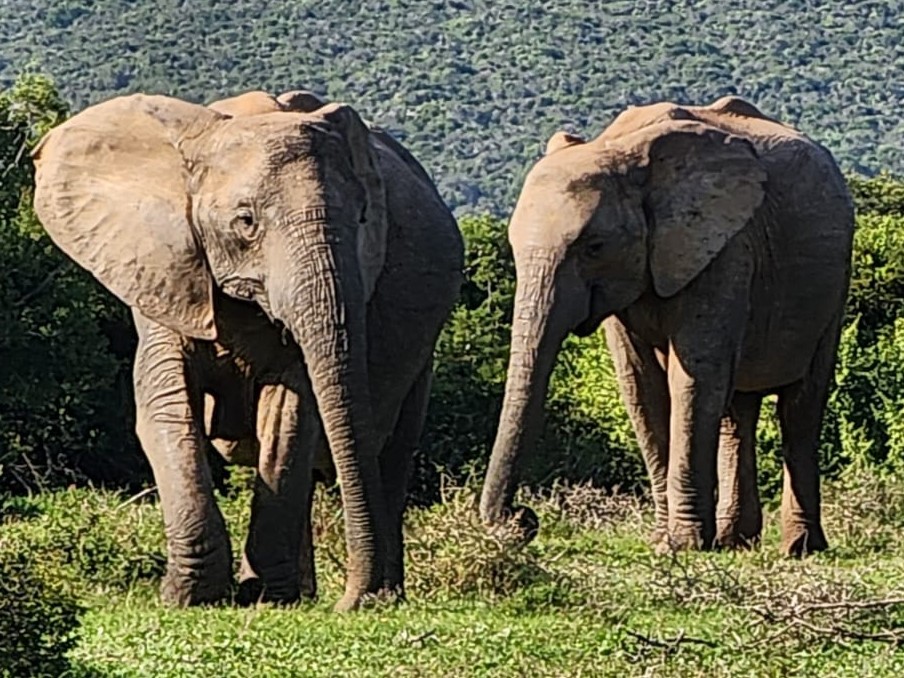
South Africa is home to about 44 000 African savanna elephants, and the population continues to grow.
This is a major conservation success, especially when compared to the decline of elephant numbers in some other countries.
Over the past 40 years, elephants in South Africa have also expanded their range.
Most elephants in the country live in government-protected areas like Kruger National Park, Mapungubwe National Park, and Tembe Elephant Park.
These parks are part of larger Transfrontier Conservation Areas (TFCAs), where elephants often move freely across national borders and are shared with neighbouring countries.
In addition to these large parks, 89 smaller, fenced reserves also support elephant populations.
About 6 000 elephants are owned privately or by communities.
In recent years, more and more communities have started to manage elephants themselves.
“South Africa’s success in recovering elephant populations not only offers hope for the species, but also brings difficult trade-offs in the context of the country’s developmental agenda and needs,” said Deputy Minister Narend Singh.
“As elephant numbers and ranges expand, encounters between people and elephants have increased, particularly in rural communities living near protected areas.
“Human-elephant conflict can result in crop losses, damage to infrastructure, and in some cases, injury or loss of human life.
“For many affected families, these incidents can threaten food security and livelihoods.
“Managing these interactions is essential to ensuring that conservation gains do not come at the expense of community well-being.
“It requires innovative solutions that promote co-existence, such as improved land-use planning, early-warning systems, community-based monitoring, and benefit-sharing initiatives that recognise the costs of living alongside elephants.”
Deputy Minister Singh said re-imagining conservation in the country was being guided by the four goals of the White Paper policy on Conservation and Sustainable Use of South Africa’s Biodiversity, which seeks to balance conservation with sustainable use, transformation, access, and benefit sharing.
“Our aspiration is to ensure that thriving elephants contribute to improving the well-being of people and ecosystems simultaneously and serve as a flagship for driving change towards ‘Thriving People and Nature’,” Deputy Minister Singh said.
“Our elephants are a national treasure, a keystone species, an integral part of our heritage, and play a significant role in maintaining a balance where the creation of value exceeds consumption, crucial for sustaining and increasing South Africa’s social and natural capital, which are fundamental for inclusive socio-economic development.”
Elephant populations still face challenges ranging from habitat loss, human-wildlife conflict to climate change, and their conservation requires a whole systems approach that recognises the voices of communities, the role of science, indigenous knowledge, and values of partnerships.
The department said South Africa needed to harness collaboration, co-learning, and co-working, so that our collective wisdom, capacity, and actions bring forth a flourishing world and thriving life.
As South Africa celebrates this day, the department, led by Deputy Minister Singh, is hosting a conversation with policy developers, the wildlife industry, and civil society groups.
NGOs, scientists, researchers, traditional leaders, traditional health practitioners, and communities neighbouring protected areas, to come up with solutions and forge partnerships that will ensure that elephants remain an enduring part of our landscape that also benefits people.
The two-day Southern African Elephant Indaba is hosted at Bonamanzi in KwaZulu-Natal.
These solutions should, among others, strengthen community-based initiatives that ensure rural communities benefit from living alongside elephants, fostering coexistence and reducing human-elephant conflict.