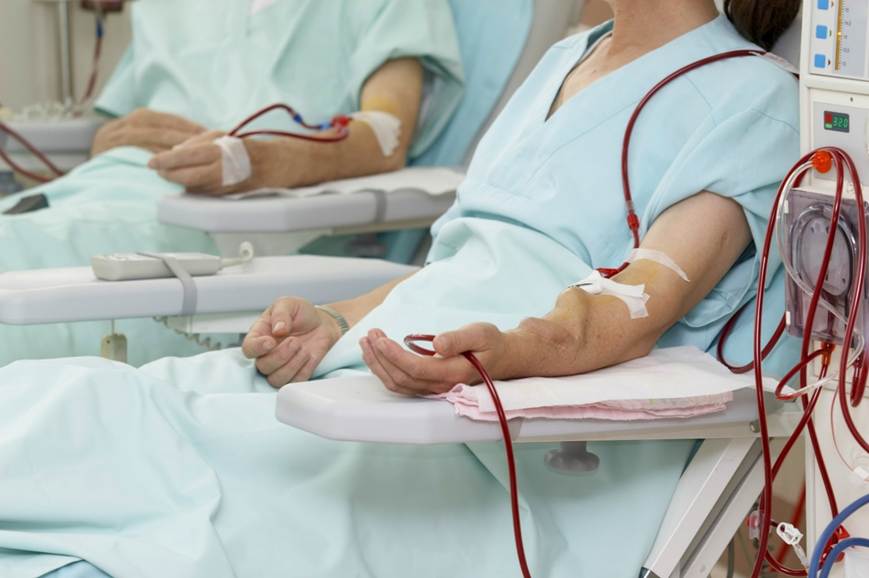
Johannesburg – South Africa is facing a sharp rise in kidney failure cases, with more than 9 300 people on dialysis or living with a kidney transplant.
In the wake of National Kidney Awareness Week (1–5 September), concern is mounting over the rising number of South Africans requiring dialysis and transplantation – mirroring the growing burden of lifestyle-related disease.
Alarming rise in kidney replacement therapy
The most recent publicly released national dataset by the South African Renal Registry (2022 Annual Report published last year) records that by December 2022, at least 9 342 patients nationwide were receiving chronic dialysis or kidney transplants, an increase from 8 866 in 2021.
This points to a continued upward trend, underscoring the growing public health challenge.
The report showed an overall prevalence of 151 per million population (pmp), and the contrast in the availability of services between the private and public sectors is particularly striking.
The private healthcare sector saw a prevalence of 771 (pmp), contrasting with just 45 pmp in the public sector.
Within the public sector, the Western Cape exhibited the highest provincial prevalence (165 pmp), while Mpumalanga recorded the lowest (3 pmp).
Due to limited resources, access to dialysis in the public sector is subject to rationing and strict eligibility criteria, which vary by province and treatment unit.
Admission is typically determined by a multidisciplinary committee and is largely based on transplant suitability and overall clinical benefit.
They will take various factors into account, including medical fitness and the presence of severe, uncontrolled comorbidities, the ability to adhere to treatment, and the availability of social support.
Active substance use is generally considered an exclusion criterion.
As a result, many patients who do not meet these requirements must turn to the private sector for treatment, provided they have the financial means.
These factors highlight the urgent need to tackle the root causes driving kidney failure.

Unhealthy lifestyle, hypertension and diabetes drive kidney disease
According to the National Kidney Foundation of South Africa (NKFSA), kidney failure in South African adults is primarily due to inherited hypertension (60–65 %) and type 2 diabetes (20-25%).
Ingrid Singels, Head of the Scientific Division at Pharma Dynamics, notes that both hypertension and type 2 diabetes can be prevented, diagnosed early, and properly treated.
In doing so, 70–80 % of all chronic kidney failure and/or cardiovascular deaths are potentially preventable.
Furthermore, she highlights that kidney disease often develops silently.
“Many individuals with high blood pressure or diabetes may show no symptoms until kidney damage reaches an advanced stage, making early screening and preventive interventions all the more critical,” said Singels.
“Prevention rather than cure”
In the lead-up to National Kidney Awareness Week, Singels emphasises the focus on prevention rather than cure.
“We cannot afford to wait for patients to develop kidney failure,’’ Singels said.
“By supporting better management of hypertension and diabetes, through education, screening, and early intervention, we can dramatically reduce the burden on individuals and the healthcare system.”
This ethos aligns closely with the NKFSA’s message that many cases of chronic kidney disease and cardiovascular death are avoidable with timely and appropriate interventions.
She also points to demographic patterns worth noting.
“In a 15-year analysis on chronic kidney disease, data from Discovery Health shows that among their medical scheme members, the average age of patients on chronic dialysis was 57 years, with transplant recipients averaging 47 years old.
“This suggests that many individuals in the working-age group are affected by advanced kidney disease, raising concerns about social and economic impact on families and workplaces.”
In addition to the human cost, Singels highlights that dialysis is extremely expensive, especially in the private sector, where costs can exceed hundreds of thousands of rands per patient annually.
“Every case of kidney failure prevented represents not only a life saved, but also scarce healthcare resources freed up for other pressing needs,” adds Singels.
“That’s why our emphasis is on empowering South Africans with practical tools to improve diet, exercise and disease control before kidney damage sets in.”
Call to action
With over 9 300 South Africans now on kidney replacement therapy and the majority of those cases attributed to preventable conditions, there is an urgent need for the public to act:
- Know your health numbers: Regularly monitor blood pressure and blood sugar, particularly if you have risk factors, such as family history or obesity.
- Adopt heart-healthy living: A balanced diet – low in salt, sugar, and saturated fats, and regular exercise can thwart the progression of both hypertension and diabetes.
- Get screened early: Because kidney disease can be silent, early detection through screening can make a critical difference.
- Access care before it’s too late: If detected early, lifestyle changes and medical treatment can slow the progression to kidney failure.
The dual realities of rising dialysis numbers and preventable causes should galvanise broader action.
“By shifting focus from treating end-stage disease to preventing it, South Africa has a real opportunity to turn the tide on kidney failure – saving lives and relieving pressure on the health system,” reinforces Singels.